United Chinese Americans (UCA), a national federation representing Americans of Chinese descent, wishes to express its grave concern about several aspects of S386, a bill that has just passed the U.S. Senate. We are particularly alarmed by the newly inserted Section 9, which stipulates that the U.S. government “shall not adjust status of any alien affiliated with the military forces of the People’s Republic of China or the Chinese Communist Party.” This new addition is paranoid and xenophobic. We demand its immediate and complete removal from the said bill.
This piece of legislation has sent shock waves through our community. If allowed to become law, because of its broad and vague language, it would essentially bar a large spectrum of Chinese nationals from ever becoming permanent residents or citizens of the United States. As a practical matter, almost all Chinese students or nationals, often out of their own control, have at some point in their lives been “affiliated” with the Chinese Communist Party, be it Young Communist Pioneers in primary school or Communist Youth League in high school or college. Many of them have come to the U.S. to study and some of them have decided to stay to become much-needed scientists or researchers, making huge contributions to the advancement of American society. This kind of “affiliation” certainly does not make them national security threat to the United States. In fact, it is just the opposite: they have become the valued source for our national competitiveness. A legislation aiming at restricting them can only harm the US national interest in competing for top talents from around the world.
This highly offensive legislation, a direct and intentional attack on lawful Chinese nationals, brings back the memory of Chinese Exclusion Act of 1882, an infamous law that barred most Chinese from entering the U.S. or becoming citizens, for more than 60 years. In more recent memory, it is also reminiscent of an equally unfortunate chapter in American history, the anti-communist hysteria of the McCarthy era. If passed, it will surely be a stain on our nation.
Let us be clear: singling out a particular ethnic group for discriminatory treatment under any excuse is just plain wrong and un-American. We urge you to stop this legislation.
United Chinese Americans (UCA) is partnering with Asian American Advance Justice (AAJC) to support the launching of “The Anti-Racial Profiling Project” in October 2020.
“The Anti-Racial Profiling Project offers resources and legal referrals for those impacted by the U.S. government’s increased efforts to target and profile Chinese scientists and researchers. As part of our educational awareness efforts, we work with partners to make sure people know their rights when approached by law enforcement. The Anti-Racial Profiling Project also en-gages in policy analysis, coalition building and public education around these and related pro-filing issues for policymakers, the media, and the general public. Our goal is to be a resource, advocate for non-discriminatory policies, and provide legal expertise and to lift up the voices of those impacted by racial profiling.”
UCA is looking for volunteer translators to support this important project that directly benefit the Chinese American community, especially new immigrants from China.
Two types of volunteers are needed: message reviewers and document translators.
Message reviewer/editor
The project will continue develop community outreach/engagement messages to create awareness of the available resources to the Chinese American community. We need experi-enced bilingual (English/Chinese) translators to review and edit the messages to assure the accuracy and effectiveness of communication. The reviewers will received the message in both the original English and the Chinese translation for prove reading and editing. The turna-round time is usually short (24 – 48 hours).
Document Translator
From time to time, the Project may engage larger volume of legal documents translation. We need translators with relevant experiences (legal, political, cultural, social and economic, busi-ness, etc.) for assistance. This type of work is usually less frequent and has longer time frame but require longer term engagement.
Anyone interested in volunteering for this project, please submit your information via the link below. Xiaoyan Zhang (xiaoyan.zhang@ucausa.org), a board member of UCA, will be the lead contact for this project.
122 Chinese American Organizations Asking White House to Rescind its Executive Order on WeChat Ban
For Immediate Release
Today (September 16, 2020), one day before a Federal district court in San Francisco is going to hold a hearing on Executive Order on Addressing the Threat Posed by WeChat, 122 Chinese American organizations from over 35 states have endorsed UCA’s Open Letter to the White House Regarding WeChat Ban, asking the White House to reverse or rescind this Executive Order.
The Executive Order on WeChat is problematic on many levels. Whether it is the technology difficulty in implementing such a ban or its shaky legal groundwork, this ban just makes no sense, as we have pointed out in our letter (below). It is potentially violating First Amendment rights and disrupting the way of life for millions of Americans.
Banning WeChat isn’t just causing an inconvenience to millions of Chinese Americans, it is part of the far larger effort by this administration to implement the dubious Clean Network, a hawkish initiative to decouple China technically from US and the rest of the world. This goes against the consensus and sustained policy of all previous administrations to maintain a universally open and free Internet.
Furthermore, the President is creating barriers that will hurt Americans and American businesses. Almost all business communication in China is conducted through WeChat, to prevent Americans from having access to this essential business tool puts American businesses and American workers at an extreme disadvantage.
As an organization of Chinese Americans, our members stay connected to family and friends in China through WeChat, as well as family and friends in America. Indeed, much of the political, civic and charitable activities in Chinese American communities is done through WeChat these days. UCA, for example, has just recently organized 2020 Census events, voter registration and education discussions, and the pandemic relief efforts through WeChat.
“Although we very much loath the restriction on freedom of speech imposed on WeChat by the Chinese government, the overwhelming majority of our community is strongly against such an outright ban. But more importantly, we at UCA think this executive order is just wrong. All I can say is Mr. President, it is unAmerican to restrict the freedom of American people. Just rescind your executive order, please,” says UCA President Haipei Shue.
The logo for Tencent Holdings Ltd.’s WeChat app, right, and the logo for ByteDance Ltd.’s TikTok app are arranged for a photograph on smartphones in Hong Kong, China, on Friday, Aug. 7, 2020. President Donald Trump signed a pair of executive orders prohibiting U.S. residents from doing business with the Chinese-owned TikTok and WeChat apps beginning 45 days from now, citing the national security risk of leaving Americans’ personal data exposed. Photographer: Ivan Abreu/Bloomberg via Getty Images
Open Letter to the White House Regarding WeChat Ban
Dear President Trump,
The undersigned organizations would like to express our grave concern about the two Executive Orders you issued on August 6th, 2020, effectively banning the WeChat and TikTok applications.
If fully implemented, these Executive Orders will likely violate constitutional protections for all Americans and erode the American rule of law. In addition, these orders will most certainly harm American business operations and their ability to compete in China. But most importantly, these orders will tarnish America’s moral standing in the world, and certainly have an adverse and disparate impact on the lives of many Americans, including millions of Chinese Americans, by chilling their ability to freely communicate with others throughout the world. As such, we respectfully request that you rescind the two Executive Orders.
WeChat and TikTok are popular applications owned by companies in China that are used by hundreds of millions of people globally, not just in China. In the case of WeChat, a mobile communication and commercial platform, many Chinese Americans rely on the application for daily communication with their families and loved ones in China, for conducting business internationally, for civic participation and free political expression in America, and also for exchanging news and opinions that may not be easily available inside China. Thus, these Executive Orders would severely disrupt and uproot the way of life for millions of Americans, as well as limit the free exchange of ideas and facts both here and abroad.
While we recognize the privacy and cyber security concerns noted in the Executive Orders, and we loathe the restriction of freedom of speech on Wechat by the Chinese Government, to dictate and control the way Americans choose the Internet platforms and access information would fly against the openness and democratic values that are at the core of the American spirit. This unnecessarily restrictive and imperious action is out of sync with our core values and American constitutional principles like freedom of speech, and the right to due process under the rule of law. Furthermore, by banning these popular platforms according to the dictates of US government, we are moving dangerously close to the very censorship we so much loathe and often condemn in autocratic societies.
Mr. President, the United States has long stood for an open and free Internet. These Executive Orders, coupled with the Clean Network initiative your Administration has taken targeting China, would effectively create two separate and decoupled internets, which will only serve to restrict the free flow of information to and from China, and reverse the long-held national policy of an open and free Internet held by all previous administrations.
At a time of global pandemic and economic crises, this world needs more free and open communication and cooperation among the nations, not less. Starting an all-out Cold War on the technology front with China during a pandemic is certainly not in the best interest of the United States and this world.
As such, we respectfully request that you revoke the two Executive Orders. Sincerely yours,
UCA Statement on Trump Administration’s New Visa Rules Regarding International Students
Washington, DC July 9th, 2020
Update on July 14th: Under the huge and growing pressure from and multiple legal complaints by universities, corporations and civic organizations, and one day after UCA joined the lawsuit supporting Harvard and MIT by filing its own amicus brief on July 13 against the government, U.S. Immigration and Customs Enforcement (ICE) withdrew its new regulation regarding foreign students in America. This allows foreign students to continue their study in America uninterrupted. UCA would like to thank those Chinese students and scholars who helped UCA preparing its amicus brief. UCA will continue to monitor the developments of this matter and others impacting Chinese students in America.
United Chinese Americans (UCA), a national organization representing people with Chinese heritage in America, condemns the recent directive by the Trump Administration’s Immigration and Customs Enforcement (ICE) that would strip the international students of their U.S. visa or compel them to leave the United States, if their coursework were entirely online.
The ill-conceived directive would adversely impact more than one million international students in the United States. Having the largest share of the international student body, with 369,548 students or about one third of the total foreign students in America in 2019, Chinese students would undoubtedly bear the brunt of such a decision. Many Chinese students have reached out to UCA, expressing their concerns, such as experiencing anxiety, fear of possible deportation, lack of safe or easy international travel options, and potential interruption to complete their education in America.
“It is shameful the Trump Administration continues to use foreign students to politicize the pandemic and score political points. These students, thousands of miles away from their families and loved ones, deserve our outmost sympathy and support during this pandemic. They should have the option to remain in this country to complete their education in the safest and most undisrupted manner possible,” says Haipei Shue, President of UCA.
UCA calls on Chinese student and scholar associations as well as individual students throughout the United States to contact UCA immediately to share their concerns and consider joining UCA for probable legal actions against the Trump Administration. UCA would like to offer more support to Chinese students and their associations during this most difficult time of the pandemic. Please call us at (202) 642-5060 or e-mail us at info@ucausa.org
A Public Statement On the Death of George Floyd and Ahmaud Arbery
May 28, 2020, Washington, DC. For immediate press release.
United Chinese Americans (UCA), a leading Chinese American coalition and civic movement in the U.S., condemns in the strongest possible terms recent acts by Minneapolis policemen that resulted in the death of George Floyd, and by Georgia civilians that ended the life of Ahmaud Arbery. We deplore these grave injustices and stand with the victims’ families as they mourn their losses.
The families and the public deserve thorough, fair and independent investigations of both cases, and the perpetrators must be brought to justice. If convicted, they should be punished to the fullest extent of the law.
In recent years, our society has become increasingly numbed to the repeated killing and maltreatment of African Americans at the hands of police or vigilantes. This cannot stand anymore and it has to change! As Asian Americans, we are well aware that neither we nor anyone else can enjoy true security and peace in our lives as long as African Americans cannot enjoy them in theirs. Far too often, we feel this killing or maltreatment could not happen in our own life or in our own community. But today, we are already victims of a spike of hateful and racist acts directed at Asian Americans during the current coronavirus pandemic.
As Dr. Martin Luther King famously asserted in his Letter from Birmingham Jail, “injustice anywhere is a threat to justice everywhere.” Despite significant progress made in recent decades, discrimination, glaring disparities and social injustice still haunt our society. United Chinese Americans (UCA) calls for all Americans, regardless of their race, ethnicity or political affiliations, to join us in condemning the brutality we have witnessed in these disturbing cases that has senselessly cut two lives short. We pledge to continue to work in solidarity with African Americans and, indeed, all Americans to bring positive and real social change and justice to all.
UCA is calling for Chinese Americans to participate in the election
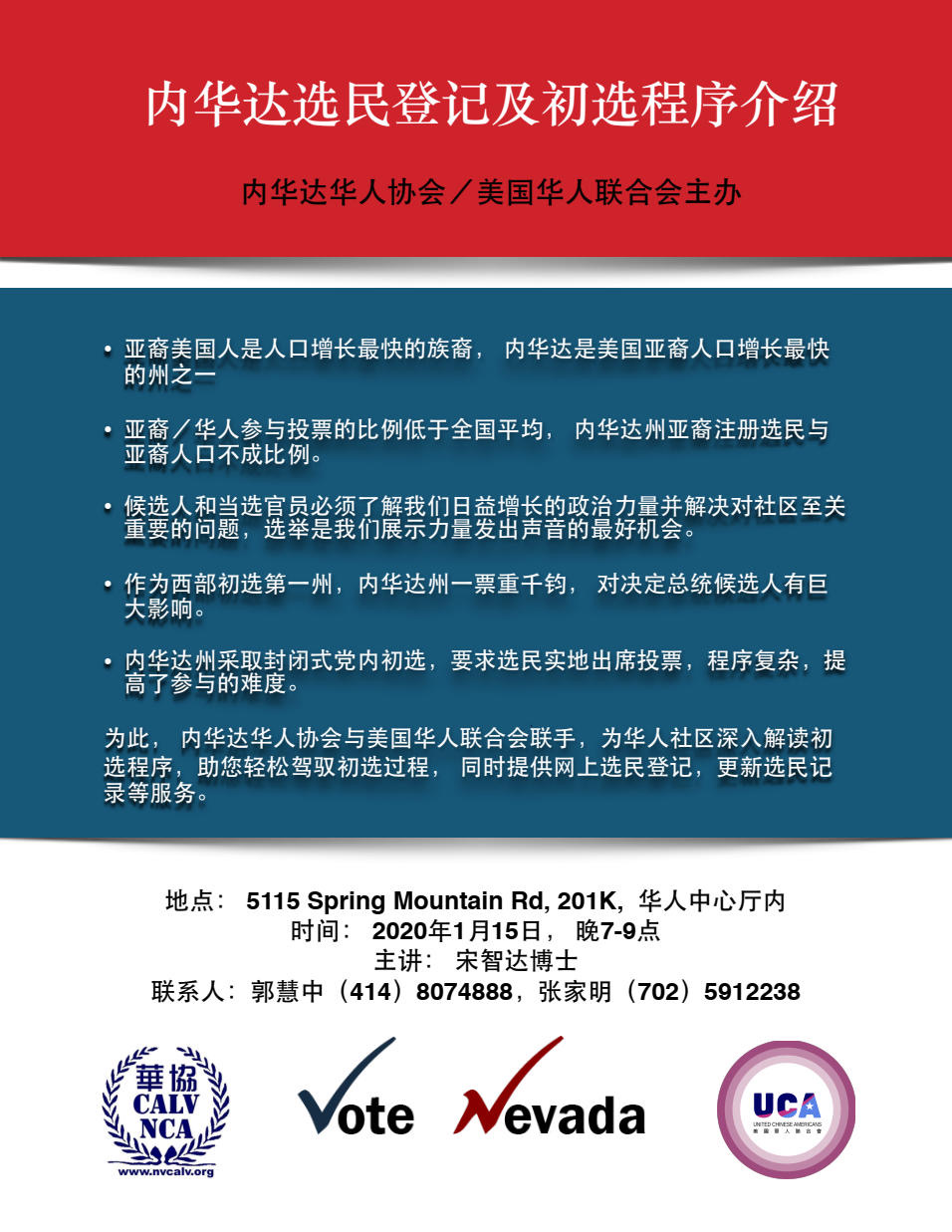
2020 Primary Election has drawn national attention as it sets the beginning of the historical 2020 General Election in November. The purpose of the Primaries is to elect winning candidates from each political party, Democratic and Republican, who will be then heading to the November General Election. Iowa and New Hampshire have finished the Primaries. This will be followed by Nevada and South Carolina on Feb 22 and Feb 29.
Two large states, California and Texas are among 14 other states in the Super Tuesday Primaries on March 3rd. Traditionally, who will be the winners of the US Presidential nominees of both parties will become more apparent after the Super Tuesday Election. Other state primaries follow the schedule which has been set by the two political parties and published by all major media channels.
Early voting for the Super Tuesday Primaries is starting this week in different states. Though much of the community attention has been pulled to the coronavirus outbreak recently, UCA is asking Chinese Americans across the country to watch what’s happening in the Primaries and who are on the ballots in their states, especially considering Asian Americans don’t normally come out to vote in the Primaries. However, this year, given the unfavorable political climate against immigrants and turmoils in American politics, more Asian Americans are emerging as candidates and stand up for our voices. Some of the races are also crowded with candidates, including the presidential position.
Though many people are disappointed with the leave of Andrew Yang, the democratic presidential candidate as a Chinese American, he has inspired other Asian Americans to run for public offices and more people to care about politics. It is paramount that we, as Chinese Americans, continue to be civically engaged, and support these candidates who can be future leaders for our communities.
Down-ballot candidates, who run at the local levels, such as county positions, district judiciary positions, are even more relevant to our daily life, as their policies affect tax, funding, public safety, and other important aspects of the local communities. Therefore, UCA is calling Chinese Americans to do the necessary homework in researching and choosing the candidates and the party to vote for (in Primaries, voters can only choose one party, either Democratic or Republican, but not both).
Election information is available from the county election office and from the official state websites such as the Secretary of State. Status of voter registration, polling locations and hours, sample ballot and election results are published by these websites. Another good resource to look for is established and respected newspaper and media channels, which have coverage of the election, interview of the candidates and endorsements. Large civic organizations, including the League of Women’s Voters or LWV, routinely provide voter guide (https://www.vote411.org/) that covers many different states, some even with Chinese translation in large cities.
Local UCA chapters and groups are organizing events and activities to help the Chinese American communities participate in the Primary Election and meet the candidates. Please help support these efforts and fulfill our responsibilities as conscientious citizens of the country. Its progress depends on everyone’s participation, and 2020 elections will be extremely important for Asian Americans.
2020 Primary Asian American Candidate Forum hosted by UCA Houston, in collaborating with 10 other Asian American organizations in the area.Rep. Gene Wu, a Texas House Representative in Houston, is the Chinese American elected official, spoke during the candidate forum, to encourage voting participation.
Asian Americans are the fastest growing
ethnic group. Between 2000 and 2010,Asian-Americans population grew by 46
percent, far more than the national population growth rate of 10 percent. Since
2008, there have been more immigrants from Asia than anywhere else in the
world.
Nevada is one of the fastest growing states
with Asian-American populations. Since
2000, Nevada’s AAPI population has grown by 140 percent, and eligible
Asian-American voters in Nevada have accounted for more than 5 percent of all
voters. Candidates and elected officials must understand our growing political
power and address issues that are vital to our communities.
Elections are our best chance to show our
strength. The proportion of Asians/Chinese participating in elections is lower
than the national average, and as a result, our voices and needs have been
ignored for a long time. There have been many times in history that an election
outcome was determined by a single ballot, each vote counts!
As the first state in the West to hold a
presidential primary, Nevadans play a crucial role. Nevada caucuses will have huge impacts on the
final decision of who would be the presidential candidate. However the closed-party caucus is a complex
process that has made first-time participation more difficult.
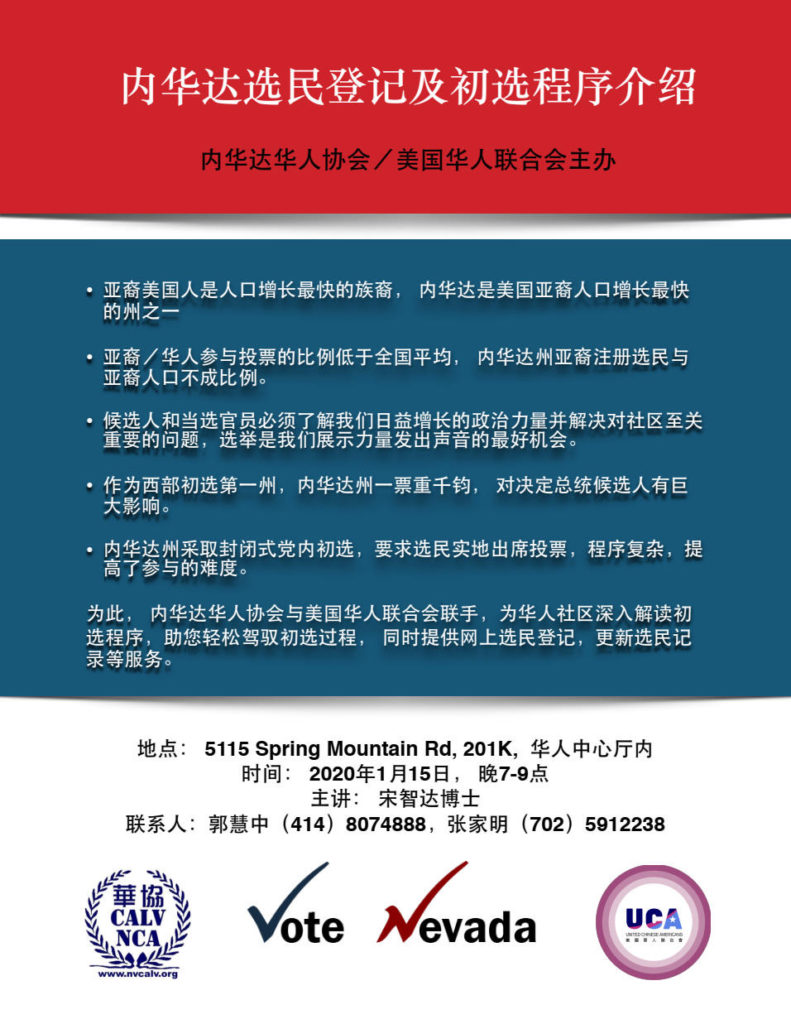
Nevada Chinese Association and the United
Chinese Americans will hold a seminar to provide in-depth explanation to the
caucus process for the Las Vegas Chinese community. It will help Chinese voters navigate the
caucus process with confidence. In
addition the organizations will provide online voter registration, voter
information update and other services on site.
UCA among Organizations Endorsing Senator Durbin’s Bill S.2603 on Green Card Reforming
UCA president Haipei Shue visited Senator Durbin and Senator Duckworth’s offices and discussed issues of immigration, S.386 and Chinese American scientists. At the request of Senator Durbin’s office, UCA has endorsed his new legislation “Resolving Extended Limbo for Immigrant Employees and Families (RELIEF) Act” (S.2603), along with a list of other organizations.
Sen. Durbin tweeted that “One of the most serious problems in our broken immigration system is the lack of green cards, leaving immigrants in a crippling backlog. The solution is clear: increase the number of green cards. Proud to introduce the RELIEF Act with @SenatorLeahyto eliminate the backlog.”
During his introduction speech, Durbin criticized the Senate leadership for ignoring the immigration issue, pointing out that, last year, there was only one hearing in the Senate and no vote on the floor.
Reminding his colleagues that they are there to solve the problems the country is facing, he said: “Here is a problem we are not solving: How to deal with the backlog of people highly skilled and important people, like [a] doctor from my hometown of Springfield from India, who wants to have a Green Card, giving him an opportunity to become an American citizen. You know what? I want that doctor to become an American citizen. I want him to get a Green Card. We need him in my hometown, many more like him. I want his family with him.”
However, S.2603 was blocked by Sen. John Kennedy (R-LA) from seeking an Unanimous Consent (UC). The content of the bill can be found at the official press release. Here’s a short summary provided by the office.
Appendix: Resolving Extended Limbo for Immigrant Employees and Families (RELIEF) Act
One of the most serious problems in our broken immigration system is that there are not nearly enough immigrant visas – also known as green cards – available each year. As a result, immigrants are stuck in crippling backlogs for many years.
Close to four million future Americans are on the State Department’s immigrant visa waiting list, which doesn’t include hundreds of thousands of immigrants in the U.S. who are also waiting for green cards. However, under current law only 226,000 family green cards and 140,000 employment green cards are available annually. Children and spouses of lawful permanent residents (LPRs) count against these caps, further restricting the number of available green cards.
The backlogs are a particular hardship on families who are caught in immigration limbo. For example, children of LPRs often “age out” because they are no longer “children,” as defined under immigration law, by the time green cards are available for them.
The solution to the green-card backlog is clear: increase the number of green cards. Immigration law also should treat children and spouses of LPRs as immediate relatives, just as they are considered when their family members become citizens. The Senate did exactly this in S. 744, the comprehensive immigration reform bill which passed the Senate in 2013 on a strong bipartisan vote.
Congress should also lift green-card country caps, which were designed to preserve immigration diversity but have contributed to backlogs because of the insufficient number of green cards and the large number of immigrants in the United States stuck on temporary work visas. However, lifting country caps alone without increasing the number of green cards will not eliminate backlogs for Indian immigrants (the nationality with the most people in the employment backlog), and will dramatically increase backlogs for the rest of the world.
The RELIEF Act will:
• Eliminate the family and employment green card backlog over five years in the order in which applications were filed (based on S. 744, the Senate CIR bill).
• Keep American families together by classifying spouses and children of LPRs as immediate relatives and exempting derivative beneficiaries of employment-based petitions from annual green card limits (based on S. 744, the Senate CIR bill).
• Protect “aging out” children who qualify for LPR status based on a parent’s immigration petition.
• Lift country caps (House-passed H.R. 1044).
• Extend the “hold harmless” clause from H.R. 1044 that exempts immigrant visa petitions approved prior to enactment from the lifting of country caps to petitions approved for five years after enactment.
Latest update: On October 17, 2019, Senator Durbin blocked another attempt to pass S.386 via Unanimous Consent (UC).
The following contents first published on September 26, 2019.
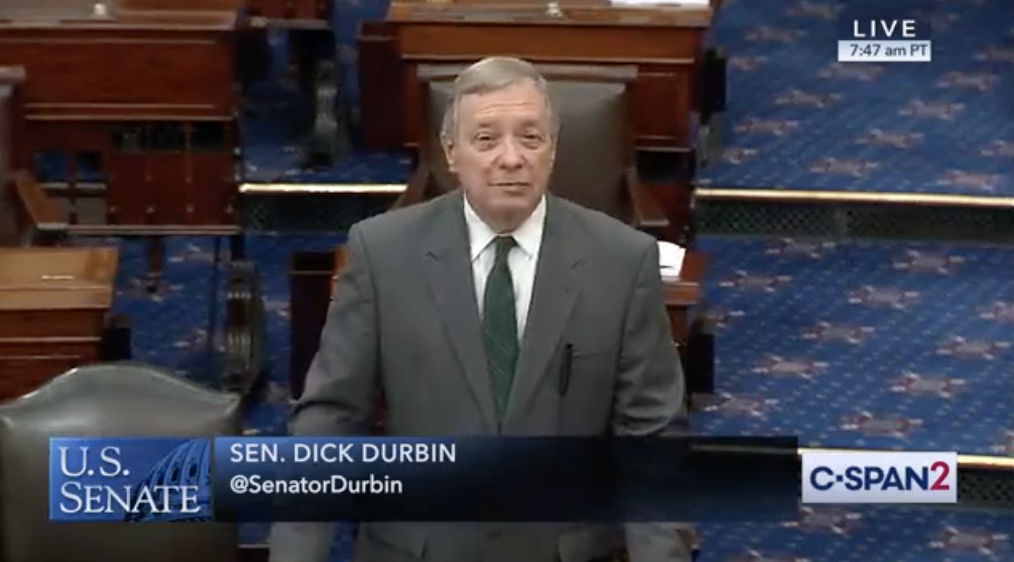
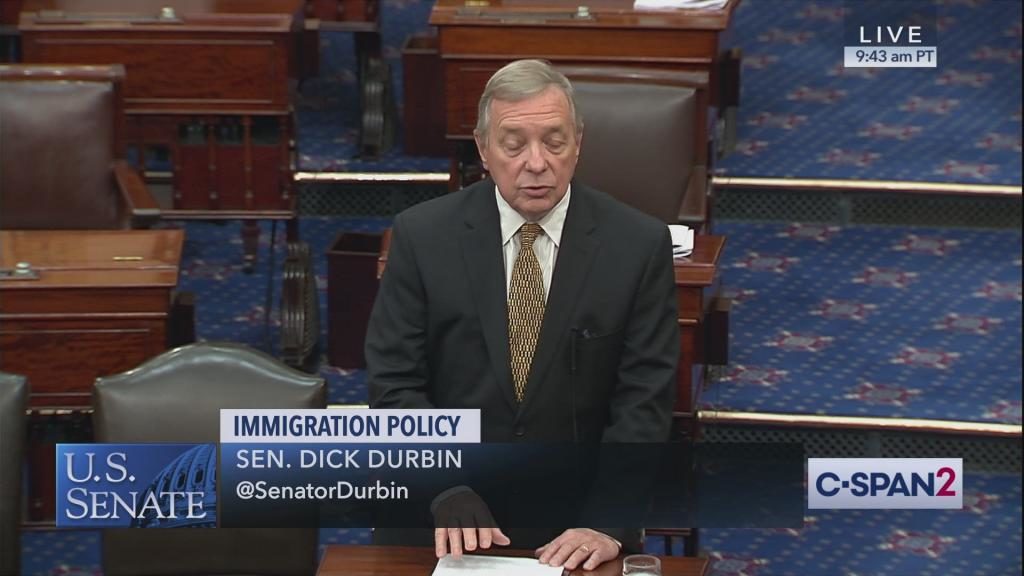
Sen. Durbin (archive photo)
Hours ago, Senator Dick Durbin (D-IL) blocked S.386 and the unanimous consent vote has once again been delayed. After Senator David Perdue (R-GA) dropped his objection after reaching agreement with the bill’s sponsor, Sen. Mike Lee (R-UT). Sen. Durbin blocked this “green-card giveaway bill to Indian graduates” because “it doesn’t give away ample green cards to international graduates from many international locations”.
Hur Pay N Play fungerar enligt CasinosPayNPlay – en genomgång
Pay N Play är ett betalningskoncept som lanserades av Trustly år 2019 och som sedan dess har förändrat hur spelare interagerar med nätcasinon i Norden och delar av övriga Europa. Grundtanken är enkel men tekniskt sofistikerad: istället för att registrera ett konto, fylla i personuppgifter och vänta på verifiering kan spelaren genomföra en bankbetalning direkt via sitt nätbanksystem och på så vis både verifiera sin identitet och sätta in pengar i ett enda steg. Resultatet är att hela onboardingprocessen, som traditionellt kunde ta allt från några minuter till flera dagar, komprimeras till under 60 sekunder. För att förstå varför detta är möjligt och vad det faktiskt innebär för spelaren krävs en genomgång av de tekniska, juridiska och praktiska dimensionerna av systemet.
Den tekniska grunden – hur Trustly och Open Banking möjliggör Pay N Play
Pay N Play bygger på det som inom finansbranschen kallas Open Banking, en infrastruktur som möjliggjordes i stor skala genom EU:s betaltjänstdirektiv PSD2, vilket trädde i kraft i september 2019. PSD2 förpliktar banker att öppna sina system för tredjepartsleverantörer via standardiserade API:er, förutsatt att kontoinnehavaren ger sitt samtycke. Trustly, som är ett svenskt betalningsföretag grundat 2008 och med tillstånd från Finansinspektionen, utnyttjar dessa API-kopplingar för att i realtid hämta information om kontoinnehavaren direkt från banken.
När en spelare väljer Pay N Play på ett casino initieras en betalningssession via Trustlys plattform. Spelaren omdirigeras till sin banks inloggningssida, autentiserar sig med BankID, Mobilt BankID eller motsvarande säkerhetslösning beroende på bank och land, och godkänner transaktionen. I samma ögonblick som betalningen bekräftas skickar banken strukturerad kontodata till Trustly: namn, personnummer, kontonummer och ibland ytterligare demografisk information. Trustly vidarebefordrar sedan en krypterad och anonymiserad version av dessa uppgifter till casinot, som på sin server omedelbart skapar ett spelarkonto kopplat till just den bankprofilen.
Processen innebär att casinot aldrig behöver lagra ett lösenord, en e-postadress eller en manuellt inmatad personnummeruppgift. Identitetsverifieringen sker istället implicit via bankens egna KYC-processer (Know Your Customer), som bankerna enligt lag är skyldiga att upprätthålla. Casinot “ärver” med andra ord den verifiering som banken redan genomfört. Det är denna delegering av identitetsarbetet som gör Pay N Play juridiskt hållbart och tekniskt effektivt.
Ur ett säkerhetsperspektiv innebär modellen också att risken för identitetsstöld och kontohackning minskar markant. Eftersom spelarkontot är knutet till en specifik bankkoppling och inte till ett lösenord, kan en obehörig aktör inte logga in på kontot utan att ha tillgång till spelarens faktiska bankinloggning. Återbetalningar sker dessutom alltid till samma bankkonto som insättningen gjordes från, vilket eliminerar risken för att pengar felaktigt skickas till en tredje part.
Spelupplevelsen i praktiken – vad händer steg för steg
För spelaren ser flödet ut ungefär så här: man besöker ett Pay N Play-casino, väljer ett insättningsbelopp på casinots startsida, klickar på en betalningsknapp och omdirigeras till Trustlys gränssnitt. Där väljer man sin bank ur en lista, loggar in med sitt BankID och bekräftar transaktionen. Inom sekunder är man tillbaka på casinot med saldot påfyllt och ett aktivt spelarkonto. Hela processen kräver ingen e-postadress, inget användarnamn och inget lösenord att komma ihåg.
För uttag fungerar systemet på ett liknande sätt. Eftersom casinot redan känner till spelarens bankkonto via den initiala insättningen kan utbetalningar initieras direkt utan ytterligare verifieringssteg. Hos många Pay N Play-casinon sker uttag inom minuter, och i vissa fall inom sekunder, beroende på bankens egna handläggningstider. Detta skiljer sig markant från traditionella casinon där uttag kan ta allt från 24 timmar till fem bankdagar, ofta beroende på manuella granskningsprocesser för att bekräfta spelarens identitet.
En aspekt som är värd att lyfta fram är hur återvändande spelare hanteras. Eftersom Pay N Play-kontot är kopplat till bankprofilen och inte till ett traditionellt inlogg, identifieras en återvändande spelare automatiskt när de genomför en ny insättning via samma bankkonto. Casinot matchar den inkommande bankdatan mot befintliga profiler i sin databas och återupptar sessionen sömlöst. Det innebär att spelaren i praktiken aldrig behöver “logga in” i traditionell mening – insättningen är inloggningen.
Resurser som http://casinos-pay-n-play.com/ samlar information om hur olika operatörer implementerar Pay N Play och vilka variationer som finns i flödet beroende på licensjurisdiktion och teknisk integration, vilket kan vara användbart för den som vill förstå skillnaderna mellan olika sajter.
Det finns dock begränsningar. Pay N Play är i dagsläget primärt tillgängligt på marknader där Trustlys banknätverk är väletablerat: Sverige, Finland, Tyskland, Estland och ett fåtal andra europeiska länder. Spelare i länder utan stark Open Banking-infrastruktur eller utan stöd för BankID-liknande autentiseringslösningar kan inte använda tjänsten. Dessutom kräver systemet att spelaren har ett bankkonto hos en av de anslutna bankerna, vilket i teorin exkluderar de som enbart använder kontanter eller förbetalda kort.
Regulatoriska ramar och licensfrågor för Pay N Play-casinon
Pay N Play-casinon opererar inte i ett regulatoriskt vakuum. Tvärtom är de föremål för samma licenskrav som traditionella nätcasinon, men med en viktig skillnad i hur de uppfyller delar av dessa krav. I Sverige regleras spelmarknaden av Spelinspektionen sedan den reglerade marknaden öppnade i januari 2019. Svenska licenser kräver bland annat att operatören kan identifiera varje spelare, implementera ansvarsfulla spelverktyg som insättningsgränser och självavstängning, samt rapportera misstänkta transaktioner till Finanspolisen.
Pay N Play-modellen underlättar efterlevnaden av dessa krav på flera punkter. Eftersom spelaren identifieras via sitt personnummer redan vid den första insättningen kan casinot omedelbart kontrollera om personen finns registrerad i Spelpaus, Sveriges nationella självavstängningsregister. Traditionella casinon gör samma kontroll, men med Pay N Play sker det automatiskt och utan att spelaren behöver ange sin information manuellt, vilket minskar risken för att uppgifter anges felaktigt eller medvetet förfalskas.
Utanför Sverige är bilden mer komplex. Malta Gaming Authority (MGA), som är en av de mest inflytelserika spelregulatorerna i Europa, tillåter Pay N Play-modellen men ställer kompletterande krav på operatörerna. Bland annat måste casinon säkerställa att KYC-processen är fullständig även när banken inte tillhandahåller all nödvändig information. I praktiken innebär det att vissa Pay N Play-casinon med MGA-licens kan begära kompletterande dokumentation om spelaren når specifika insättningsgränser eller om transaktionsmönstret triggar AML-algoritmer (Anti-Money Laundering).
Curaçao-licensierade casinon, som historiskt sett haft lägre regulatoriska krav, har också adopterat Pay N Play, men med varierande grad av efterlevnad. Sedan 2023 pågår en reform av Curaçaos spellagstiftning med syfte att höja standarden till en nivå jämförbar med EU-baserade jurisdiktioner, vilket sannolikt kommer att påverka hur Pay N Play implementeras på dessa plattformar framöver.
En aspekt av Pay N Play som ibland förbises i den regulatoriska diskussionen är hanteringen av spelarbeteendedata. Eftersom casinot kan koppla varje transaktion till en verifierad identitet skapas en detaljerad transaktionshistorik per spelare. Denna data kan användas för att identifiera problematiska spelmönster, men den väcker också frågor om dataintegritet och GDPR-efterlevnad. Operatörer är skyldiga att informera spelarna om hur deras data används och lagras, och att tillhandahålla möjligheten att begära radering av personuppgifter – något som tekniskt sett är mer komplext när kontot är direkt kopplat till en bankidentitet.
Ansvarfullt spelande och Pay N Play – möjligheter och utmaningar
En av de mer substantiella diskussionerna kring Pay N Play handlar om dess relation till ansvarsfullt spelande. Å ena sidan erbjuder modellen strukturella fördelar: automatisk identifiering möjliggör omedelbar kontroll mot självavstängningsregister, och kopplingen till ett bankkonto gör det svårare att kringgå spelbegränsningar genom att skapa flera anonyma konton. Å andra sidan har kritiker pekat på att friktionsminskningen – den snabba och sömlösa inloggningsprocessen – kan göra det lättare för spelare med spelproblem att agera impulsivt.
CasinosPayNPlay och liknande informationsresurser har lyft fram att ansvarsfullt spelande-verktyg i Pay N Play-miljöer faktiskt kan vara mer effektiva än i traditionella casinon, förutsatt att de implementeras korrekt. Eftersom spelaren är identifierad från första kontakt kan casinot tillämpa personaliserade gränser, skicka realtidsvarningar baserade på sessionslängd och förlustmönster, och genomföra automatiska pauser utan att spelaren behöver initiera dessa manuellt.
I Sverige har Spelinspektionen fastställt att alla licensierade operatörer måste erbjuda möjligheten att sätta insättningsgränser, och att dessa gränser ska gälla omedelbart vid sänkning men med 24 timmars fördröjning vid höjning. Pay N Play-casinon med svensk licens är bundna av dessa regler precis som sina traditionella konkurrenter. Skillnaden ligger i implementationens kvalitet: eftersom Pay N Play-casinon har en mer komplett bild av spelaren från start kan de i teorin erbjuda mer proaktiva interventioner.
Det finns också en ekonomisk dimension av ansvarsfullt spelande som sällan diskuteras. Eftersom Pay N Play kräver att insättningar görs från ett registrerat bankkonto finns det en inbyggd koppling till spelarens faktiska ekonomi. En spelare som har satt upp månadsbudgetar eller spärrar i sin nätbank kan effektivt begränsa sin spelaktivitet via bankens egna verktyg, utan att ens behöva interagera med casinots ansvarsfullt spelande-system. Denna integration mellan bankens och casinots ekosystem är en av Pay N Plays mer undervärderade fördelar ur ett folkhälsoperspektiv.
Sammantaget representerar Pay N Play en teknisk och affärsmässig innovation som på ett grundläggande sätt omdefinierar relationen mellan spelare, casino och betalningsinfrastruktur. Systemet är inte utan komplexitet – det ställer krav på robust teknisk integration, noggrann regulatorisk efterlevnad och genomtänkt implementering av ansvarsfullt spelande-verktyg. Men för den spelare som prioriterar effektivitet, säkerhet och transparens i sin spelupplevelse erbjuder Pay N Play en modell som är svår att argumentera emot. Utvecklingen av Open Banking-infrastrukturen i Europa och den pågående harmoniseringen av spelreglering inom EU tyder på att Pay N Play-modellen kommer att fortsätta växa och mogna under de kommande åren, med fler marknader och fler operatörer som adopterar konceptet i någon form.
We attribute this win to the collective actions of the communities including fellow citizens from various ethic background: Chinese, Korean, Arabic, Iranian, etc. We celebrate the good news with everyone who worked hard in contacting the offices of multiple Senators. This is a superb example of political engagement, with combined efforts from grass-root movement and organizational actions. Let’s continue to push for a public hearing and a true reform of the employment-based green card system.
Why Low Deposit Casinos Are Growing in New Zealand According to 5DollarDepositCasinos
New Zealand’s online gambling market has undergone a notable structural shift over the past several years, with low deposit casinos — particularly those accepting minimum deposits of five dollars — accounting for a growing share of active player accounts. This trend is not accidental, nor is it simply a marketing gimmick. It reflects a convergence of regulatory conditions, changing consumer demographics, technological infrastructure, and economic pressures that have collectively made smaller deposit thresholds not just viable, but strategically important for operators targeting the New Zealand market. Understanding why this segment is expanding requires looking closely at each of these forces and how they interact within the specific context of New Zealand’s gambling environment.
The Regulatory Landscape and Its Unintended Consequences
New Zealand occupies an unusual position in the global online gambling regulatory framework. Under the Gambling Act 2003, it is technically illegal for offshore operators to offer online casino services to New Zealand residents, yet the law contains no provisions that criminalise players for accessing those services. This creates a grey market where dozens of offshore-licensed casinos — primarily holding licences from the Malta Gaming Authority, the UK Gambling Commission, or the Curaçao eGaming authority — openly accept New Zealand players without legal consequence to those players. The Department of Internal Affairs, which oversees gambling regulation domestically, has focused its enforcement efforts primarily on unlicensed operators targeting New Zealand residents in a predatory manner, rather than pursuing a broad crackdown on offshore access.
This regulatory ambiguity has had a direct effect on deposit structures. Because offshore operators are competing for New Zealand players without any formal licensing obligation to the New Zealand government, they have significant latitude in how they structure their products. Unlike markets such as the United Kingdom, where the Gambling Commission’s 2019 and 2023 regulatory updates imposed strict affordability checks and deposit limit requirements, New Zealand players face no mandatory verification thresholds tied to deposit amounts. This means operators can set minimum deposits at whatever level they believe will attract the most players, and the competitive dynamics of the offshore market have consistently pushed those minimums downward.
Between 2018 and 2023, the average minimum deposit across offshore casinos accepting New Zealand dollars dropped from approximately NZD 20 to NZD 10 or below, with a growing cohort of platforms setting the floor at NZD 5. This is not a coincidence — it reflects operators responding to player acquisition data showing that lower deposit thresholds significantly reduce the friction of first-time sign-ups. When a player is uncertain about a platform’s trustworthiness or game quality, a NZD 5 commitment represents a genuinely low-risk trial. The regulatory environment in New Zealand, by neither formally permitting nor rigorously enforcing against offshore operators, has inadvertently created ideal conditions for this kind of product experimentation.
Consumer Demographics and the Role of Mobile Gaming
New Zealand has one of the highest rates of smartphone penetration in the Asia-Pacific region, with Statistics New Zealand data from 2022 indicating that over 90 percent of adults owned a smartphone. More significantly, mobile internet usage patterns in New Zealand skew heavily toward leisure and entertainment applications during commuting hours and evenings. This demographic reality has shaped the online casino market in important ways. Mobile-first casino players behave differently from desktop players: they tend to play in shorter sessions, they are more sensitive to the friction of account setup and payment processes, and they are more likely to abandon a registration flow if it requires extensive documentation or large upfront financial commitments.
Low deposit casinos are specifically well-suited to this mobile-first behaviour. A NZD 5 deposit can be processed through a mobile payment method in seconds, and the psychological barrier to completing that transaction is minimal. Platforms that have studied New Zealand player behaviour — including independent review and comparison operations such as https://5-dollar-deposit-casinos.com/, where current minimum deposit offerings across the New Zealand market are documented and compared — have noted that conversion rates from registration to first deposit are substantially higher on platforms with NZD 5 minimums than on those requiring NZD 20 or more. This data point has not gone unnoticed by operators, and it has accelerated the race to lower minimum thresholds.
The demographic profile of new online casino players in New Zealand has also shifted. Younger adults between the ages of 25 and 35, who came of age with digital payments and are comfortable with app-based financial transactions, represent the fastest-growing segment of new online casino registrations. This cohort is also more likely to be managing tighter discretionary budgets than older, more established players. For someone allocating a modest portion of their entertainment budget to online gambling, the ability to begin with NZD 5 rather than NZD 20 or NZD 50 is not just a preference — it is sometimes the difference between participating in the market and not participating at all. Operators who understood this dynamic early have captured disproportionate market share among younger New Zealand players.
It is also worth noting the role of EFTPOS and New Zealand’s domestic payment infrastructure. New Zealand’s banking system has historically been somewhat conservative in its treatment of gambling-related transactions, with several major banks implementing soft blocks or delays on transfers to known gambling platforms. This has pushed players toward alternative payment methods including POLi, Skrill, Neteller, and more recently cryptocurrency options. Many of these alternative payment methods have their own minimum transaction thresholds that happen to align closely with the NZD 5 deposit model, making low deposit casinos a natural fit for players who prefer or require non-bank payment channels.
The Economics of Low Deposit Models for Operators
From an operator perspective, accepting NZD 5 deposits involves a genuine economic calculation that is more nuanced than it might appear. Payment processing fees, particularly for credit card and e-wallet transactions, typically involve both a percentage component and a fixed fee per transaction. On a NZD 5 deposit, a fixed fee of, say, NZD 0.30 plus 2.5 percent represents a total processing cost of NZD 0.425, or 8.5 percent of the deposit value. On a NZD 50 deposit, the same fee structure results in a processing cost of NZD 1.55, or just 3.1 percent. This means that low deposit models are inherently less cost-efficient on a per-transaction basis.
Why, then, are operators increasingly willing to absorb this cost disadvantage? The answer lies in lifetime value modelling and player retention economics. Research conducted across multiple regulated European markets — where operators have access to more granular player data due to licensing requirements — consistently shows that players acquired through low minimum deposit platforms have lower initial average revenue per user (ARPU) but comparable or higher retention rates over 12-month periods compared to players who made larger initial deposits. The reasoning is intuitive: a player who starts with NZD 5 and has a positive experience is likely to return and gradually increase their deposit amounts. A player who commits NZD 50 upfront and has a mediocre experience is unlikely to return at all.
5DollarDepositCasinos, which has tracked the New Zealand market since approximately 2019, has documented this pattern through aggregated player feedback and operator promotional cycles. Platforms that initially introduced NZD 5 deposit options as a limited promotional feature have, in most cases, made the option permanent after observing that the player cohort acquired through low deposit entry points demonstrated acceptable long-term revenue metrics. The model works particularly well when combined with welcome bonus structures that scale with deposit amounts — a player depositing NZD 5 might receive a 100 percent match bonus of NZD 5, giving them NZD 10 to play with, which is enough to meaningfully experience the platform’s game library without creating significant bonus liability for the operator.
Software provider economics also play a role here. The major game studios supplying content to offshore casinos — including Microgaming, NetEnt, Play’n GO, and Pragmatic Play — have progressively reduced the minimum bet thresholds on their slot titles over the past decade. In 2015, it was common for online slots to have minimum bets of NZD 0.20 to NZD 0.50 per spin. By 2023, minimum bets of NZD 0.01 per spin were standard across most titles from major providers. This means that a NZD 5 bankroll can now sustain hundreds of spins at minimum bet, giving a player a genuinely extended gaming session rather than a token experience. This shift in game economics has made low deposit models practically viable in a way they were not a decade ago.
Bonus Structures, Responsible Gambling, and Market Maturity
The proliferation of low deposit casinos in New Zealand has also reshaped the bonus landscape in ways that have implications for responsible gambling discussions. Traditional casino welcome bonuses were structured around substantial first deposits — a 100 percent match on up to NZD 200, for example, incentivises players to deposit large amounts upfront. These structures have been criticised by responsible gambling advocates because they encourage players to commit more money than they might otherwise be comfortable with in order to maximise bonus value. Low deposit bonuses invert this dynamic to some extent: the bonus value is modest in absolute terms, which means players are less likely to be stretching their budgets to chase bonus amounts.
This does not mean low deposit casinos are inherently safer from a responsible gambling perspective. The ease of entry they provide can lower inhibitions around repeated small deposits, and a player who makes ten NZD 5 deposits in a session has spent NZD 50 regardless of how the individual transactions were framed. Organisations such as the Problem Gambling Foundation of New Zealand have noted that the accessibility of online gambling — including the low financial barriers represented by NZD 5 minimum deposits — is a factor worth monitoring, even if it does not constitute a direct harm in isolation. The foundation’s 2022 annual report highlighted that online gambling now accounts for a growing proportion of problem gambling presentations, though it did not attribute this specifically to low deposit structures.
What the low deposit model has done, arguably, is accelerate market maturation. When a broader range of players can access online casinos with minimal financial risk, the competitive pressure on operators to deliver high-quality experiences intensifies. A player who deposits NZD 5 and encounters slow payouts, poor customer service, or a limited game library will not return — and in the age of social media and review platforms, they may actively discourage others from doing so. This dynamic has contributed to a general improvement in platform quality standards among operators targeting New Zealand, as evidenced by the increasing prevalence of features such as instant withdrawal processing, 24-hour customer support, and mobile-optimised interfaces across even smaller offshore operators.
5DollarDepositCasinos has observed that the operators maintaining the strongest reputations in the New Zealand low deposit segment are those that have invested in payment infrastructure to ensure that NZD 5 deposits and subsequent withdrawals are processed with the same speed and reliability as larger transactions. This operational commitment distinguishes platforms that treat low deposit players as valued customers from those that view the NZD 5 minimum as a loss leader designed to upsell players to higher deposit tiers. The former group has built durable market positions; the latter has generally struggled with player retention.
The growth of low deposit casinos in New Zealand is ultimately a story about market forces operating within a specific regulatory and demographic context. The absence of a formal licensing framework for offshore operators has created space for product innovation that might be constrained in more tightly regulated markets. The mobile-first behaviour of New Zealand consumers has made low-friction entry points commercially important. The economics of payment processing and game design have evolved to make NZD 5 deposit models financially viable for operators. And the competitive dynamics of the offshore market have driven a general improvement in platform quality that benefits players across all deposit levels. Whether New Zealand’s regulatory framework will evolve to formally address this market segment remains an open question — the Department of Internal Affairs has signalled interest in reviewing the Gambling Act 2003 framework, but no concrete legislative timeline has been established as of late 2024. Until that changes, the conditions that have driven the growth of low deposit casinos in New Zealand are likely to persist, and possibly intensify.
We suggest the community keep reaching out to the Senators via phone and email or in person. In addition, a letter co-signed by multiple local organizations, preferably from diverse ethic background, may be helpful. The letter of opposition show above can be an example; the following can be another for your reference.
Comment Skrill a transformé les dépôts selon Conseilsparis en France
Depuis le début des années 2010, les méthodes de paiement en ligne ont connu une mutation profonde en France, notamment dans les secteurs où la rapidité et la confidentialité des transactions sont des critères déterminants. Parmi les portefeuilles électroniques qui ont marqué cette évolution, Skrill occupe une place singulière. Fondé en 2001 sous le nom de Moneybookers, puis rebaptisé Skrill en 2013, ce service de paiement numérique a progressivement redéfini la manière dont les utilisateurs français effectuent leurs dépôts en ligne, en particulier dans des environnements réglementés où la traçabilité et la sécurité des fonds constituent des exigences légales incontournables. Comprendre comment cette transformation s’est opérée implique d’examiner à la fois l’architecture technique du service, le cadre réglementaire européen qui l’encadre, et les comportements concrets des utilisateurs français face à ces nouvelles possibilités.
L’émergence de Skrill dans le paysage des paiements numériques français
Lorsque Skrill a commencé à gagner en visibilité en France, le marché des paiements en ligne était encore largement dominé par les cartes bancaires traditionnelles et, dans une moindre mesure, par PayPal. La particularité de Skrill résidait dans son positionnement : un portefeuille électronique conçu dès l’origine pour répondre aux besoins des utilisateurs souhaitant effectuer des transactions rapides sans exposer directement leurs coordonnées bancaires à des tiers. Cette approche s’est révélée particulièrement adaptée au contexte français, où la méfiance envers la divulgation des données financières en ligne reste historiquement élevée.
Entre 2013 et 2016, Skrill a considérablement renforcé son infrastructure européenne, notamment en obtenant une licence d’établissement de monnaie électronique auprès de la Financial Conduct Authority (FCA) au Royaume-Uni, une accréditation reconnue dans l’ensemble de l’Espace économique européen en vertu de la directive sur la monnaie électronique (2009/110/CE). Pour les utilisateurs français, cette conformité réglementaire n’était pas un détail anecdotique : elle signifiait que les fonds déposés sur un compte Skrill bénéficiaient d’une protection légale équivalente à celle d’un compte bancaire ordinaire, avec ségrégation des fonds clients et obligations de reporting strictes.
L’intégration de Skrill dans des plateformes opérant légalement en France a également joué un rôle central dans sa diffusion. Après la libéralisation partielle du marché français des jeux en ligne en 2010, avec la création de l’Autorité Nationale des Jeux (ANJ, anciennement ARJEL), les opérateurs agréés ont dû proposer des méthodes de dépôt conformes aux exigences de lutte contre le blanchiment d’argent (LCB-FT). Skrill, grâce à ses procédures KYC (Know Your Customer) robustes, s’est imposé comme un partenaire naturel pour ces plateformes, offrant aux utilisateurs une alternative aux virements bancaires souvent jugés trop lents et aux cartes de crédit parfois refusées par certains émetteurs pour ce type de transactions.
Il convient également de mentionner l’acquisition de Skrill par le groupe Paysafe en 2015, une opération qui a permis au service de bénéficier d’une infrastructure technologique renforcée et d’une présence commerciale élargie. Cette consolidation a accéléré le déploiement de fonctionnalités supplémentaires, comme la possibilité de convertir des devises en temps réel ou d’utiliser la carte prépayée Skrill Prepaid Mastercard, des outils qui ont directement impacté l’expérience des utilisateurs français en matière de gestion de leurs fonds numériques.
Les mécanismes concrets de transformation des dépôts
La transformation que Skrill a apportée aux dépôts en ligne ne se limite pas à une simple substitution d’un mode de paiement par un autre. Elle touche à plusieurs dimensions simultanément : la vitesse d’exécution, la sécurité des données, les frais associés et la flexibilité d’utilisation. Sur chacun de ces axes, le service a introduit des changements mesurables dans les pratiques des utilisateurs français.
En termes de rapidité, les dépôts effectués via Skrill sont crédités quasi instantanément sur les plateformes partenaires, contrairement aux virements bancaires classiques qui peuvent nécessiter un à trois jours ouvrés. Cette immédiateté répond à un besoin réel dans des contextes où la disponibilité des fonds en temps réel conditionne directement l’expérience utilisateur. Une étude publiée par Paysafe Group en 2022 indiquait que 68 % des utilisateurs européens de portefeuilles numériques citaient la rapidité comme critère principal dans le choix de leur méthode de paiement, un chiffre cohérent avec les retours d’expérience observés sur le marché français.
Sur le plan de la sécurité, Skrill agit comme un intermédiaire qui masque les informations bancaires de l’utilisateur. Lorsqu’un dépôt est effectué, la plateforme destinataire ne reçoit que la confirmation du paiement, sans accès aux numéros de carte ou aux coordonnées IBAN de l’utilisateur. Ce mécanisme de pseudonymisation des données financières a constitué un argument de poids auprès des utilisateurs français, dans un contexte où le règlement général sur la protection des données (RGPD), entré en application en mai 2018, a sensibilisé l’ensemble de la population aux enjeux de la confidentialité numérique.
Les analyses disponibles sur Conseilsparis montrent que cette évolution dans les comportements de dépôt s’est accompagnée d’une diversification des profils d’utilisateurs : si Skrill était initialement associé à une catégorie spécifique de transactions, son adoption s’est progressivement étendue à des utilisateurs plus âgés et moins technophiles, attirés par la simplicité de l’interface et la lisibilité des frais appliqués.
La structure tarifaire de Skrill mérite d’ailleurs une attention particulière. Le service applique des frais de conversion de devises de l’ordre de 3,99 % pour les transactions impliquant un changement de monnaie, et des frais d’inactivité de 5 euros par mois après 12 mois sans transaction. Ces paramètres, bien que parfois critiqués, sont clairement affichés et permettent aux utilisateurs d’anticiper le coût réel de leurs opérations, contrairement à certaines solutions bancaires traditionnelles dont les frais cachés restent difficiles à identifier a priori. Cette transparence tarifaire a contribué à instaurer un rapport de confiance avec une partie significative des utilisateurs français.
Un autre mécanisme transformateur a été l’introduction du programme de fidélité Skrill Loyalty Program, qui récompense les utilisateurs en fonction de leur volume de transactions mensuel. Organisé en plusieurs niveaux (Bronze, Silver, Gold, Diamond et VIP), ce programme a incité de nombreux utilisateurs à concentrer leurs dépôts sur Skrill plutôt que de les répartir entre plusieurs méthodes de paiement. Cette logique de fidélisation, empruntée aux modèles des compagnies aériennes et des enseignes de distribution, a représenté une innovation notable dans le secteur des paiements numériques, traditionnellement peu enclin à ce type d’approche commerciale.
Le cadre réglementaire et son influence sur l’adoption en France
L’adoption de Skrill en France ne peut être comprise sans une analyse du cadre réglementaire qui a simultanément contraint et facilité son développement. La directive européenne sur les services de paiement, dite DSP2 (directive 2015/2366/UE), transposée en droit français en 2018, a profondément reconfiguré le paysage des paiements numériques en imposant de nouvelles exigences en matière d’authentification forte des clients (SCA). Pour Skrill, cette évolution a nécessité des investissements techniques importants, notamment l’intégration de systèmes d’authentification à deux facteurs conformes aux normes techniques réglementaires (RTS) publiées par l’Autorité bancaire européenne (ABE).
Ces adaptations ont eu un effet paradoxal sur l’expérience utilisateur : si elles ont initialement généré des frictions supplémentaires lors des processus de connexion et de validation des transactions, elles ont également renforcé la confiance des utilisateurs dans la sécurité du système. Des enquêtes menées par des organismes de surveillance des paiements en ligne ont montré qu’entre 2019 et 2021, le taux de fraude sur les transactions Skrill en Europe occidentale était inférieur de 40 % à la moyenne observée sur les paiements par carte bancaire classique, un écart attribuable en partie aux mécanismes de vérification renforcés imposés par la DSP2.
La réglementation française en matière de lutte contre le blanchiment d’argent a également joué un rôle structurant. En vertu de l’ordonnance du 12 février 2020 transposant la cinquième directive anti-blanchiment (AMLD5), les prestataires de services de paiement opérant en France sont tenus d’appliquer des procédures de vérification d’identité approfondies pour les transactions dépassant certains seuils. Skrill, en tant qu’établissement de monnaie électronique soumis à ces obligations, a développé un processus de vérification documentaire qui, bien qu’exigeant, garantit la conformité légale de chaque compte utilisateur. Cette rigueur a permis à Skrill de maintenir ses partenariats avec des opérateurs agréés par l’ANJ, dont les cahiers des charges en matière de conformité sont particulièrement stricts.
Il est également important de noter l’impact de la sortie du Royaume-Uni de l’Union européenne (Brexit) sur la situation réglementaire de Skrill. Après le 31 janvier 2020, la licence FCA de Skrill n’était plus automatiquement reconnue dans les États membres de l’UE. En réponse, Paysafe a restructuré ses entités juridiques européennes, transférant les activités destinées aux clients de l’UE vers Skrill Limited, une entité opérant sous licence de la Banque centrale de Malte, elle-même membre de l’UE. Pour les utilisateurs français, ce changement de structure juridique a été largement transparent, mais il a démontré la capacité de Skrill à s’adapter aux contraintes réglementaires complexes sans interruption de service.
L’environnement fiscal a également évolué en parallèle. La directive DAC7, applicable depuis janvier 2023, impose aux plateformes numériques de déclarer aux autorités fiscales les revenus générés par leurs utilisateurs. Bien que Skrill soit un outil de paiement et non une plateforme de revenus au sens strict de cette directive, son intégration dans des écosystèmes numériques plus larges a conduit l’entreprise à renforcer ses mécanismes de reporting, ce qui a indirectement amélioré la traçabilité des flux financiers pour les utilisateurs soumis à des obligations déclaratives en France.
L’impact sur les comportements financiers des utilisateurs français
Au-delà des aspects techniques et réglementaires, la transformation opérée par Skrill dans les pratiques de dépôt a eu des répercussions concrètes sur la manière dont une partie des utilisateurs français gèrent leur argent en ligne. L’un des effets les plus notables est la compartimentalisation volontaire des finances : de nombreux utilisateurs ont adopté la pratique consistant à alimenter leur compte Skrill avec un montant prédéfini, créant ainsi une séparation psychologique et pratique entre leur budget dédié aux activités en ligne et leurs finances quotidiennes.
Cette approche, que les spécialistes du comportement financier qualifient de “mental accounting” ou comptabilité mentale, a des implications positives en termes de gestion budgétaire. En limitant les fonds disponibles sur leur portefeuille Skrill, les utilisateurs se dotent d’un mécanisme naturel de contrôle des dépenses, sans avoir recours à des outils de gestion budgétaire sophistiqués. Des plateformes spécialisées dans l’analyse des comportements financiers numériques ont documenté cette tendance à partir de 2017, observant une corrélation entre l’utilisation de portefeuilles électroniques dédiés et une meilleure maîtrise des dépenses en ligne chez les utilisateurs réguliers.
L’aspect intergénérationnel de l’adoption de Skrill en France mérite également d’être examiné. Si les utilisateurs les plus jeunes, familiers des interfaces numériques, ont adopté le service dès ses premières années de déploiement, la période 2020-2022, marquée par la pandémie de COVID-19 et l’accélération générale de la numérisation, a vu une adoption significative parmi les tranches d’âge supérieures. La fermeture temporaire des agences bancaires et la nécessité de gérer ses finances à distance ont poussé de nombreux Français de plus de 45 ans à explorer des solutions de paiement numérique alternatives, dont Skrill faisait partie.
Cette démocratisation de l’usage a également entraîné une évolution des attentes en matière de support client. Skrill a progressivement renforcé son service d’assistance en français, proposant un support multicanal incluant le chat en direct, l’assistance téléphonique et une base de connaissances traduite. Cette adaptation linguistique et culturelle a été perçue comme un signal positif par les utilisateurs français, souvent sensibles à la disponibilité d’un service client dans leur langue maternelle, contrairement à d’autres services de paiement internationaux qui maintiennent un support principalement en anglais.
Par ailleurs, l’intégration de Skrill dans des applications mobiles tierces via des API standardisées a facilité son adoption dans des contextes variés. Des plateformes de commerce électronique, des services de streaming, des applications de trading et des sites de divertissement en ligne ont progressivement intégré Skrill comme option de paiement native, réduisant ainsi la friction liée au passage d’une application à une autre pour effectuer un dépôt. Cette intégration en profondeur dans l’écosystème numérique français a transformé Skrill d’un outil spécialisé en une méthode de paiement généraliste pour une portion croissante d’utilisateurs.
En définitive, la transformation des dépôts opérée par Skrill en France s’inscrit dans une dynamique plus large de recomposition des rapports entre les utilisateurs, les institutions financières et les plateformes numériques. En combinant conformité réglementaire rigoureuse, innovation technologique continue et adaptation aux spécificités culturelles du marché français, Skrill a contribué à normaliser l’usage des portefeuilles électroniques comme alternative crédible aux méthodes de paiement traditionnelles. Cette évolution, loin d’être achevée, continuera d’être influencée par les développements réglementaires à venir, notamment la mise en œuvre progressive du règlement européen sur les marchés de crypto-actifs (MiCA) et l’avancement du projet d’euro numérique porté par la Banque centrale européenne, deux initiatives susceptibles de redéfinir une fois de plus les contours des paiements numériques en France dans les années à venir.
September
24, 2019
Honorable Sen. David Perdue 3280 Peachtree Rd, Suite 2640 Atlanta, GA 30305
Hoe Speeltips de Opkomst van Digitale Betalingen bij Casino’s Verklaart
De manier waarop spelers bij online casino’s betalen, is de afgelopen tien jaar ingrijpend veranderd. Waar in 2012 nog het overgrote deel van de transacties via creditcards en bankoverschrijvingen verliep, domineren digitale betaalmethoden zoals e-wallets, cryptovaluta en directe bankkoppelingen tegenwoordig een steeds groter deel van de markt. Volgens schattingen van de European Gaming and Betting Association (EGBA) werd in 2023 meer dan 65 procent van alle stortingen bij Europese online casino’s verwerkt via digitale betaalsystemen die tien jaar geleden nauwelijks bestonden of nog helemaal niet op de markt waren. Die verschuiving is niet toevallig: ze is het resultaat van veranderende regelgeving, technologische innovatie en een groeiende behoefte aan transparantie bij zowel spelers als aanbieders. Informatieplatforms die de casinomarkt nauwgezet volgen, spelen daarin een verklarende rol die niet onderschat mag worden.
De technologische en regulatoire achtergrond van digitale betalingen
Om te begrijpen waarom digitale betalingen zo snel zijn doorgebroken in de casinosector, moet men kijken naar twee parallelle ontwikkelingen: de opkomst van betaaltechnologie en de verscherping van regelgeving rondom gokken. In Europa was de implementatie van de PSD2-richtlijn (Payment Services Directive 2) in 2018 een kantelpunt. Deze Europese wetgeving verplichtte banken om hun betaalinfrastructuur open te stellen voor derde partijen via zogenaamde open banking API’s. Hierdoor konden fintech-bedrijven directe bankkoppelingen aanbieden zonder dat spelers hun volledige bankgegevens aan een casino hoefden te verstrekken. Diensten zoals Trustly, die al in 2008 waren opgericht maar pas na PSD2 echt schaalden, profiteerden enorm van deze wetswijziging.
Tegelijkertijd verscherpten nationale toezichthouders hun eisen rondom Know Your Customer (KYC) en anti-witwasmaatregelen. De Britse Gambling Commission introduceerde in 2020 strengere verificatievereisten, waarbij spelers hun identiteit moesten bewijzen voordat ze konden storten of opnemen. Dit maakte anonieme betaalmethoden zoals prepaid creditcards minder aantrekkelijk en stuwde spelers richting traceerbare digitale alternatieven. In Nederland introduceerde de Kansspelautoriteit (KSA) met de inwerkingtreding van de Wet Kansspelen op Afstand (KOA) in oktober 2021 vergelijkbare verplichtingen, waarbij aanbieders verantwoordelijk werden gesteld voor het monitoren van betaalgedrag als onderdeel van verslavingspreventie.
E-wallets zoals PayPal, Skrill en Neteller bestonden al langer, maar hun adoptie bij casino’s versnelde door deze regelgeving. PayPal, dat lange tijd terughoudend was geweest met de casinosector vanwege reputatierisico’s, begon vanaf 2016 gelicenseerde aanbieders in gereguleerde markten te accepteren. Skrill en Neteller, beide onderdeel van Paysafe Group, verwerkten in 2022 gezamenlijk naar schatting meer dan 40 miljard dollar aan gokgerelateerde transacties wereldwijd. De combinatie van snelheid, veiligheid en traceerbaarheid maakte deze diensten aantrekkelijk voor zowel operators als spelers.
Hoe Speeltips de verschuiving in kaart brengt en duidt
Informatieplatforms die zich richten op de Nederlandse casinomarkt, vervullen een specifieke functie in het begrijpelijk maken van deze complexe betalingsontwikkelingen voor gewone spelers. Ze vertalen technische en juridische veranderingen naar praktisch bruikbare informatie: welke betaalmethoden zijn beschikbaar bij welke gelicenseerde aanbieders, hoe lang duren uitbetalingen gemiddeld, en welke methoden vallen onder de bescherming van de KSA-regelgeving? Die informatierol is niet triviaal, want de diversiteit aan beschikbare betaalmethoden is inmiddels zo groot dat spelers zonder begeleiding moeilijk kunnen navigeren.
De analyses die men op Speeltips kan vinden, illustreren hoe de markt zich heeft ontwikkeld: van een situatie waarin creditcards de standaard waren, naar een gedifferentieerd landschap waarin iDEAL, Trustly, Paysafecard, cryptovaluta en mobiele betalingen elk hun eigen gebruikersgroep bedienen. iDEAL, het Nederlandse directe betaalsysteem dat in 2005 werd gelanceerd door een consortium van Nederlandse banken, is inmiddels bij vrijwel alle KSA-gelicenseerde casino’s beschikbaar als stortiingsmethode. De populariteit ervan in de Nederlandse casinomarkt weerspiegelt een bredere trend: spelers geven de voorkeur aan betaalmethoden die ze al kennen uit hun dagelijkse leven, wat de adoptie van nieuwe methoden vertraagt maar ook stabieler maakt.
Cryptovaluta vormen een apart hoofdstuk. Bitcoin werd al vroeg, rond 2013 en 2014, door sommige offshore casino’s geaccepteerd, maar de echte doorbraak in gereguleerde markten bleef lang uit vanwege de anonimiteit die crypto biedt en die haaks staat op KYC-vereisten. Toch zijn er inmiddels aanbieders actief in gereguleerde markten die Ethereum of stablecoins als USDT accepteren, mits de herkomst van de fondsen kan worden aangetoond. Platforms die de markt monitoren, signaleren deze ontwikkelingen en helpen spelers begrijpen welke risico’s en voordelen aan verschillende betaalmethoden verbonden zijn.
Snelheid, veiligheid en de rol van uitbetalingstijden
Een van de meest concrete manieren waarop digitale betalingen de casinoervaring hebben veranderd, is de dramatische verkorting van uitbetalingstijden. In het tijdperk van bankoverschrijvingen duurde een uitbetaling gemiddeld drie tot vijf werkdagen, een periode die spelers als frustrerend ervoeren en die ook het risico op chargebacks voor operators vergrootte. Met de introductie van e-wallets daalde die tijd naar enkele uren. Tegenwoordig adverteren veel aanbieders met zogenaamde instant withdrawals via Trustly of specifieke e-wallets, waarbij uitbetalingen binnen minuten op de rekening van de speler staan.
Die snelheid heeft niet alleen gevolgen voor de gebruikerservaring, maar ook voor het risicomodel van casino’s. Snellere uitbetalingen betekenen minder tijd voor operators om frauduleuze transacties te detecteren, wat heeft geleid tot investeringen in real-time fraudedetectiesystemen. Bedrijven als Featurespace en Onfido, die machine learning inzetten voor transactiemonitoring, zijn de afgelopen jaren sterk gegroeid door de vraag vanuit de goksector. De Britse Gambling Commission rapporteerde in haar Annual Report van 2022-2023 dat fraudegerelateerde incidenten bij online casino’s ondanks de hogere transactiesnelheid niet significant waren gestegen, wat wijst op de effectiviteit van deze technologische tegenmaatregelen.
Veiligheid is daarmee een tweesnijdend zwaard geworden. Aan de ene kant beschermen digitale betaalmethoden spelers beter dan traditionele methoden: e-wallets fungeren als buffer tussen het casino en de bankrekening van de speler, waardoor gevoelige bankgegevens nooit direct worden gedeeld. Aan de andere kant creëren ze nieuwe kwetsbaarheden, zoals phishing-aanvallen gericht op e-walletaccounts of SIM-swapping om tweefactorauthenticatie te omzeilen. De sector heeft hierop gereageerd met biometrische authenticatie en geavanceerde encryptiestandaarden, maar de wapenwedloop tussen fraudeurs en beveiligingssystemen blijft voortdurend in beweging.
Mobiele betalingen verdienen in deze context aparte aandacht. Apple Pay en Google Pay, die respectievelijk in 2014 en 2015 werden gelanceerd, zijn inmiddels bij een groeiend aantal gelicenseerde casino’s beschikbaar. Hun adoptie is deels gedreven door de verschuiving naar mobiel gokken: in 2023 werd naar schatting meer dan 70 procent van alle online goksessies gestart via een smartphone of tablet. Mobiele betaalmethoden sluiten naadloos aan op dit gebruikspatroon en bieden bovendien een extra beveiligingslaag via de biometrische authenticatie die in moderne smartphones is ingebouwd. De uitdaging zit in de limieten die Apple en Google stellen aan gokgerelateerde transacties in bepaalde regio’s, wat operators dwingt meerdere betaalmethoden parallel aan te bieden.
De toekomst van betalingen in de casinosector: open banking en verdere regulering
De volgende fase in de evolutie van casinobetalingen wordt grotendeels bepaald door de verdere uitrol van open banking en de komst van nieuwe Europese regelgeving. PSD3, de opvolger van PSD2, wordt verwacht in 2025 of 2026 van kracht te worden en zal de verplichtingen rondom open banking verder aanscherpen. Dit zal naar verwachting leiden tot nog directere integraties tussen bankrekeningen en casinoplatforms, waarbij intermediairs zoals e-wallets deels overbodig kunnen worden. Voor spelers betekent dit potentieel nog snellere en goedkopere transacties; voor aanbieders van e-walletdiensten betekent het een bedreiging voor hun businessmodel.
Cryptovaluta blijven een onzeker terrein. De implementatie van de Markets in Crypto-Assets (MiCA)-verordening in de Europese Unie, die gefaseerd van kracht wordt tussen 2024 en 2025, brengt voor het eerst een geharmoniseerd regelgevingskader voor crypto in Europa. Dit kan de weg vrijmaken voor bredere acceptatie van crypto bij gelicenseerde casino’s, mits de traceerbaarheid van transacties kan worden gegarandeerd. Stablecoins, die gekoppeld zijn aan de waarde van fiatvaluta zoals de euro, lijken daarin de meest kansrijke categorie, omdat ze de volatiliteitsrisico’s van Bitcoin of Ethereum vermijden.
Tegelijkertijd is er een groeiende discussie over de rol van betaalmethoden in verslavingspreventie. Verschillende landen, waaronder het Verenigd Koninkrijk in 2020, hebben het gebruik van creditcards voor gokken al verboden, precies omdat krediet gokkers in staat stelt meer te verliezen dan ze zich kunnen veroorloven. Nederland heeft vergelijkbare discussies, waarbij de KSA betaaldata steeds vaker inzet als signaal voor problematisch gokgedrag. Algoritmen die afwijkingen in stortingspatronen detecteren, worden al ingezet door operators als onderdeel van hun zorgplicht, maar de vraag is hoe ver deze monitoring mag gaan zonder de privacy van spelers te schenden.
Informatieplatforms die deze ontwikkelingen bijhouden, moeten voortdurend actueel blijven. De casinomarkt verandert snel, en wat vandaag geldt voor beschikbare betaalmethoden, limieten of uitbetalingstijden kan morgen al anders zijn door nieuwe regelgeving of technologische wijzigingen. Dat maakt de rol van onafhankelijke informatievoorziening des te waardevoller: spelers die geïnformeerde keuzes willen maken, zijn afhankelijk van bronnen die niet alleen beschrijven wat er is, maar ook verklaren waarom de markt zich in een bepaalde richting beweegt.
De opkomst van digitale betalingen bij casino’s is geen geïsoleerd fenomeen, maar een weerspiegeling van bredere maatschappelijke en technologische trends: de digitalisering van de financiële sector, de verscherping van anti-witwasregelgeving en de groeiende verwachting van consumenten dat transacties snel, veilig en transparant verlopen. Voor spelers in de Nederlandse markt is het navigeren door dit landschap complex, maar de combinatie van duidelijke regelgeving vanuit de KSA en toegankelijke informatiebronnen maakt het steeds beter mogelijk om weloverwogen keuzes te maken. De betaalmethode die een speler kiest, zegt inmiddels veel meer over diens prioriteiten, risicobereidheid en digitale gewoonten dan ooit tevoren het geval was.
RE: S.386
Dear Senator
Perdue:
On Behalf of Chinese
American community in Atlanta area, we urge you to oppose Senate legislative
Bill S.386.
Legislative Bill
“Fairness for High-Skilled Immigrants Act of 2019” is misnamed and cannot be
considered “fair” under any circumstances. By lifting the 7% country caps and
allocating almost 100% of all available employment green cards to nationals
from one country alone – India; S.386 will shut out nearly all nationals from
190+ other countries for many years to come. If passed, S.386 will absolutely
reduce the required skill, industry and ethnic diversity that American needs to
continue healthy growth into the future.
Bagaimana Slotguidemalaysia Menjelaskan Matematik Di Sebalik Strategi Blackjack
Blackjack adalah antara permainan kasino yang paling banyak dikaji dari sudut matematik dan teori kebarangkalian. Tidak seperti permainan tulen berasaskan nasib seperti slot atau roulette, blackjack menawarkan ruang kepada pemain untuk membuat keputusan yang boleh mempengaruhi hasil permainan secara langsung. Inilah sebabnya mengapa disiplin matematik memainkan peranan yang sangat penting dalam memahami cara permainan ini berfungsi. Bagi pemain yang ingin melampaui sekadar bermain secara intuitif, memahami asas statistik dan kebarangkalian di sebalik setiap keputusan adalah langkah pertama yang tidak boleh diabaikan. Artikel ini akan membincangkan bagaimana pendekatan berasaskan matematik terhadap strategi blackjack dijelaskan dengan terperinci, termasuk konsep seperti house edge, basic strategy, dan kiraan kad, serta bagaimana sumber-sumber dalam talian membantu pemain Malaysia memahami subjek yang kompleks ini.
Asas Matematik Yang Menggerakkan Permainan Blackjack
Blackjack bukanlah permainan yang bergantung sepenuhnya kepada keberuntungan. Setiap keputusan yang dibuat oleh pemain — sama ada untuk hit, stand, double down, atau split — membawa implikasi statistik yang boleh dikira dengan tepat. Ini bermakna ada jawapan “betul” secara matematik untuk hampir setiap situasi yang mungkin timbul semasa permainan, bergantung kepada kad yang dipegang pemain dan kad terbuka dealer.
Konsep asas yang perlu difahami ialah house edge. Dalam blackjack standard dengan peraturan biasa — termasuk dealer berdiri pada soft 17, blackjack membayar 3:2, dan pemain boleh double down pada mana-mana dua kad — house edge berada pada sekitar 0.5% apabila pemain menggunakan basic strategy yang sempurna. Ini menjadikan blackjack antara permainan kasino dengan house edge paling rendah. Sebagai perbandingan, slot mesin biasanya mempunyai house edge antara 2% hingga 15%, manakala roulette Amerika mempunyai house edge sekitar 5.26%.
Angka 0.5% ini bukan sesuatu yang muncul secara rawak. Ia dikira melalui simulasi komputer yang menganalisis jutaan tangan kad untuk menentukan keputusan optimum dalam setiap senario yang mungkin. Pada tahun 1956, empat ahli matematik Amerika — Roger Baldwin, Wilbert Cantey, Herbert Maisel, dan James McDermott — menerbitkan kertas kerja bertajuk “The Optimum Strategy in Blackjack” dalam Journal of the American Statistical Association. Kertas kerja ini merupakan titik tolak kepada apa yang kita kenali hari ini sebagai basic strategy. Mereka menggunakan kalkulator meja untuk mengira kebarangkalian setiap hasil, satu pencapaian yang luar biasa pada zaman sebelum komputer peribadi wujud.
Struktur dek kad juga memainkan peranan kritikal. Dek standard mengandungi 52 kad, dengan empat suit dan tiga belas nilai. Kad bernilai 10 — iaitu 10, Jack, Queen, dan King — membentuk 16 daripada 52 kad, atau kira-kira 30.8% daripada keseluruhan dek. Ini penting kerana dealer terpaksa mengikut peraturan tetap: dealer mesti hit jika jumlahnya 16 atau kurang, dan mesti stand jika jumlahnya 17 atau lebih. Pemain, sebaliknya, bebas membuat keputusan sendiri. Kebebasan inilah yang membolehkan matematik digunakan untuk kelebihan pemain.
Basic Strategy: Jadual Keputusan Yang Dibina Atas Kebarangkalian
Basic strategy ialah satu set keputusan optimum yang memberitahu pemain apa yang perlu dilakukan dalam setiap kombinasi tangan pemain berbanding kad terbuka dealer. Ia bukan tekaan atau heuristik — ia adalah hasil pengiraan matematik yang tepat berdasarkan kebarangkalian semua hasil yang mungkin.
Sebagai contoh, jika pemain memegang jumlah 16 dan dealer menunjukkan kad 7, basic strategy mengesyorkan hit. Ini mungkin terasa tidak selesa kerana pemain sudah berada di ambang bust. Namun, matematik menunjukkan bahawa dalam jangka panjang, hit dalam situasi ini menghasilkan kerugian yang lebih kecil berbanding stand. Dealer yang menunjukkan 7 berkemungkinan besar mempunyai jumlah 17 (jika kad tersembunyi ialah 10), yang bermakna stand dengan 16 hampir pasti mengakibatkan kekalahan. Dengan hit, pemain sekurang-kurangnya mempunyai peluang untuk memperbaiki tangan mereka.
Situasi double down pula adalah antara yang paling menarik dari sudut matematik. Apabila pemain memegang jumlah 11 dan dealer menunjukkan kad 6, double down adalah keputusan yang sangat menguntungkan. Kebarangkalian mendapat kad bernilai 10 adalah sekitar 30.8%, yang bermakna terdapat peluang yang agak tinggi untuk mendapat 21 atau mendekatinya. Sementara itu, dealer yang menunjukkan 6 berada dalam kedudukan lemah — dealer berkemungkinan besar akan bust kerana terpaksa hit jika jumlah tersembunyi adalah rendah. Kombinasi kedua faktor ini menjadikan double down pilihan matematik yang kukuh.
Pelbagai sumber pendidikan dalam talian telah cuba menerangkan konsep-konsep ini kepada pemain tempatan. Penjelasan yang disediakan di Slotguidemalaysia, sebagai contoh, membincangkan cara jadual basic strategy dibaca dan diaplikasikan dalam konteks permainan sebenar, termasuk perbezaan antara peraturan kasino yang berbeza yang boleh mengubah keputusan optimum dalam beberapa situasi tertentu.
Satu perkara yang sering disalahfahami ialah basic strategy tidak menjamin kemenangan dalam setiap tangan. Ia hanya memastikan bahawa dalam jangka panjang, pemain membuat keputusan yang meminimumkan kerugian atau memaksimumkan keuntungan berdasarkan maklumat yang ada. Varians jangka pendek masih wujud — pemain boleh kalah sepuluh tangan berturut-turut walaupun menggunakan basic strategy dengan sempurna. Ini adalah sifat semula jadi kebarangkalian, dan pemain perlu memahami perbezaan antara keputusan yang betul secara matematik dan hasil jangka pendek.
Terdapat juga variasi dalam basic strategy bergantung kepada bilangan dek yang digunakan. Dalam permainan satu dek, house edge boleh turun kepada sekitar 0.17% dengan basic strategy yang sempurna. Apabila bilangan dek meningkat kepada enam atau lapan (seperti yang biasa ditemui di kasino moden), house edge meningkat sedikit. Ini berlaku kerana dengan lebih banyak dek, komposisi dek berubah dengan lebih perlahan selepas setiap kad dikeluarkan, mengurangkan sedikit kelebihan yang boleh diperolehi daripada maklumat tersebut.
Kiraan Kad: Matematik Di Sebalik Teknik Yang Sering Disalahfahami
Kiraan kad (card counting) adalah topik yang sering dibincangkan dalam konteks blackjack, tetapi juga antara yang paling banyak disalahfahami. Ramai orang menganggap ia melibatkan memori yang luar biasa atau kemahiran matematik yang tinggi. Hakikatnya, sistem kiraan kad yang paling popular — seperti Hi-Lo — adalah sangat mudah dari sudut matematik, walaupun pelaksanaannya memerlukan latihan dan tumpuan.
Sistem Hi-Lo, yang dipopularkan oleh Harvey Dubner pada tahun 1963 dan kemudiannya diperhalusi oleh Stanford Wong dan pakar-pakar lain, beroperasi atas prinsip yang mudah: kad bernilai rendah (2 hingga 6) diberi nilai +1, kad neutral (7 hingga 9) diberi nilai 0, dan kad bernilai tinggi (10 hingga Ace) diberi nilai -1. Pemain mengira secara kumulatif sepanjang permainan untuk mendapatkan “running count”.
Logik di sebalik sistem ini adalah berasaskan matematik yang kukuh. Apabila running count adalah positif tinggi, ini bermakna lebih banyak kad bernilai rendah telah keluar dari dek, meninggalkan perkadaran kad bernilai tinggi yang lebih besar dalam dek yang tinggal. Ini menguntungkan pemain atas beberapa sebab: pertama, kebarangkalian blackjack semula jadi meningkat (dan blackjack membayar 3:2); kedua, dealer lebih berkemungkinan bust kerana terpaksa hit pada jumlah rendah; ketiga, double down dan split menjadi lebih menguntungkan.
Untuk menukar running count kepada “true count” yang lebih tepat, pemain membahagikan running count dengan bilangan dek yang dianggarkan masih tinggal dalam kasut (shoe). Jika running count adalah +10 dan dianggarkan masih ada 2 dek tersisa, true count adalah +5. True count inilah yang digunakan untuk menentukan saiz pertaruhan — pemain meningkatkan pertaruhan apabila true count tinggi dan mengurangkan pertaruhan (atau keluar dari permainan) apabila true count negatif.
Kajian menunjukkan bahawa pemain yang mahir menggunakan sistem kiraan kad boleh mendapat kelebihan antara 0.5% hingga 1.5% ke atas kasino, bergantung kepada keadaan permainan. Ini mungkin kelihatan kecil, tetapi dalam jangka panjang, kelebihan ini boleh menghasilkan keuntungan yang konsisten. Ini sebabnya kasino menggunakan pelbagai langkah untuk mengesan dan menghalang kiraan kad, termasuk menggunakan lebih banyak dek, mengocok kad lebih kerap, dan menggunakan kamera pengawasan yang canggih.
Perlu ditekankan bahawa kiraan kad bukanlah aktiviti haram. Ia hanyalah penggunaan matematik dan memori. Namun, kasino berhak menolak perkhidmatan kepada sesiapa sahaja, dan pemain yang dikesan mengira kad boleh diharamkan dari kasino tersebut. Di Malaysia, perjudian dikawal ketat di bawah Akta Perjudian 1953 dan hanya dibenarkan di Genting Highlands melalui lesen khas. Konteks undang-undang ini penting untuk difahami oleh setiap pemain.
Varians, Pengurusan Bankroll, Dan Realiti Statistik Jangka Panjang
Salah satu aspek matematik yang paling kritikal tetapi sering diabaikan oleh pemain adalah konsep varians dan pengurusan bankroll. Memahami basic strategy dan kiraan kad tidak mencukupi jika pemain tidak memahami bagaimana turun naik semula jadi dalam kebarangkalian boleh menjejaskan pengalaman bermain mereka.
Varians dalam blackjack boleh dikira menggunakan sisihan piawai (standard deviation). Untuk satu tangan blackjack dengan pertaruhan flat (sama besar), sisihan piawai adalah kira-kira 1.14 kali saiz pertaruhan. Ini bermakna dalam jangka pendek, hasil boleh menyimpang jauh dari jangkaan matematik. Sebagai contoh, pemain dengan bankroll 100 unit yang bermain dengan pertaruhan 1 unit setiap tangan boleh mengalami kerugian atau keuntungan yang ketara dalam sesi 100 tangan, walaupun mereka bermain dengan sempurna.
Konsep “risk of ruin” adalah penting dalam pengurusan bankroll. Ini merujuk kepada kebarangkalian bahawa pemain akan kehilangan seluruh bankroll mereka sebelum mencapai matlamat keuntungan tertentu. Formula matematik untuk mengira risk of ruin bergantung kepada tiga faktor: kelebihan pemain (edge), varians permainan, dan nisbah bankroll kepada unit pertaruhan. Semakin besar bankroll berbanding unit pertaruhan, semakin rendah risk of ruin.
Pakar-pakar matematik kasino seperti Don Schlesinger, pengarang buku “Blackjack Attack” (edisi pertama 1997), telah mengembangkan alat-alat seperti “N0” (N-zero) untuk mengukur bilangan tangan yang diperlukan sebelum kelebihan matematik menjadi ketara berbanding varians. Untuk pemain kiraan kad dengan kelebihan 1%, N0 mungkin berada pada puluhan ribu tangan — ini bermakna diperlukan sesi bermain yang sangat panjang sebelum hasil sebenar menghampiri jangkaan teori.
Implikasi praktikal daripada memahami varians adalah bahawa pemain perlu menetapkan had kerugian yang realistik dan tidak membuat keputusan emosional berdasarkan keputusan jangka pendek. Pemain yang menggunakan basic strategy dengan sempurna tetapi kalah dalam 20 tangan berturut-turut tidak bermakna strategi mereka salah — ia hanyalah manifestasi varians yang normal. Sebaliknya, pemain yang menang besar dalam sesi pertama tidak semestinya menggunakan strategi yang betul.
Pengurusan bankroll yang baik juga melibatkan pemilihan meja yang betul. Meja dengan had minimum yang sesuai dengan bankroll pemain adalah penting. Pakar-pakar biasanya mengesyorkan bankroll sekurang-kurangnya 200 hingga 300 kali had minimum meja untuk mengurangkan risk of ruin kepada tahap yang boleh diterima bagi pemain yang bermain tanpa kelebihan kiraan kad. Bagi pemain kiraan kad, keperluan bankroll adalah lebih tinggi kerana mereka perlu meningkatkan pertaruhan semasa count tinggi, yang meningkatkan varians keseluruhan.
Aspek lain yang perlu dipertimbangkan adalah peraturan khusus meja yang boleh mempengaruhi house edge secara ketara. Peraturan seperti blackjack membayar 6:5 (berbanding 3:2 standard) meningkatkan house edge sebanyak kira-kira 1.39% — ini hampir menghapuskan sepenuhnya kelebihan basic strategy. Peraturan yang melarang double down selepas split, atau yang menghadkan bilangan kad yang boleh di-split, juga meningkatkan house edge. Pemain yang memahami matematik di sebalik peraturan-peraturan ini akan sentiasa mencari meja dengan peraturan yang paling menguntungkan sebelum duduk bermain.
Kesimpulannya, matematik di sebalik blackjack adalah bidang yang kaya dan mendalam, merangkumi teori kebarangkalian, statistik, dan pengurusan risiko. Pemain yang mengambil masa untuk memahami asas-asas ini — dari basic strategy hingga konsep varians dan pengurusan bankroll — akan mendapati diri mereka berada dalam kedudukan yang jauh lebih baik berbanding mereka yang bermain secara intuitif semata-mata. Blackjack adalah permainan di mana pengetahuan matematik bukan sahaja berguna, tetapi merupakan perbezaan antara pemain yang sekadar berjudi dan pemain yang membuat keputusan berasaskan logik dan bukti. Pemahaman ini tidak menjamin kemenangan setiap kali, tetapi ia memastikan bahawa setiap keputusan yang dibuat adalah yang terbaik yang boleh dilakukan berdasarkan maklumat yang ada — dan itulah inti pati bermain blackjack dengan bijak.
As you know, the
State of Georgia relies on skilled immigration workers in certain fields, such
as rural area hospitals (nurses and physicians) and biomedical industry. Losing
the ability to recruit these workers will have significant negative impact on
our state.
Jak denní limity výher fungují v českém hazardu podle Sazkovyradce
Regulace hazardních her v České republice prošla od roku 2017 zásadní proměnou, kdy vstoupil v platnost zákon č. 186/2016 Sb. o hazardních hrách. Tento zákon nejenže zavedl povinné licencování provozovatelů, ale také položil základy pro ochranu hráčů prostřednictvím celé řady nástrojů odpovědného hraní. Jedním z klíčových mechanismů, které zákon a navazující předpisy upravují, jsou limity výher a vkladů – tedy nástroje, jež mají hráčům pomoci udržet kontrolu nad svým herním chováním. Přestože pojem „denní limit výher” zní na první pohled jednoduše, jeho praktická implementace v českém prostředí je výrazně složitější a zahrnuje celou řadu technických, právních i behaviorálních aspektů, které stojí za podrobnější analýzu.
Právní základ a regulatorní rámec limitů v českém hazardu
Zákon o hazardních hrách z roku 2016, který nabyl plné účinnosti k 1. lednu 2017, svěřil dohled nad hazardními hrami Ministerstvu financí České republiky a Celní správě. Zákon zavedl povinnost provozovatelů implementovat takzvané nástroje odpovědného hraní, přičemž mezi ně explicitně patří možnost hráče nastavit si limity vkladů, sázek, ztrát i herní doby. Zákon ovšem přímo neukládá povinné denní limity výher jako takové – tato oblast je regulována spíše kombinací technických standardů, podmínek udělení licence a dobrovolných závazků provozovatelů.
Technické požadavky na herní systémy jsou podrobněji specifikovány ve vyhlášce č. 30/2018 Sb. a v navazujících technických normách Ministerstva financí. Tyto předpisy stanovují, že certifikovaný herní software musí umožňovat nastavení limitů ze strany hráče i ze strany provozovatele. Provozovatelé jsou zároveň povinni zajistit, aby hráč mohl kdykoli svůj limit snížit s okamžitou platností, zatímco zvýšení limitu podléhá ochlazovací lhůtě – zpravidla 24 hodin, v některých případech i delší. Tento asymetrický přístup je záměrný: chrání hráče před impulzivními rozhodnutími v momentech, kdy jsou pod vlivem herního vzrušení.
Důležitou součástí systému je také Centrální registr vyloučených osob (CRVO), který spravuje Ministerstvo financí. Osoby zapsané v tomto registru – ať již na vlastní žádost, nebo na základě soudního rozhodnutí – nesmějí být k hazardním hrám vůbec připuštěny. Propojení CRVO s limity výher je nepřímé, ale systémově důležité: registr funguje jako krajní ochranný mechanismus pro ty hráče, u nichž standardní limitní nástroje nestačily.
V roce 2021 přistoupilo Ministerstvo financí k dalšímu zpřísnění podmínek, když zavedlo povinnou identifikaci hráčů při každém přístupu do online herního prostředí. Tato změna měla přímý dopad na fungování limitů, protože bez spolehlivé identifikace nelze limity efektivně vymáhat – hráč by jinak mohl jednoduše vytvořit nový účet a obejít nastavená omezení. Propojení identity hráče s jeho limity je tedy technickým předpokladem celého systému.
Jak denní limity výher skutečně fungují v praxi
Terminologie v oblasti limitů může být matoucí, a to i pro zkušené hráče. Je důležité rozlišovat mezi limitem vkladů, limitem sázek, limitem ztrát a limitem výher – každý z těchto nástrojů funguje jinak a chrání hráče před odlišnými riziky. Denní limit výher je ze všech čtyř typů nejméně rozšířený a zároveň nejméně intuitivní, což vede k časté záměně s limitem ztrát.
Limit ztrát stanovuje maximální částku, o kterou může hráč za dané období přijít. Jakmile hráč dosáhne tohoto limitu, systém mu zablokuje další hru až do obnovení limitu (zpravidla po uplynutí 24 hodin, týdne nebo měsíce podle nastavení). Tento typ limitu je v českém prostředí nejrozšířenější a jeho nastavení je u licencovaných provozovatelů povinnou součástí registrace.
Denní limit výher funguje odlišně: stanovuje maximální částku, kterou může hráč za jeden den vyhrát. Jakmile hráč tuto částku dosáhne, je mu znemožněno pokračovat ve hře – a to i přesto, že by rád hrál dál. Logika tohoto nástroje vychází z behaviorální ekonomie: výzkumy opakovaně ukazují, že hráči s problémovým chováním mají tendenci po výhře okamžitě reinvestovat zisk a pokračovat ve hře, dokud všechny peníze neprohrají. Limit výher tento vzorec přerušuje tím, že hráče donutí odejít v momentě, kdy je ve výhodné pozici.
Analytické materiály dostupné na platformě Sazkovyradce ukazují, že čeští hráči využívají limit výher výrazně méně než limit ztrát – přičemž tento rozdíl je patrný napříč věkovými skupinami i typy herních preferencí. Důvodem je pravděpodobně psychologická bariéra: hráči instinktivně vnímají limit ztrát jako ochranu před negativním scénářem, zatímco limit výher považují za omezení pozitivního výsledku, který si „zasloužili”.
Z technického hlediska je implementace denního limitu výher náročnější než u limitu ztrát. Systém musí v reálném čase sledovat kumulativní čistý zisk hráče (tedy rozdíl mezi celkovými výhrami a celkovými vklady za dané období), nikoli pouze absolutní výši výher. Pokud by se počítaly pouze výhry bez odečtení vkladů, byl by limit dosažen velmi rychle i při minimálním zisku – například hráč, který vloží 1 000 Kč, vsadí je celé a pak vyhraje 1 100 Kč, má absolutní výhru 1 100 Kč, ale čistý zisk pouze 100 Kč. Správně implementovaný limit výher pracuje s čistým ziskem, což vyžaduje kontinuální výpočet a aktualizaci herního systému.
Srovnání s evropskými standardy a specifika českého trhu
Česká republika není v implementaci limitů výher ojedinělá, ale přístup jednotlivých evropských zemí se výrazně liší. Německo zavedlo v roce 2021 po dlouhém legislativním procesu plošný měsíční limit vkladů ve výši 1 000 eur pro online hazardní hry, přičemž tento limit platí napříč všemi licencovanými provozovateli a je vymáhán prostřednictvím centrálního systému LUGAS. Švédsko zvolilo jiný přístup: v reakci na pandemii COVID-19 zavedlo v roce 2020 dočasné týdenní limity vkladů ve výši 5 000 švédských korun, které byly později zrušeny, ale zanechaly trvalý dopad na regulatorní diskusi.
Velká Británie, dlouhodobě považovaná za referenční trh v oblasti regulace hazardu, prochází od roku 2023 rozsáhlou reformou Gambling Act z roku 2005. Britská Gambling Commission navrhla zavedení povinných limitů ztrát pro hráče, kteří nevykazují dostatečné finanční zázemí – systém by automaticky omezoval hráče, jejichž ztráty přesáhnou určitou hranici relativně k jejich příjmům. Tento přístup je sofistikovanější než plošné limity, ale zároveň technicky i eticky náročnější.
Český trh má několik specifik, která ovlivňují fungování limitů. Za prvé, česká regulace od počátku kombinovala online a offline hazard pod jeden legislativní rámec, zatímco mnohé jiné země tyto sektory regulovaly odděleně. Za druhé, podíl státem vlastněných nebo kontrolovaných provozovatelů (zejména Sazka) je v českém kontextu historicky vysoký, což ovlivňuje politickou dynamiku regulace. Za třetí, česká hráčská populace vykazuje relativně vysokou míru využívání sportovního sázení ve srovnání s kasinovými hrami – a právě u sportovního sázení je implementace limitů výher technicky nejkomplexnější, protože výsledky sázek jsou závislé na reálných sportovních událostech a nelze je jednoduše zastavit v momentě dosažení limitu.
Tento poslední bod si zaslouží podrobnější vysvětlení. Pokud hráč hraje online slot a dosáhne limitu výher, systém může hru okamžitě zastavit. Pokud ale hráč vsadí na fotbalový zápas a vsazená sázka je stále aktivní v momentě dosažení limitu, existují dvě možnosti: buď systém sázku stornuje (což je technicky i smluvně problematické), nebo ji nechá doběhnout a výhru připíše na účet, ale zablokuje další sázení. Česká regulace preferuje druhou variantu, která je praktičtější, ale vytváří prostor pro hraniční situace.
Behaviorální aspekty a efektivita limitů jako nástroje ochrany hráčů
Otázka, zda limity výher skutečně fungují jako ochranný nástroj, je předmětem aktivního výzkumu. Akademické studie z posledního desetiletí přinášejí smíšené závěry. Výzkum publikovaný v Journal of Gambling Studies v roce 2020 analyzoval data od více než 100 000 online hráčů a zjistil, že hráči, kteří si dobrovolně nastavili limity, vykazovali nižší míru problémového chování – ale zároveň upozornil na selekční zkreslení: tito hráči pravděpodobně již od začátku hráli zodpovědněji než ti, kteří limity nenastavili.
Klíčovým problémem je tedy otázka, zda limity pomáhají těm, kteří pomoc nejvíce potřebují. Hráči s rozvinutou závislostí mají tendenci vyhledávat cesty, jak limity obejít – například přechodem k neregulovaným zahraničním operátorům, kteří na český trh cílí bez licence. Podle odhadů Ministerstva financí z roku 2022 tvoří šedý trh v České republice přibližně 15–20 % celkového online hazardního trhu, přičemž přesné číslo je obtížné stanovit vzhledem k povaze nelegálního podnikání. Hráči na šedém trhu jsou mimo dosah jakýchkoli limitů a ochranných mechanismů.
Efektivita limitů je také závislá na způsobu jejich prezentace hráčům. Výzkumy v oblasti behaviorální ekonomie ukazují, že takzvaný „default effect” – tedy nastavení výchozí hodnoty – má zásadní vliv na chování. Pokud je výchozí limit nastaven na vysokou hodnotu (nebo není nastaven vůbec) a hráč musí aktivně jednat, aby limit snížil, využívá tuto možnost výrazně méně hráčů než v situaci, kdy je výchozí limit nastaven konzervativně a hráč musí aktivně jednat pro jeho zvýšení. Některé jurisdikce, například Norsko prostřednictvím státního monopolu Norsk Tipping, přistoupily k zavedení povinných výchozích limitů, které hráč může zvýšit, ale nemůže zcela zrušit.
V českém kontextu je zajímavý přístup k takzvaným „cooling-off” obdobím, tedy ochlazovacím lhůtám. Jak bylo zmíněno, snížení limitu je okamžité, zatímco zvýšení vyžaduje čekací dobu. Tato asymetrie je psychologicky důležitá: v momentě, kdy hráč prožívá silné emoce (ať již po výhře nebo po prohře), mu systém neumožní impulzivně zvýšit svůj limit. Musí počkat, až emoce opadnou, a pak znovu posoudit, zda vyšší limit skutečně chce. Výzkumy ukazují, že velká část žádostí o zvýšení limitu je po uplynutí ochlazovací lhůty stažena – hráči si po klidném uvážení uvědomí, že původní limit byl nastaven správně.
Dalším behaviorálním nástrojem, který se v českém prostředí postupně prosazuje, jsou takzvané „reality checks” – pravidelná upozornění, která hráče informují o délce herní session, výši vkladů a aktuálním zůstatku. Tato upozornění nejsou přímou součástí systému limitů, ale fungují jako jeho doplněk: připomínají hráči, kde se nachází ve vztahu ke svým limitům, a umožňují mu učinit informované rozhodnutí o pokračování ve hře.
Závěrem lze říci, že denní limity výher představují jeden z nejméně využívaných, ale potenciálně nejúčinnějších nástrojů odpovědného hraní v českém regulatorním systému. Jejich efektivita závisí na správné technické implementaci, srozumitelné prezentaci hráčům a na celkovém kontextu regulace, která musí zároveň potlačovat šedý trh a motivovat hráče k využívání licencovaných platforem. Česká regulace v tomto směru udělala od roku 2017 výrazný pokrok, ale výzvy spojené s behaviorálními aspekty hráčského chování a s přetrvávajícím šedým trhem zůstávají aktuální a vyžadují průběžnou pozornost regulátorů i provozovatelů.
The root cause of
the employment-based green card backlog stems from many years of H1B visa abuse
where IT outsourcing companies flooded the H1-B lottery program with applicants
on behalf of Indian nationals and dominated visa distribution. Passing
legislation S.386 would simply reward this H1B visa abuse. We ask that you
resist the temptation to implement convenient, but entirely ineffective,
legislation “solutions” that solve nothing, regarding the very real problem of
the employment-based green card visa backlog.
Cómo Funcionan las Tiradas Gratis según Explica Gransuerte en España
Las tiradas gratis, conocidas en el sector del juego online como free spins, constituyen uno de los mecanismos promocionales más extendidos en los casinos digitales que operan en España bajo la regulación de la Dirección General de Ordenación del Juego (DGOJ). Sin embargo, detrás de su aparente simplicidad se esconde un sistema de reglas, condicionantes y parámetros técnicos que determinan en gran medida si un jugador puede beneficiarse realmente de ellas o no. Comprender cómo funcionan estas tiradas no es solo una cuestión de curiosidad, sino una necesidad práctica para cualquier persona que quiera tomar decisiones informadas dentro del entorno del juego responsable.
Qué son exactamente las tiradas gratis y cómo se activan
Una tirada gratis es, en esencia, una ronda de juego en una tragaperras online que el jugador puede realizar sin deducir dinero de su saldo real. El casino financia esa ronda, bien como parte de una bonificación de bienvenida, bien como recompensa por la actividad continuada del usuario, o bien como parte de una promoción puntual vinculada a un título concreto de software. La distinción entre estos tres orígenes es relevante porque cada uno implica condiciones distintas.
Cuando las tiradas gratis forman parte de un bono de bienvenida, suelen estar ligadas a un depósito mínimo. Por ejemplo, un operador puede ofrecer 50 tiradas gratis al realizar un primer ingreso de 20 euros. En este caso, las tiradas no son completamente gratuitas en sentido estricto: están condicionadas a una acción económica previa por parte del jugador. En cambio, cuando se ofrecen como tiradas sin depósito, el casino las concede simplemente por registrarse, sin que el usuario deba aportar fondos propios. Este segundo tipo es menos frecuente y, generalmente, viene acompañado de restricciones más estrictas en cuanto a los requisitos de apuesta.
La activación técnica de las tiradas puede producirse de dos formas: de manera automática, cuando el sistema las añade directamente al saldo de bonificación del jugador, o de forma manual, cuando el usuario debe introducir un código promocional o aceptar explícitamente la oferta desde su panel de cuenta. En España, la normativa vigente obliga a los operadores a informar de forma clara y accesible sobre todas las condiciones asociadas a estas promociones antes de que el jugador las acepte, lo que incluye el número de tiradas, el valor por tirada, el juego al que aplican y los requisitos de apuesta sobre las ganancias obtenidas.
El valor de cada tirada gratis no es uniforme. Puede oscilar entre 0,10 euros y 1 euro por ronda, dependiendo del operador y de la promoción. Este dato es fundamental porque determina el potencial de ganancia real. Cincuenta tiradas a 0,10 euros equivalen a un valor nominal de 5 euros en juego, mientras que cincuenta tiradas a 1 euro representan 50 euros de exposición al juego, con las correspondientes diferencias en los premios potenciales.
Los requisitos de apuesta: el factor determinante para convertir ganancias en dinero real
El aspecto más crítico de las tiradas gratis, y el que más confusión genera entre los jugadores, es el denominado requisito de apuesta o wagering requirement. Este parámetro establece cuántas veces debe multiplicarse el importe ganado con las tiradas gratis antes de que el jugador pueda retirar ese dinero a su cuenta bancaria. Ignorar este factor es uno de los errores más habituales y puede llevar a frustraciones significativas.
Pongamos un ejemplo concreto: un jugador obtiene 30 euros en ganancias tras utilizar sus tiradas gratis. Si el requisito de apuesta es de 30x, deberá apostar un total de 900 euros antes de poder retirar ese dinero. Esto no significa que pierda necesariamente esa cantidad, pero sí que debe mantener una actividad de juego sostenida para cumplir el requisito, lo cual implica un riesgo real de perder las ganancias acumuladas durante el proceso. En el mercado español, los requisitos de apuesta habituales oscilan entre 20x y 40x, aunque algunos operadores aplican condiciones más favorables o más restrictivas dependiendo del tipo de promoción.
Además del multiplicador, existen otras restricciones que afectan al proceso de conversión. Muchos operadores establecen un límite máximo de ganancia a partir de tiradas gratis, independientemente de lo que el jugador haya obtenido realmente. Este tope puede situarse en 50, 100 o 200 euros, lo que significa que aunque un jugador logre un premio mayor, solo podrá retener hasta ese importe máximo como saldo de bono sujeto a requisitos. Asimismo, los juegos que contribuyen al cumplimiento del requisito de apuesta no son siempre los mismos: en muchos casinos, las tragaperras contribuyen al 100%, mientras que los juegos de mesa como el blackjack o la ruleta pueden contribuir solo al 10% o estar directamente excluidos.
La plataforma https://www.gransuerte.com detalla en su sección de promociones las condiciones específicas aplicables a cada oferta, lo que permite al usuario comparar estos parámetros antes de decidir si acepta o no una bonificación determinada. Esta práctica de transparencia informativa está alineada con las exigencias regulatorias de la DGOJ, que desde la reforma del marco normativo en 2021 ha endurecido los requisitos de divulgación de condiciones para los operadores con licencia en España.
Otro elemento que los jugadores frecuentemente pasan por alto es el período de validez de las tiradas y de las ganancias derivadas. Las tiradas gratis suelen tener una ventana de uso de entre 24 horas y 7 días desde su concesión. Una vez expirado ese plazo, las tiradas no utilizadas se cancelan automáticamente. Del mismo modo, las ganancias obtenidas y el saldo de bono tienen un período limitado para cumplir el requisito de apuesta, generalmente de entre 7 y 30 días. Superar ese límite temporal sin haber completado el requisito implica la pérdida del saldo de bonificación y de las ganancias acumuladas.
La mecánica técnica de las tiradas gratis dentro de los juegos
Desde el punto de vista del software, las tiradas gratis en las tragaperras online no son simplemente rondas normales financiadas por el casino. En muchos títulos, las tiradas gratis activan características especiales del juego que no están disponibles durante el juego regular. Esto incluye multiplicadores de premios, símbolos adicionales, carretes expandidos o mecánicas de sticky wilds, es decir, símbolos comodín que permanecen fijos durante varias rondas consecutivas.
Los proveedores de software más relevantes en el mercado español, como NetEnt, Pragmatic Play, Play’n GO o Microgaming, diseñan sus tiradas gratis con parámetros de volatilidad y RTP (Return to Player) específicos que pueden diferir de los aplicables al juego base. En algunos casos, el RTP durante las tiradas gratis es superior al del juego normal, lo que teóricamente incrementa las posibilidades de obtener ganancias. Sin embargo, la alta volatilidad característica de estas rondas significa que los resultados pueden ser muy dispares: algunos jugadores obtienen premios significativos, mientras que otros terminan las tiradas con ganancias mínimas o nulas.
El generador de números aleatorios (RNG, por sus siglas en inglés) que determina los resultados de cada tirada opera de forma independiente, sin que el historial de rondas anteriores influya en los resultados futuros. Esta característica, que es un requisito técnico certificado por organismos como eCOGRA o GLI (Gaming Laboratories International), garantiza la imparcialidad del juego pero también implica que no existe ninguna estrategia matemática que permita predecir o influir en los resultados de las tiradas gratis.
Gransuerte, como operador con presencia en el mercado español, trabaja con títulos de estos proveedores certificados, lo que asegura que las tiradas gratis ofrecidas cumplen con los estándares técnicos exigidos por la regulación española. La DGOJ requiere que todos los juegos disponibles en plataformas con licencia española hayan sido auditados y certificados por laboratorios independientes reconocidos, lo que añade una capa de garantía para el jugador.
Desde el punto de vista de la experiencia de usuario, las tiradas gratis suelen presentarse con una interfaz visual diferenciada: fondos especiales, animaciones adicionales o contadores visibles que muestran cuántas tiradas quedan por utilizar. Esta presentación no es meramente estética; cumple también una función informativa que ayuda al jugador a mantener el control sobre su actividad, un aspecto especialmente relevante en el contexto del juego responsable.
Marco regulatorio en España y protección del jugador en relación con las tiradas gratis
España cuenta con uno de los marcos regulatorios del juego online más detallados de Europa. La Ley 13/2011 de Regulación del Juego y sus sucesivas actualizaciones establecen las bases sobre las que operan todos los casinos con licencia en el país. En lo que respecta específicamente a las promociones y bonificaciones, el Real Decreto 958/2020, que entró en vigor en septiembre de 2021, introdujo restricciones significativas que afectan directamente a la forma en que los operadores pueden ofrecer tiradas gratis.
Entre las restricciones más relevantes de esta normativa se encuentra la prohibición de ofrecer bonificaciones a nuevos usuarios durante su primer año desde el registro, salvo en determinadas circunstancias. Además, se limita la publicidad de este tipo de promociones en horarios de máxima audiencia y se prohíbe su difusión en medios generalistas durante franjas horarias específicas. Estas medidas responden a una preocupación creciente de las autoridades por los efectos de las bonificaciones agresivas sobre los jugadores vulnerables o con problemas de adicción al juego.
La normativa también obliga a los operadores a incluir advertencias claras sobre los requisitos de apuesta en cualquier comunicación promocional que incluya tiradas gratis. El incumplimiento de estas disposiciones puede acarrear sanciones económicas considerables, que en los últimos años han alcanzado cifras millonarias en algunos casos resueltos por la DGOJ. Esta presión regulatoria ha llevado a muchos operadores a simplificar y transparentar sus condiciones promocionales, aunque la comprensión de los términos sigue siendo una responsabilidad que recae en gran medida sobre el jugador.
El sistema de autoexclusión RGIAJ (Registro General de Interdicciones de Acceso al Juego) es otro elemento del marco protector español que tiene implicaciones directas sobre las tiradas gratis. Los jugadores inscritos en este registro no pueden acceder a ninguna plataforma de juego con licencia española, lo que incluye la imposibilidad de recibir o utilizar tiradas gratis. Los operadores están obligados a consultar este registro antes de permitir el acceso a sus servicios y antes de conceder cualquier tipo de bonificación, incluyendo las tiradas sin depósito.
Gransuerte, como operador que opera en el mercado español, está sujeto a todas estas obligaciones regulatorias. La aplicación de estas normas no es opcional ni discrecional; es un requisito vinculante que forma parte de las condiciones de la licencia otorgada por la DGOJ. Los jugadores que detecten irregularidades en la aplicación de estas normas tienen la posibilidad de presentar reclamaciones tanto ante el propio operador como ante la Dirección General de Ordenación del Juego, que actúa como organismo supervisor y árbitro en los conflictos entre jugadores y operadores.
Entender el funcionamiento real de las tiradas gratis requiere ir más allá de la cifra que aparece en el titular de una promoción. El número de tiradas, su valor unitario, el juego al que aplican, los requisitos de apuesta, los límites de ganancia, los plazos de validez y el marco regulatorio en el que se enmarcan son variables que, tomadas en conjunto, determinan el valor real de una oferta. Un jugador informado es un jugador que puede evaluar estas condiciones de manera crítica, decidir si una bonificación se adapta a su perfil de juego y actuar dentro de los límites del juego responsable, que en última instancia es el principio que debe guiar cualquier actividad en el ámbito del juego online.
The best solution
to this issue it not to scrap the per country cap, but to expand the number of
green cards available and to enact
a merit-based system for awarding employment green cards that rewards the most
qualified, talented, and likely to succeed.
While we do
understand that there is a problem to be solved with the backlogged green card
applicants, clearly S.386 is not designed with America’s best interest in mind.
We respectfully request that you oppose this bill moving forward by unanimous
consent and, at the very least, ensure that the bill proceeds through regular
order so that it is properly debated, and its implications fully assessed.
So far, 18 national organizations, including UCA, have joint their forces to oppose S.386. We expect more national organizations to join this coalition in the coming days. Please share the letter with staffers of senators when you contact those offices.
To: Members of the U.S. Senate
Dear Honorable Senators,
As organizations representing immigrant
communities who would be harmed byH.R.
1044/S. 386, the so-called Fairness for High Skilled Immigrants Act, we write
to express our opposition to this legislation. Given that this proposal would
remove a pillar of our immigration system and have significant repercussions,
we urge Senators to block the bill from moving forward for unanimous consent.
We do so for the following reasons:
The bill would not fix the green card backlog faced by visa applicants. Instead, it would merely shift the backlog onto other nationals, reducing the diversity of the green card process.
The bill offers a zero-sum approach that pits one group of immigrants against others to fight over a broken immigration system.
A true solution would protect diversity by expanding the number of green cards available.
We agree that the substantial backlog of
visa applicants is unfortunate and needs to be addressed. But H.R. 1044/S. 386
is not a fair solution and risks further problems, such as creating what the
State Department has referred to as a “monopoly” of the green card process for
one group of nationals and eliminate any diversity from the process. We urge
Senators to object to the bill moving forward by unanimous consent and reject
what would be a counterproductive attempt at fixing a long-standing, complex
problem.
Sincerely,
80-20 United
Arab American Institute
Asian Pacific Islander American Public Affairs (APAPA)
Asian Pacific American Labor Alliance, AFL-CIO
Council on American-Islamic Relations
Emgage Action
Federal Asian Pacific American Council (FAPAC)
Italian American Democratic Leadership Council
Korean American Service & Education Consortium (NAKASEC)
National Iranian American Council Action
National Korean American Service and Education Consortium (NAKASEC)
OCA – Asian Pacific American Advocates
Pakistani American Political Action Committee (PAKPAC Membership)
Project South
South Asian Americans Leading Together (SAALT)
United Chinese Americans (UCA)
United Community Oriented Development Association (UCODA)
Upon UCA’s Call for Action, over a dozen of professions in University of Delaware (UD), lead by Named Professor Xiaohan Yan, expressed their concerns over increasingly deteriorated atmosphere. The university released the following official statement in a positive and articulated response, emphasizing on the support of legit scientific communication and collaboration, and highlighting on recognition an protection of the legal rights of Chinese researchers in UD.
This makes UD the fifth institution doing the same, following UC Berkeley, Stanford, U of Michigan, and UC Davis, and the first on the east coast. We appreciate the timely and proactive action by these Chinese professors in UD that empowers the community by example. UCA hopes more universities and institutions would follow the suit. Please contact us at info@ucausa.org or call (202)642-5060 regarding similar actions.
Our Commitment to International Scholarship
Dear UD Community,
The University of Delaware has long been a leader in
international scholarship, exemplified by our role as the originator of
study-abroad programs and continuing with today’s robust global partnerships
that extend our impact around the world. Students and scholars from dozens of
nations have made tremendous and indispensable contributions to UD’s
excellence, and we are a more vibrant and diverse institution because of their
engagement.
Unfortunately, members of our nation’s international community
sometimes may feel vulnerable or unwelcome, caught in the political crossfire
among nations. Recently, concerns have been voiced at UD and other institutions
regarding rhetoric and actions targeting certain international community
members, such as Chinese or Chinese-American scholars. What’s more, faculty and
students here and elsewhere have been subject to prejudicial comments,
unwarranted scrutiny or professional strictures based on their race, ethnicity
or national origin. Therefore, it is essential that we at the University of
Delaware reaffirm our unwavering support for our international students,
faculty, staff and visitors, as well as the vital partnerships and initiatives
that enable their work.
The University of Delaware is committed to enabling the success
of our students, building inclusive excellence, strengthening global
initiatives and investing in our intellectual capital, as well as other
priorities. International scholarship is absolutely integral to these
commitments. Diversity of knowledge, skill and perspective undoubtedly
strengthens our academic programs and research teams by bringing multiple
viewpoints to bear on the complex challenges of our society. Collaboration with
our global partners attracts talented people to our campus and sends UD’s best
and brightest as ambassadors around the world. Top scholars in every field and
from every continent enrich our intellectual climate and help ensure the
academic rigor of our student experience.
To realize these benefits, we will continue to facilitate
international collaborations through UD’s Research Office,
the Office of International Students and Scholars, and
the Institute for Global Studies, as
well as other campus units. Our policies and practices, along with federal reviews,
help protect our intellectual property, our digital infrastructure and our
research disclosures. It is equally important that our vigilance is never
mistaken for suspicion based on ethnic or national heritage.
The work of the University of Delaware — along with the entire
American higher education system — is an essential element in the global
knowledge economy and serves as a beacon of intellectual freedom around the
world. We remain committed to the promise of international scholarship to benefit
our institution, our community, our partners and, most importantly, our
society.
Community Dialogue with Law Enforcement: Bridging the Perception Gap
University of Chicago, 929 E 57th St, Gordon Center for Integrative Science, Chicago, IL 60637
The cases of Chinese American scientists such as Dr. Xiaoxing Xi and Sherry Chen have aroused concern in the Chinese American community that innocent parties are collateral damage in worsening U.S.-China relations. Yet, the cases represent broader trends. As the U.S. reacts to the rise of China as a military and economic competitor, the Chinese Americans, particularly immigrants, are facing a new reality. They face potential heightened scrutiny from both countries if they work in a broad range of science and technology areas. Now, the act of downloading information at the workplace has national security implications. Hear a panel of speakers explain the legal and environmental changes that have led to this situation. Learn about the backdrop of Asian American history that makes Chinese Americans more wary about government actions in a handful of cases that look like profiling. Find out about the work of community groups around the country to engage elected officials and law enforcement around the issue of bias, press for more transparency and accountability, and community dialogue.
Thank you to our event organizers : United Chinese Americans National and Illinois Chapter, Six Hues, Community of 100, Civic Leadership USA. Thanks also go to our forum co-sponsors : Association of Chinese Scientists and Engineers, Shaw Legal Services, Ltd., Cornerstone International Education Consulting, Inc., OCA Chicago, Midwest Biotechnology Association, Chinese American Citizen Alliance, Filipino American Lawyers Association, Asian American Bar Association Law Foundation, Chinese American Bar Association, South Asian Bar Association, Asian Americans Advancing Justice Chicago, McAndrews Held and Malloy, and Coalition for a Better Chinese American Community.