Thanksgiving has a special place in the hearts of UCA family members, because we have so much to be thankful and grateful about each other.
Your abundant support, care and belief in UCA and its values and ideals have sustained UCA, a growing community civic movement spearheaded by the very best and most beautiful Chinese Americans who care about our community, care for UCA family, and believe in changing ourselves and the world for the better!
Although we cannot gather together in person for the holiday, our shared gratefulness and shared dreams will keep us together and let our dreams live on.
We look forward to the exciting family reunion next year from June 25 to 27 in Vegas for third Chinese American Convention and AAPI Presidential Town Hall.
We have done a lot and achieved for our community. We are making history together! Thank you, the amazing UCA family!
Kick-off Event Held for United Chinese Americans of Washington (UCAWA)
October 26, 2019
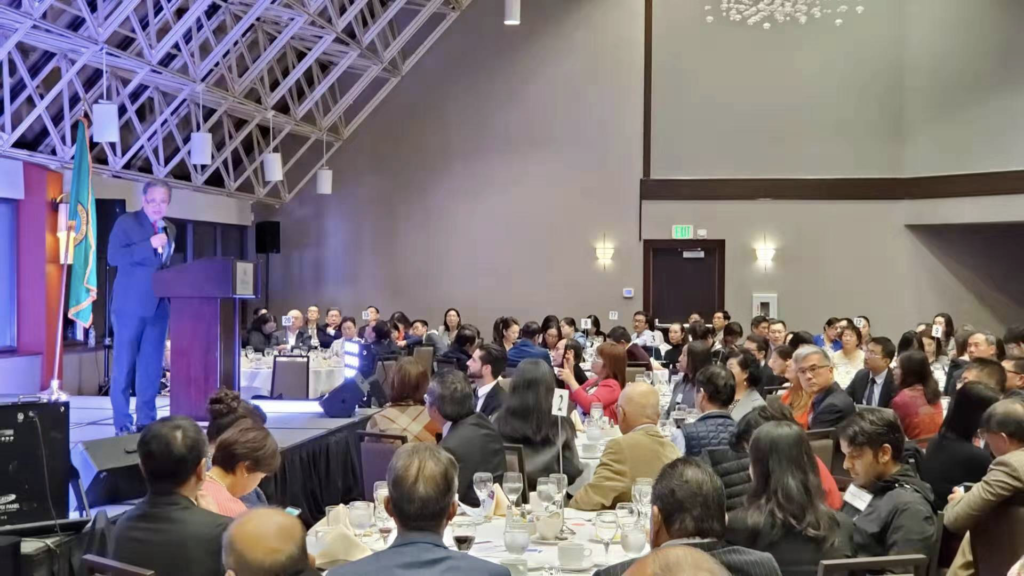
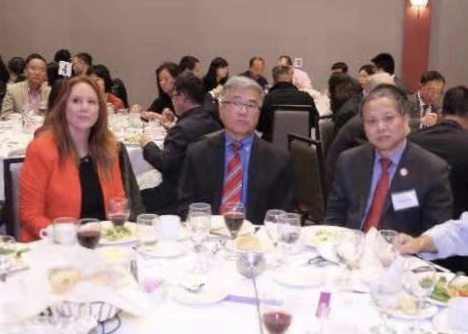
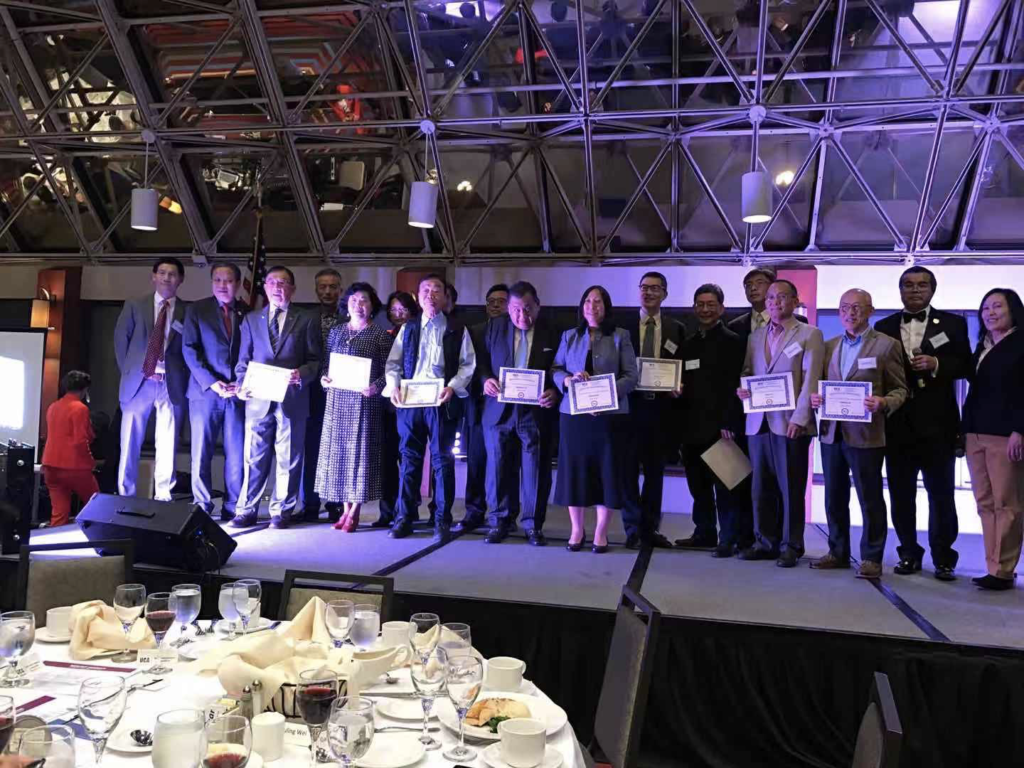
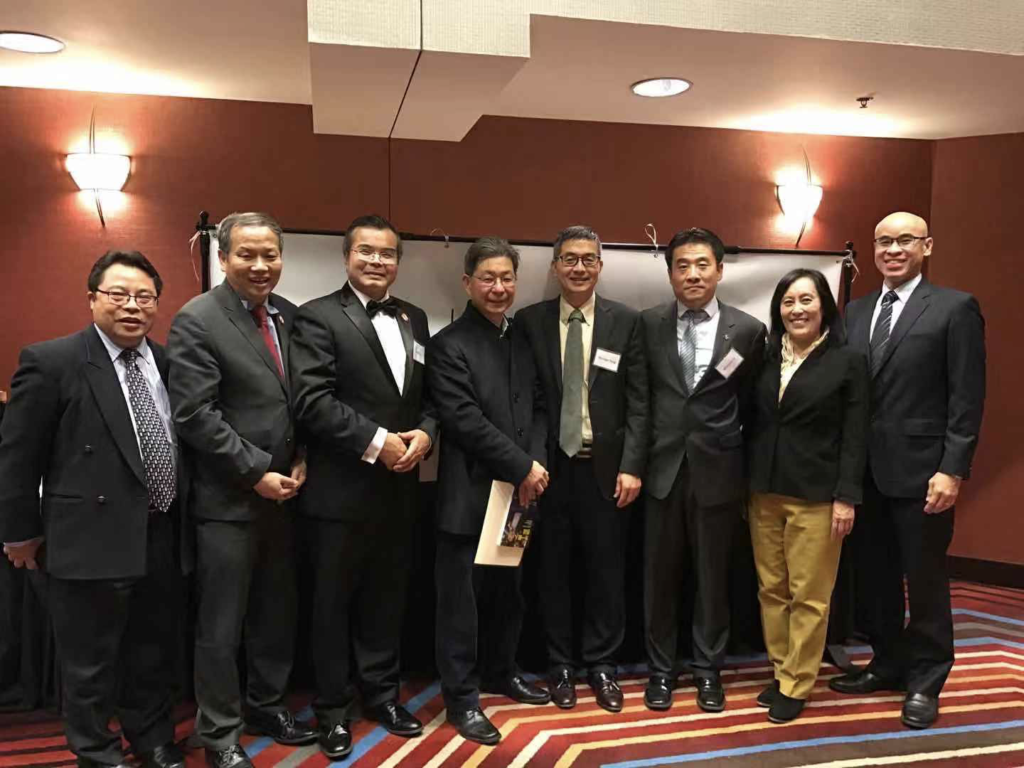
A new chapter of UCA – United Chinese Americans of Washington (UCAWA) hosted its Kick-off Dinner and Reception at Bellevue Hilton. More than 200 guests attended. Among the VIPs there are former Ambassador to China Gary Locke; the Secretary of State Kim Wyman, WA State Representative Mia Gregerson, Former Mayor of Bellevue Conrad Lee, City Council Member Janice Zahn. US Congressman Adam Smith’s representative Garrett Moore also attend the event and red the congratulatory letter from congressman Smith.
As news agency reported, former Governor Gary Locke of Washington commended the huge contribution by Chinese Americans to the United States while warning against a rise in anti-immigrant sentiment in the country. In a speech delivered at the inauguration, Locke recalled Chinese Americans’ contributions to the success of the United States, as early as the key role of Chinese laborers in building the first U.S. transcontinental railroad that boosted American development and prosperity.
He also spoke of the first Chinese American trained in Massachusetts Institute of Technology who became the Boeing company’s first aeronautical engineer in 1916. “In every field from the arts to the sciences, from business to entertainment, politics to sports, Chinese Americans have contributed mightily to America,” said Locke, who is a Chinese American himself. Locke was also a former U.S. ambassador to China, and was secretary of commerce under President Barack Obama’s administration.
In the meanwhile, he slammed an emerging anti-immigrant tendency in U.S. politics. “Today, we’re seeing a return to anti-immigrant sentiment in America, and it’s now targeting the Chinese,” he said.
While referring to the history of Japanese Americans who were put into internment camps during World War II, Locke blasted the anti-immigrant policy of the U.S. government, saying “President (Donald) Trump has enacted policies that would exclude people from countries where Islam is the predominant religion.”
He repeatedly emphasized the importance of diversity to U.S. society. “The strength of America is our diversity of people, cultures, customs, languages, and perspectives of all colors,” he said. He urged Chinese Americans and other Asian Americans to get more engaged in politics to defend their rights. “We have achieved an outsized impact in business, science, and arts and academia that greatly exceeds our numbers,” Locke said.
“If Chinese Americans and Asian Americans are to protect our successes and our constitutional rights, we need more Asian elected officials,” he said. “This is a land of immigrants and our strength as a nation comes from our diversity,” Locke said.
United Chinese Americans is a nationwide non-profit, non-partisan federation dedicated to empowering Chinese American communities through civic engagement, political participation, heritage sharing, youth development and a greater understanding between the United States and China.
UCA among Organizations Endorsing Senator Durbin’s Bill S.2603 on Green Card Reforming
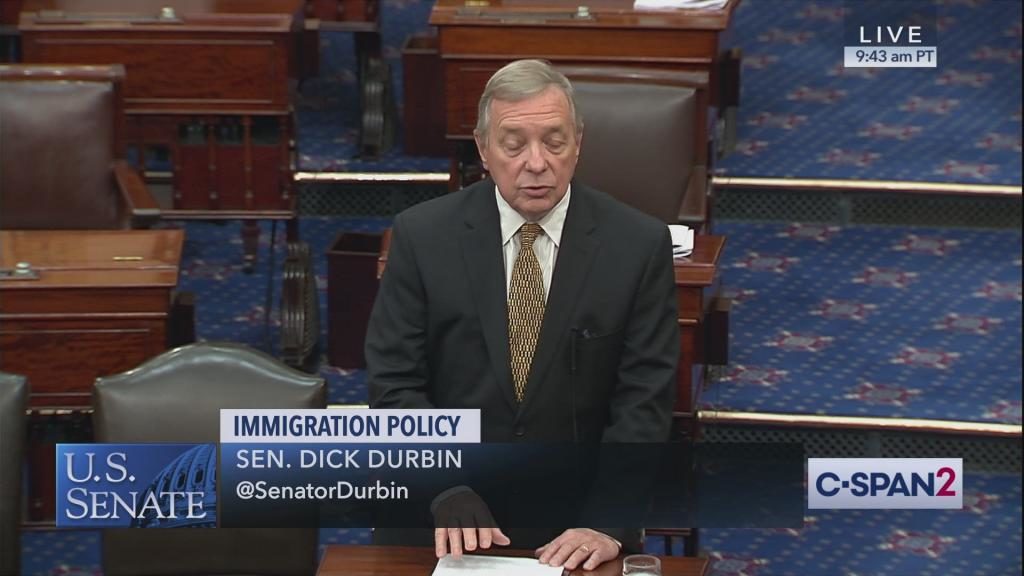
UCA president Haipei Shue visited Senator Durbin and Senator Duckworth’s offices and discussed issues of immigration, S.386 and Chinese American scientists. At the request of Senator Durbin’s office, UCA has endorsed his new legislation “Resolving Extended Limbo for Immigrant Employees and Families (RELIEF) Act” (S.2603), along with a list of other organizations.
Sen. Durbin tweeted that “One of the most serious problems in our broken immigration system is the lack of green cards, leaving immigrants in a crippling backlog. The solution is clear: increase the number of green cards. Proud to introduce the RELIEF Act with @SenatorLeahyto eliminate the backlog.”
During his introduction speech, Durbin criticized the Senate leadership for ignoring the immigration issue, pointing out that, last year, there was only one hearing in the Senate and no vote on the floor.
Reminding his colleagues that they are there to solve the problems the country is facing, he said: “Here is a problem we are not solving: How to deal with the backlog of people highly skilled and important people, like [a] doctor from my hometown of Springfield from India, who wants to have a Green Card, giving him an opportunity to become an American citizen. You know what? I want that doctor to become an American citizen. I want him to get a Green Card. We need him in my hometown, many more like him. I want his family with him.”
However, S.2603 was blocked by Sen. John Kennedy (R-LA) from seeking an Unanimous Consent (UC). The content of the bill can be found at the official press release. Here’s a short summary provided by the office.
Appendix: Resolving Extended Limbo for Immigrant Employees and Families (RELIEF) Act
One of the most serious problems in our broken immigration system is that there are not nearly enough immigrant visas – also known as green cards – available each year. As a result, immigrants are stuck in crippling backlogs for many years.
Close to four million future Americans are on the State Department’s immigrant visa waiting list, which doesn’t include hundreds of thousands of immigrants in the U.S. who are also waiting for green cards. However, under current law only 226,000 family green cards and 140,000 employment green cards are available annually. Children and spouses of lawful permanent residents (LPRs) count against these caps, further restricting the number of available green cards.
The backlogs are a particular hardship on families who are caught in immigration limbo. For example, children of LPRs often “age out” because they are no longer “children,” as defined under immigration law, by the time green cards are available for them.
The solution to the green-card backlog is clear: increase the number of green cards. Immigration law also should treat children and spouses of LPRs as immediate relatives, just as they are considered when their family members become citizens. The Senate did exactly this in S. 744, the comprehensive immigration reform bill which passed the Senate in 2013 on a strong bipartisan vote.
Congress should also lift green-card country caps, which were designed to preserve immigration diversity but have contributed to backlogs because of the insufficient number of green cards and the large number of immigrants in the United States stuck on temporary work visas. However, lifting country caps alone without increasing the number of green cards will not eliminate backlogs for Indian immigrants (the nationality with the most people in the employment backlog), and will dramatically increase backlogs for the rest of the world.
The RELIEF Act will:
• Eliminate the family and employment green card backlog over five years in the order in which applications were filed (based on S. 744, the Senate CIR bill).
• Keep American families together by classifying spouses and children of LPRs as immediate relatives and exempting derivative beneficiaries of employment-based petitions from annual green card limits (based on S. 744, the Senate CIR bill).
• Protect “aging out” children who qualify for LPR status based on a parent’s immigration petition.
• Lift country caps (House-passed H.R. 1044).
• Extend the “hold harmless” clause from H.R. 1044 that exempts immigrant visa petitions approved prior to enactment from the lifting of country caps to petitions approved for five years after enactment.
Welcome to the Chinese American Women in History Conference
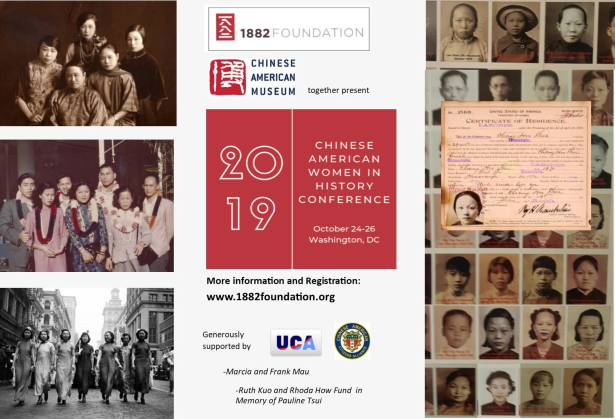
CAWH Conference flyer
UCA is honoured to co-sponsor the Chinese American Women in History (CAWH) Conference, coming soon to Washington, D.C.
The 1882 Foundation and the Chinese American Museum DC present a conference on CAWH, exploring a century of experiences framed by the enactment of the 1875 Page Act, that targeted Chinese women for exclusion from the US, and the 1965 Hart-Celler Act, landmark immigration reform that finally enabled migration of Chinese spouses and families.
The conference will be held in Washington, DC, October 24-26, 2019 at three convenient locations in a 2-block radius: the Chinese American Museum, the historic Charles Sumner School Museum and Archives, and University of California Washington Center. The conference will include scholarly panels, community storytelling, and film screenings that feature the pioneering work of Chinese American women filmmakers.
The conference is open to anyone interested in the topic whether as professional scholars or for personal curiosity. For more information and registration for all programs ($50 per person), click the registration link here:
Science and Technology Caught between the United States and China Conference
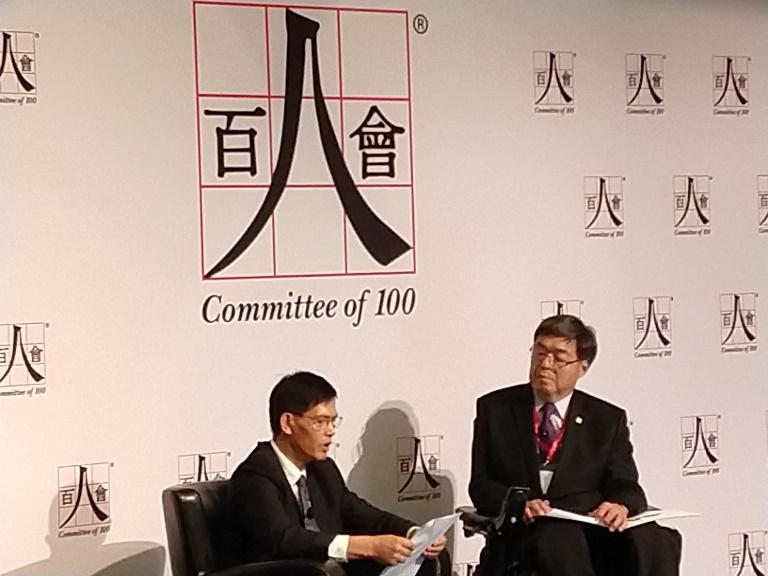
The Committee of 100 (C100) convened nearly 300 leading policy makers, legal experts, educators, business leaders, scientists, and community leaders in Palo Alto, Ca. on September 28, 2019 to address the human impacts of geopolitics. In addition to sixteen community partners, including Civic Leadership USA (CLUSA) and United Chinese Americans (UCA), the conference was also co-sponsored by thirteen professional organizations, including the Society of Chinese Bioscientists in America (SCBA), the Chinese American Hematologist and Oncologist Network (CAHON), and the Chinese Biological Investigators Society (CBIS), who issued the first open letter in the Science Magazine and drew a response from the leadership of National Institute of Health (NIH) on March 22, 2019.
After the opening welcome by Roger Wang, Chair of C100, Ambassador Gary Locke set the tone of the conference: “The U.S. – China relationship is the world’s most consequential bi-lateral relationship. We must be concerned about security concerns and condemn illegal activity, but in recent years there have been many cases of wrongful prosecution. Our pride in our heritage does not mean we are any less loyal or patriotic to America.” He was followed by Professor Susan Shirk, Chair, 21st Century China Center at the School of Global Policy & Strategy, University of California, San Diego, and former U.S. Deputy Assistant Secretary of State. She gave the opening keynote: “China and the U.S. wove together a dense fabric of trade, technology, and education – forming a nexus of what became globalization.” “To preserve America’s open society and vibrant research environment, we should double down on American openness, not put limitations on scientific collaboration.”
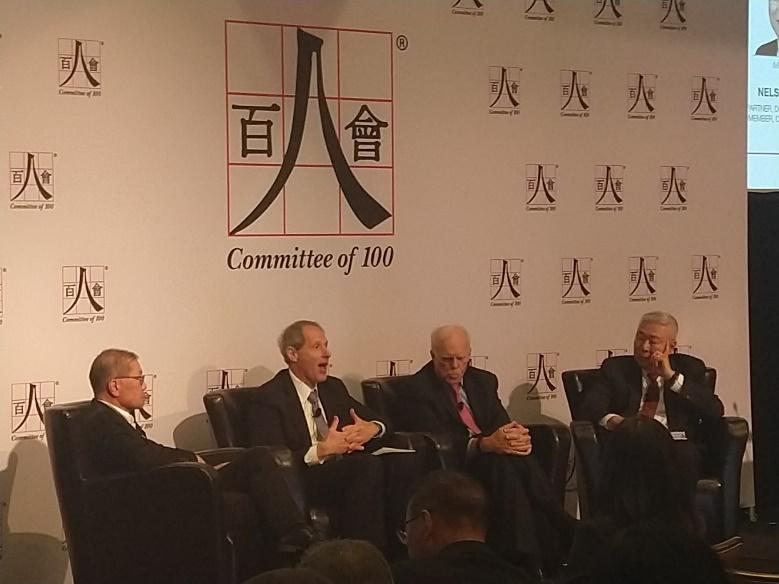
Dr. David Ho, Scientific Director of Aaron Diamond AIDS Research Center, Dr. Thomas Rosenbaum, President of California Institute of Technology, Dr. John Hennessy, Chairman of Alphabet Inc. and moderator Nelson Dong of C100 at the keynote panel.
Dong pointed out that “76% of 1,466 patents issued in 2011 to top 10 U.S. research universities had at least one foreign born inventor.” He also presented data showing the high percentages of American Nobel laureates and prize winners, science and engineering workers and student who were foreign-born.
Dr. Ho argued, worried that NIH’s crackdown had already gone too far. Ho argued that the known cases are “largely due to sloppiness and a degree of greed” by a few scientists. “A small number of ‘bad apples’ does not connote a systemic problem that requires federal intervention when it could be addressed at the institutional level with policies already in place.”
President Rosenbaum, “The strength of the United States as a scientific, technological and economic power has depended crucially on immigration. Recent demonstrated examples of violations of scientific ethics, coupled with fears for U.S. economic competitiveness and national security, may well lead to governmental restrictions that broadly and severely restrict the flow of people and ideas.”
Chairman Hennessy pointed out that “Immigrants come to this country to make America a better country. There are a number of important American companies with foreign born founders. If you cut that off, you cut off an important part of our nation’s economic vitality.”
Dr. Steven Chu, Nobel Laureate and Former Secretary of Energy, and Congresswoman Judy Chu gave the plenary speeches at lunch. Robert Gee of C100 and Former Assistant Secretary of Energy gave a policy briefing in the afternoon.
David Stilwell, U.S. Assistant Secretary of State for the Bureau of East Asian and Pacific Affairs joined by live video conference from the United Nation.
Congressman Adam Schiff, chair of House Intelligence Committee, also delivered a pre-recorded speech.
It was followed by the “Business and Technology Panel” on the impact on business and the technology industry with Ambassador Craig Allen, President of U.S.-China Business Council and Carl Guardino, President and CEO of Silicon Valley Leadership Board. The panel was moderated Jerry Yang of C100 and co-founder of Yahoo! Inc.
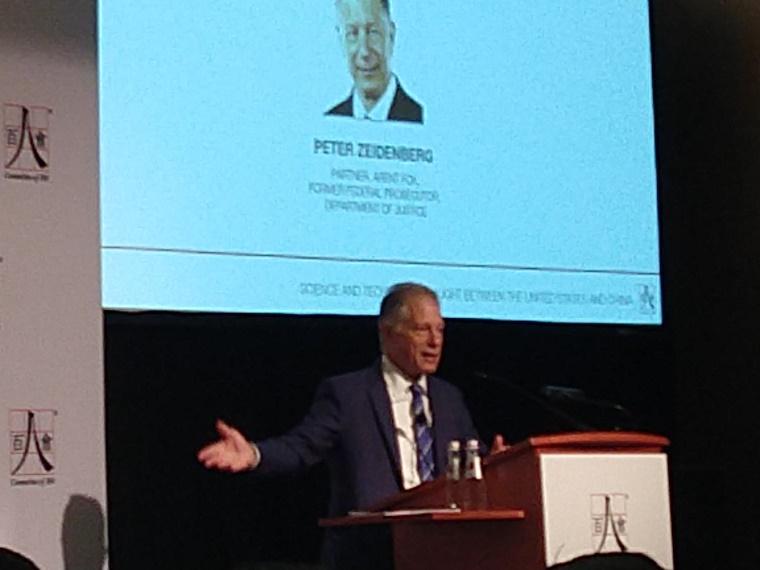
John Hemann, Chief of the Special Prosecutions Section of the U.S. Attorney’s Office for the Northern District of California and Peter Zeidenberg, former Federal Prosecutor, Department of Justice at the “Law and Justice Panel” on legal perspectives and impact moderated by Brian Sun of C100.
Brian Sun opened the panel with a discussion of Chinese Americans contributions and several U.S. Government initiatives and investigations of espionage cases and false accusations. As a lawyer with Jones Day in Los Angeles, California, he warned the audience that participating in the Thousand Talents Program “puts a target on your back. So don’t be stupid.”
Zeidenberg talked about the cases of Xiaoxing Xi and Sherry Chen that he represented. It set the stage for “A Personal Perspective” by Professor Xiaoxing Xi. Even though he has shared what he and his family went through many times already, it brought Xi to tears again. Then Conference Chair Charlie Woo of C100 annnounced the good news that the American Physics Society just named Xi the 2020 recipient of Andrei Sakharov Prize “for his steadfast advocacy in support of the U.S. scientific community and open scientific exchange.”
Woo also gave the closing remarks, “It is our hope to come together and find balanced solutions that protect national security, uphold the civil liberties of all Americans, and continue to foster the welcoming environment for the development of science, technology and research that America has always been known for.”
UCA Co-Sponsored 2019 National Civic Leadership Forum
Civic Engagement and Empowerment in 2020 Census and 2020 Election Season are key areas of campaign for UCA
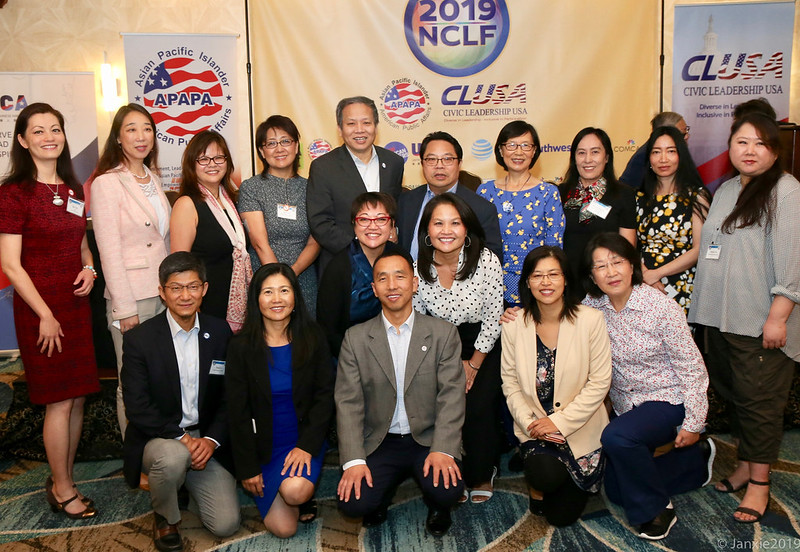
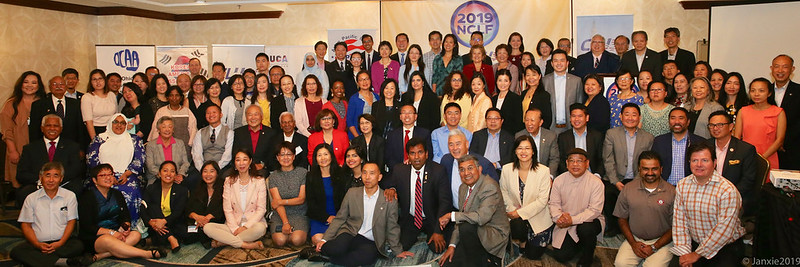
UCA members attending the NCLF 2019
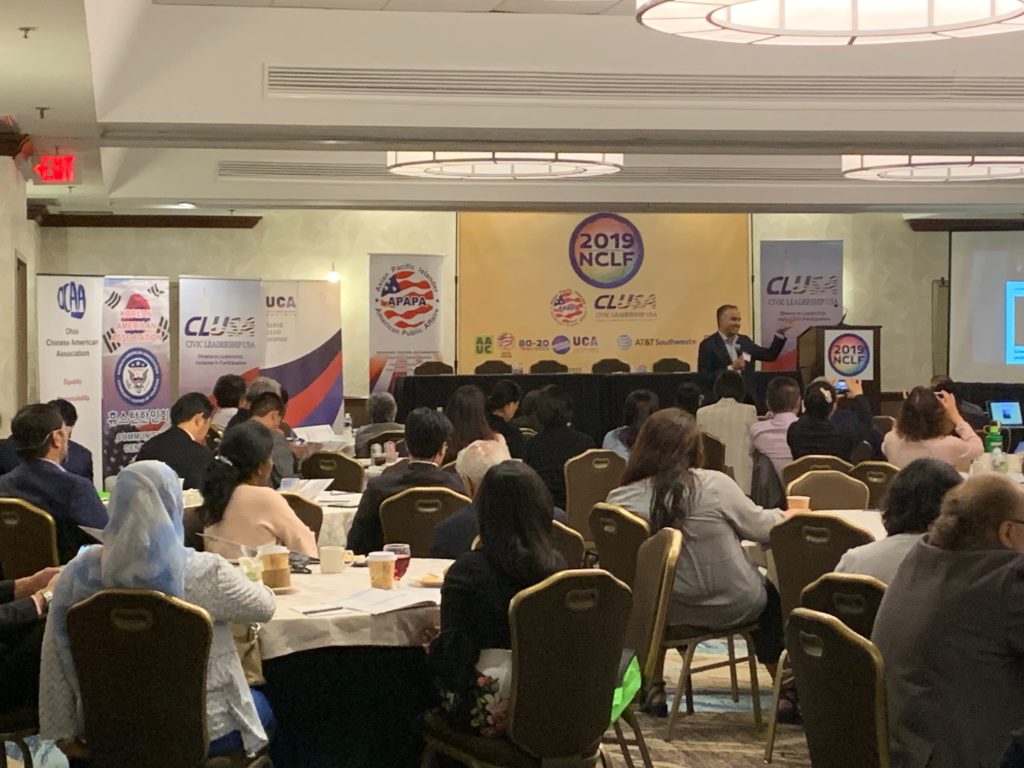
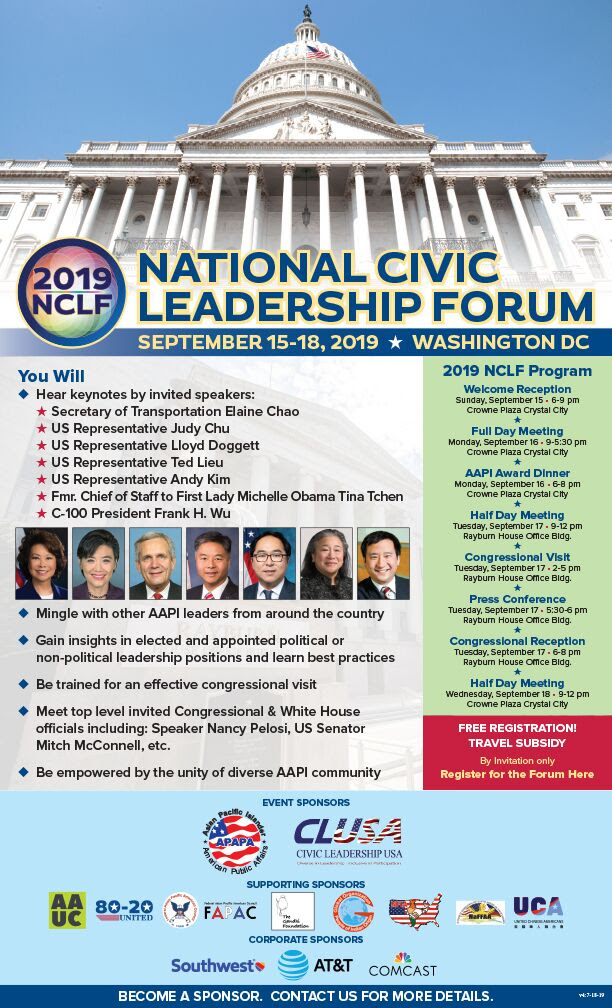
Washington, DC – UCA has successfully hosted and supported its members to participate in the 2019 National Civic Leadership Forum (NCLF) held Sep 15-18th, in Washington, DC. The conference was attended by about 200 Asian Pacific Islander American (AAPI) community leaders representing 100 civic organizations across the country. The conference was led by Asian Apacific Islander American Public Affairs Association (APAPA) and Civic Leadership USA (CLUSA), with UCA being one of the major co-sponsoring AAPI organizations, including, Asian American Unity Coalition (AAUC), Asian Pacific Islander American Vote (APIAVote), New American Leaders (NAL), 80-20 United, Asian Pacific American Institute for Congressional Studies (APAICS), National Federation of Filipino American Associations (NaFFAA), Federal Asian Pacific American Council (FAPAC). The theme of the conference is “Empower AAPI for 2020”, with an aim to increase civic engagement in the AAPI community, build a broad coalition among many different AAPI organizations, and prepare for the 2020 elections and decennial census.
AAPI population is about 24.2 million in 2018 according to the Census Bureau, a 27% increase since 2010 Census, though this could be a significant underestimate because of undercount of the population. Many AAPIs are successful business owners, lawyers, doctors, and professionals, who are among the major contributing force to American economy and society. Yet AAPIs are also highly diverse and segmented with more than 21 major ethnic groups, over 30 languages spoken, and predominantly immigrants. These communities have experienced lowest voter turnout and census participation in the past two decades.
NCLF attendees and organization leadersMCLF meeting session
Facing the challenges in 2020 census and historical 2020 election season coming up, AAPI civic leaders recognized the importance of gathering in Washington DC, discussing pressing issues and urgent threats to the communities that were exacerbated by the rise of anti-immigrant sentiment and hate crimes in recent years. More than 100 AAPI civic organizations representing twelve (12) ethnic groups were represented at the NCLF, including Bangladeshi, Cambodian, Chinese, Filipino, Hawaiian or Pacific Islanders, Indian, Indonesian, Japanese, Korean, Pakistani, Thai and Vietnamese.
AAPI Congressional members, including Rep. Judy Chu, Ted Lieu, former Rep. David Wu, attended the conference and encouraged participants to be leaders and champions of the AAPI community. Secretary Elaine Chao (Department of Transportation), and members of the Asian American Caucus in US Congress also sent their representatives and encouraging remarks to the meeting attendees. Other Congressional members and speakers of the meeting included, Tom McClintock, Brendan Boyle, Lloyd Dogget, Bobby Scott, Kurt Schrader, Earl Blumenauer and Sheila Jackson Lee.
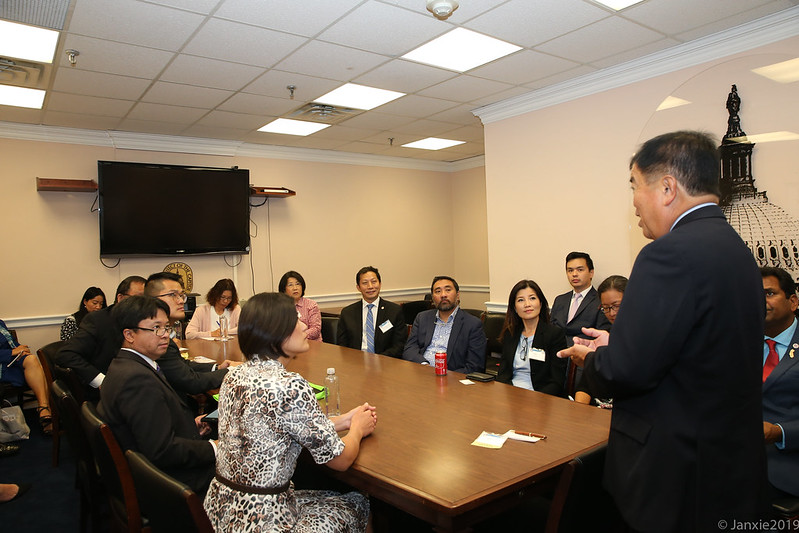
During the Congressional Visit session of the conference, AAPI leaders visited more than 70 US House and Senate representatives, and communicated the most urgent issues concerning the AAPI communities, including, 1. cumbersome and outdated immigration procedures that created crowded and lengthy backlogs with inhumane treatment of immigrants and families; 2. lack of funding and support in 2020 census especially for the AAPI community; 3. threats to civil rights under the scrutiny of national security caused by increased tension of international relations in the current administration. UCA has organized a similar Congressional Visit in its 2018 annual convention in Washington DC, advocating for civil rights protection for the Chinese community.
AAPI civic organizations including Asian Pacific Islander American Vote (APIAVote), Asian American Advancing Justice (AAJC), and others, along with AAPI elected officials and organization leaders, reviewed key statistics of the AAPI community and shared the best practices of voter engagement, leadership development, and how to run social-political campaigns. Full details of the conference can be found at the meeting website of https://whova.com/web/nclf_201909/.
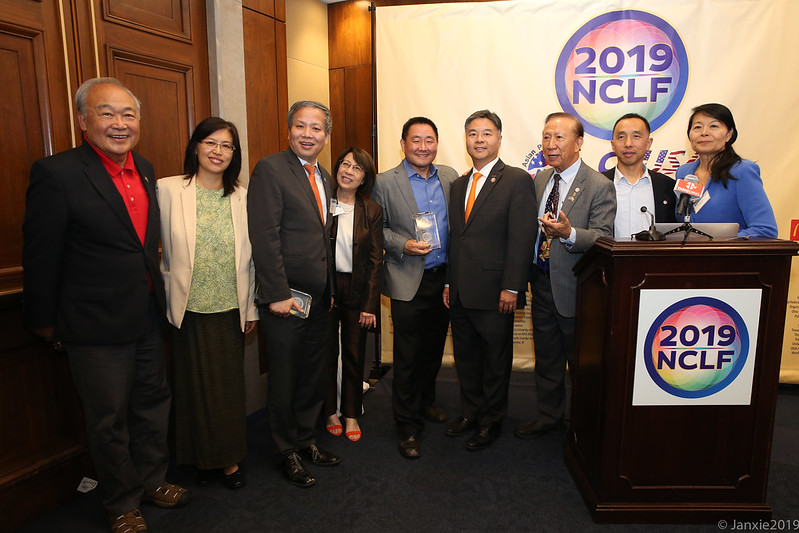
The conference culminated in a press conference, Congressional Reception, and ceremony on Sep 17th, when 90 community leaders attended co-signed a joint statement by participating organizations. The joint statement highlighted the contribution of the AAPIs in their professional fields and economic impact. At the same time, it called AAPI communities to increase efforts in civic engagement and empowerment, to participate in volunteerism, philanthropy, public policy advocacy, census and election, and other areas of social-political activism.
UCA board members played key roles in organizing and supporting the meeting, including Joy Guo, organizing Committee member, Chaoyu Xie, Campaign 101 session chair, Mary Liu, Keynote Speech session chair, Helen Shih, Congressional Visit session chair, and Xie Jan, official photographer. UCA president Haipei Xue, and Chairman of the board, Xiaoyan Zhang, were among the guest speakers at the conference. Vincent Wang (NCLF program chair) and Qiu Hong are Ohio APAPA members and UCA community partnership representatives who are the key organizers and supporters of the conference. Other UCA board members and community partnership leaders representing UCA included Zhida Song-James, Paul Li from Maryland, Lily Chen from Illinois, Hardy Li and Qi Hong Wagner from Washington state, and Zhaobang Zeng from North Carolina.
Latest update: On October 17, 2019, Senator Durbin blocked another attempt to pass S.386 via Unanimous Consent (UC).
The following contents first published on September 26, 2019.
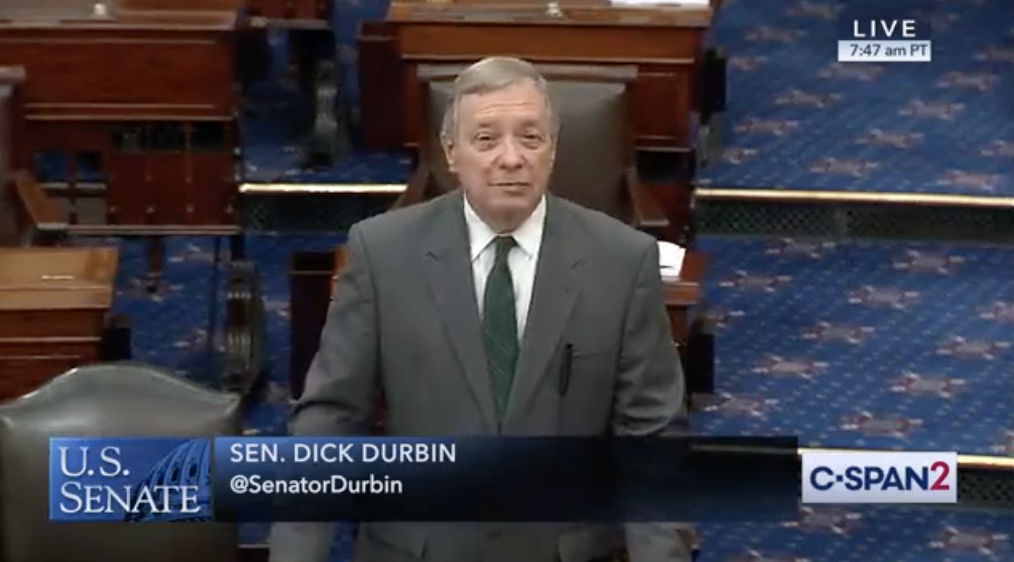
Sen. Durbin (archive photo)
Hours ago, Senator Dick Durbin (D-IL) blocked S.386 and the unanimous consent vote has once again been delayed. After Senator David Perdue (R-GA) dropped his objection after reaching agreement with the bill’s sponsor, Sen. Mike Lee (R-UT). Sen. Durbin blocked this “green-card giveaway bill to Indian graduates” because “it doesn’t give away ample green cards to international graduates from many international locations”.
We attribute this win to the collective actions of the communities including fellow citizens from various ethic background: Chinese, Korean, Arabic, Iranian, etc. We celebrate the good news with everyone who worked hard in contacting the offices of multiple Senators. This is a superb example of political engagement, with combined efforts from grass-root movement and organizational actions. Let’s continue to push for a public hearing and a true reform of the employment-based green card system.
We suggest the community keep reaching out to the Senators via phone and email or in person. In addition, a letter co-signed by multiple local organizations, preferably from diverse ethic background, may be helpful. The letter of opposition show above can be an example; the following can be another for your reference.
September
24, 2019
Honorable Sen. David Perdue 3280 Peachtree Rd, Suite 2640 Atlanta, GA 30305
RE: S.386
Dear Senator
Perdue:
On Behalf of Chinese
American community in Atlanta area, we urge you to oppose Senate legislative
Bill S.386.
Legislative Bill
“Fairness for High-Skilled Immigrants Act of 2019” is misnamed and cannot be
considered “fair” under any circumstances. By lifting the 7% country caps and
allocating almost 100% of all available employment green cards to nationals
from one country alone – India; S.386 will shut out nearly all nationals from
190+ other countries for many years to come. If passed, S.386 will absolutely
reduce the required skill, industry and ethnic diversity that American needs to
continue healthy growth into the future.
As you know, the
State of Georgia relies on skilled immigration workers in certain fields, such
as rural area hospitals (nurses and physicians) and biomedical industry. Losing
the ability to recruit these workers will have significant negative impact on
our state.
The root cause of
the employment-based green card backlog stems from many years of H1B visa abuse
where IT outsourcing companies flooded the H1-B lottery program with applicants
on behalf of Indian nationals and dominated visa distribution. Passing
legislation S.386 would simply reward this H1B visa abuse. We ask that you
resist the temptation to implement convenient, but entirely ineffective,
legislation “solutions” that solve nothing, regarding the very real problem of
the employment-based green card visa backlog.
The best solution
to this issue it not to scrap the per country cap, but to expand the number of
green cards available and to enact
a merit-based system for awarding employment green cards that rewards the most
qualified, talented, and likely to succeed.
While we do
understand that there is a problem to be solved with the backlogged green card
applicants, clearly S.386 is not designed with America’s best interest in mind.
We respectfully request that you oppose this bill moving forward by unanimous
consent and, at the very least, ensure that the bill proceeds through regular
order so that it is properly debated, and its implications fully assessed.
So far, 18 national organizations, including UCA, have joint their forces to oppose S.386. We expect more national organizations to join this coalition in the coming days. Please share the letter with staffers of senators when you contact those offices.
To: Members of the U.S. Senate
Dear Honorable Senators,
As organizations representing immigrant
communities who would be harmed byH.R.
1044/S. 386, the so-called Fairness for High Skilled Immigrants Act, we write
to express our opposition to this legislation. Given that this proposal would
remove a pillar of our immigration system and have significant repercussions,
we urge Senators to block the bill from moving forward for unanimous consent.
We do so for the following reasons:
The bill would not fix the green card backlog faced by visa applicants. Instead, it would merely shift the backlog onto other nationals, reducing the diversity of the green card process.
The bill offers a zero-sum approach that pits one group of immigrants against others to fight over a broken immigration system.
A true solution would protect diversity by expanding the number of green cards available.
We agree that the substantial backlog of
visa applicants is unfortunate and needs to be addressed. But H.R. 1044/S. 386
is not a fair solution and risks further problems, such as creating what the
State Department has referred to as a “monopoly” of the green card process for
one group of nationals and eliminate any diversity from the process. We urge
Senators to object to the bill moving forward by unanimous consent and reject
what would be a counterproductive attempt at fixing a long-standing, complex
problem.
Sincerely,
80-20 United
Arab American Institute
Asian Pacific Islander American Public Affairs (APAPA)
Asian Pacific American Labor Alliance, AFL-CIO
Council on American-Islamic Relations
Emgage Action
Federal Asian Pacific American Council (FAPAC)
Italian American Democratic Leadership Council
Korean American Service & Education Consortium (NAKASEC)
National Iranian American Council Action
National Korean American Service and Education Consortium (NAKASEC)
OCA – Asian Pacific American Advocates
Pakistani American Political Action Committee (PAKPAC Membership)
Project South
South Asian Americans Leading Together (SAALT)
United Chinese Americans (UCA)
United Community Oriented Development Association (UCODA)
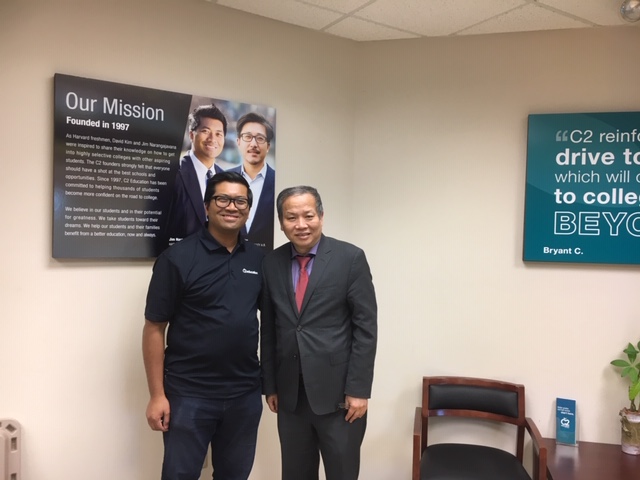
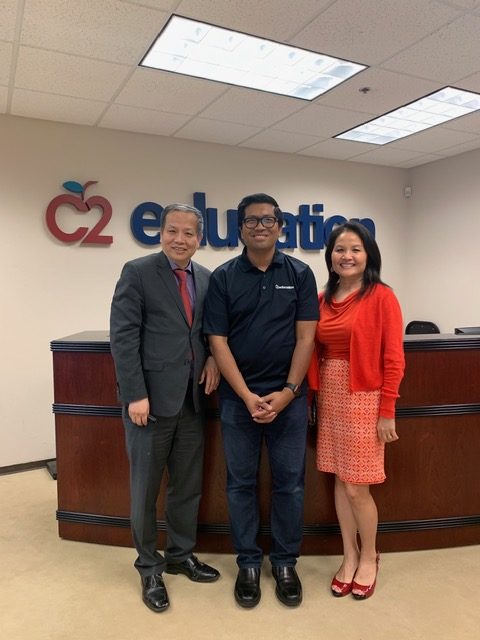
Haipei Shue, UCA President, and Lily Chen, senior advisor and UCA Illinois Chapter President visited C2 Education (www.c2educate.com) headquarters in Atlanta , Georgia, on September 6, 2019.
After working with C2 Education in the past several months , UCA and C2 Education reached an agreement for partnership. We are pleased to announce that that C2 Education is a corporate sponsor for 2020 Chinese American Convention, and UCA will help reach Chinese American community through UCA network to promote C2 test preparation and tutoring business, which is popular with many Chinese families. C2 Education was 2018 Chinese American convention silver sponsor and one of its founders Jim Narangajavana attended the Convention. C2 Education Chicago centers have sponsored several UCA IL programs and events. We thank C2 Education, and look forward to a great partnership.
If you know any corporation or individual business interested in becoming a UCA corporate partner or becoming a 2020 Chinese American Convention sponsor, please contact info@ucausa.org, or call us at (202) 642-5060.
Lee C. Bollinger, president of Columbia University, published an opinion piece on Washington Post, titled “No, I won’t start spying on my foreign-born students“, in response to heightened pressure on academic research, joining a growing list of other institutions making similar statements. The content is reposted here.
The FBI has stepped up its scrutiny of research practices at college and university campuses — including mine.
Law enforcement and intelligence agencies determined to thwart the illegal transfer of intellectual property to foreign rivals are encouraging U.S. academics and administrators to develop more robust protocols for monitoring foreign-born students and visiting scholars — particularly if they are ethnically Chinese.
With students returning to campus, these policing attempts thrust economic and political concerns into fierce conflict with First Amendment freedoms.
To be sure, government-funded academic research in such national security realms as cybersecurity and bioterrorism is justifiably sensitive. Likewise, academic research conducted in collaboration with U.S. companies — a principal target of most unlawful technology transfers — leads to commercial innovations that warrant protections. Universities have an obligation to comply with existing security protocols, identify sensible ways to bolster them, and cooperate fully with law enforcement authorities and corporate research partners if clear acts of espionage are suspected. To the extent we are falling short in any of these areas — and yes, there have been isolated incidents of academics sharing sensitive intellectual property with foreign governments — we can and must do better.
At the same time, however, only a fraction of the research conducted on campus is “secret.” Indeed, the reality is just the opposite. Academic research is intended to be shared — released into the public domain to advance human progress. Groundbreaking medical discoveries, agricultural innovations credited with saving billions of people worldwide from starvation, the Internet, artificial intelligence: All are the result of publicly available, university-based research.
Consequently, a foreign national need not fly halfway around the world to “infiltrate” our great universities and learn about our latest insights and findings: With some notable exceptions,she can type words into a search engine and peruse peer-reviewed academic journals from the comfort of an office or dorm room overseas. Or, similarly, she can visit the U.S. Patent and Trademark Office’s website, where applications for patent protection provide detailed descriptions of recent innovations.
And so, most worrisome to me, as someone who has spent five decades advocating freedom of expression and assembly, is the notion that university personnel — and perhaps students themselves — should be asked to monitor the movements of foreign-born students and colleagues. This is antithetical to who we are.
The mission of a university is to foster an open atmosphere conducive to speculation, experimentation and creation. American higher education is the envy of the world not in spite of, but because of, its unrivaled commitment to openness and diversity. Attracting — and welcoming — the brightest minds in the world, regardless of nationality or country of origin, is what we’re all about.
To put it another way, the U.S. university model is a strategic advantage, not a hindrance to American competitiveness. Our administrators, professors and research scholars are not, and should not become, an arm of U.S. law enforcement. Ironically, what the FBI apparently considers our great vulnerability is, in my view, our greatest strength.
At Columbia University, where I am president, thousands of students and faculty represent more than 150 countries. We stewards of major research universities couldn’t contain intellectual freedom even if we wanted to. The incompatibility of university culture with systematic scrutiny may explain why even law enforcement officials who have visited our campus have offered little prescriptive guidance, instead offering that we should be vigilant.
The unauthorized use of intellectual property by overseas competitors is a serious problem. But the surveillance of foreign-born scholars in this country is the wrong solution. If law enforcement agencies have legitimate concerns, it seems to me that they should identify and monitor those they designate as “suspicious people” based on real threats, not broad worries about entire nationalities.
A more effective approach — advocated by many of my colleagues in higher education as well as the bipartisan Commission on the Theft of American Intellectual Property — is to expand the number of green cards awarded to foreign-born graduates of our great colleges and universities. Many of these international scholars, especially in the fields of science, technology, engineering and mathematics, would, if permitted, prefer to remain in the United States and work for U.S.-based companies after graduation, where they could also contribute to the United States’ economic growth and prosperity. But under the present rules, when their academic studies are completed, we make it difficult for them to stay. They return to their countries with the extraordinary knowledge they acquired here, which can inform future commercial strategies deployed against U.S. competitors.
The mandate of our colleges and universities is to pursue open, robust inquiry across a wide range of topics. Our institutions of higher learning should do more — not less — of what made the United States the most innovative nation in the history of the world.
The U.S. and China need each other. We need each other as trading partners; we need each other as major world leaders. And our universities need each other.
As we count down the final days of summer and get ready for another academic year, let me tell you about my most interesting trip of the summer.
In late May, I had the honor of leading a delegation to China. While not my first trip to that country, it was my first trip as UW chancellor.
Why visit at a time when the geopolitical relationship between the countries is strained? Quite simply, UW and China need each other more than ever and can learn much from one another.
On the May trip, multiple groups from campus, including the International Division, the Wisconsin Foundation and Alumni Association, International Student Services and several of our schools and colleges, participated in various aspects of the trip to help make it a success.
It was a busy itinerary, including meeting with our alumni, welcoming incoming Chinese students and their families to UW, attending conferences organized by UW faculty at Chinese universities, meeting with higher education leaders, and conducting industry-partnership conversations.
By way of background, you might know that UW’s history with China goes back more than 100 years. A century ago, we were the top public university (and 4th largest overall) recipient of Chinese students enrolling in American universities through the “Boxer Indemnity” scholarship fund, the main route at that time for Chinese students to attend college in the U.S.
Forty years ago, then-Chancellor Irving Shain was the among first American university presidents to visit China after it re-opened to the outside.
Today, we have 3,200 students from mainland China studying at UW. They comprise the largest group of international students at UW. Between 2000 and 2018, their share increased from 25% of all international students to 55%.
We welcome these students and scholars to Madison and do everything we can to support them and help them to be successful. Their presence on campus enriches the residential experience of all of our students.
Big, public research institutions like UW that educate thousands of students and conduct groundbreaking research have to have a global reach if we’re going to carry out our mission. Unlike in past decades, this relationship has become increasingly bilateral. Our scientists are collaborating with Chinese scientists. While there are still far more Chinese students coming to UW, increasing numbers of our U.S. students are interested in going to China. Our faculty are organizing international conferences in China with colleagues from that country – and vice versa. During my recent visit, a conference on higher education organized by a UW faculty member in collaboration with Peking University allowed me to address colleagues in China. All of these connections create new opportunities for all involved.
We need to be smart and respectful in all of our international collaborations. Full transparency and disclosure will benefit all partners and everyone involved in collaborative research projects.
The strategic partnership agreement that we signed with Nanjing University is particularly significant. We have a long-shared history of cooperation with Nanjing – this is the campus that made the most significant impression on Chancellor Shain in 1979.
In signing our most recent agreement, UW-Madison and Nanjing are seeking linkages across disciplines that can have a lasting and positive global impact. This lays the foundation for an expanded relationship featuring many more years of research collaboration and student exchange.
We also are collaborators in nine active research partnerships with Chinese universities, including a project that brings our wildlife biologists together with ones at Peking University to understand the impact of development on the Asiatic Black Bear population.
Our faculty talk about the two-way nature of their work with Chinese counterparts. As Chinese universities expand in size and quality, and as top scholars work in China, we now meet as full partners and potential collaborators with much to gain on both sides.
Collaborations can create the potential for economic development, with six current industry projects located in China, including a $2.5 million project with Nestle to develop and run a dairy farming institute.
There is growing concern about security issues with China, particularly around intellectual property. We need to be smart and respectful in all of our international collaborations. Full transparency and disclosure will benefit all partners and everyone involved in collaborative research projects.
But I am proud of the number of scholars at UW – both US citizens and citizens of other countries – who have ties to China, and I support the work that they do.
The U.S. and China need each other. We need each other as trading partners; we need each other as major world leaders. And our universities need each other. We can learn more working together than working in silos.
As long as we both share a commitment to open inquiry, outstanding education, and sharing knowledge and discoveries in a way that improves people’s lives, we can work together.
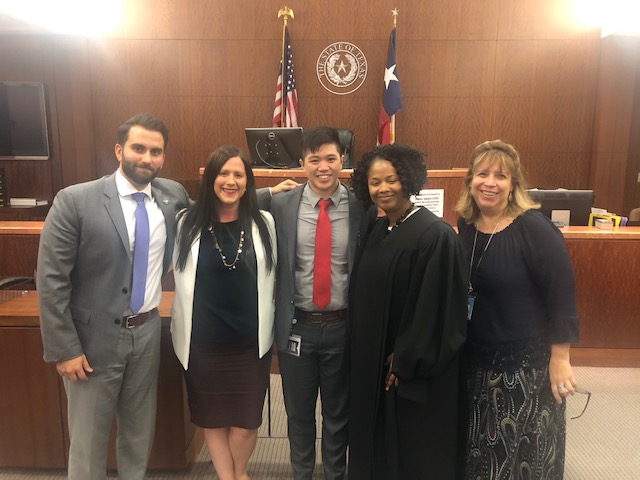
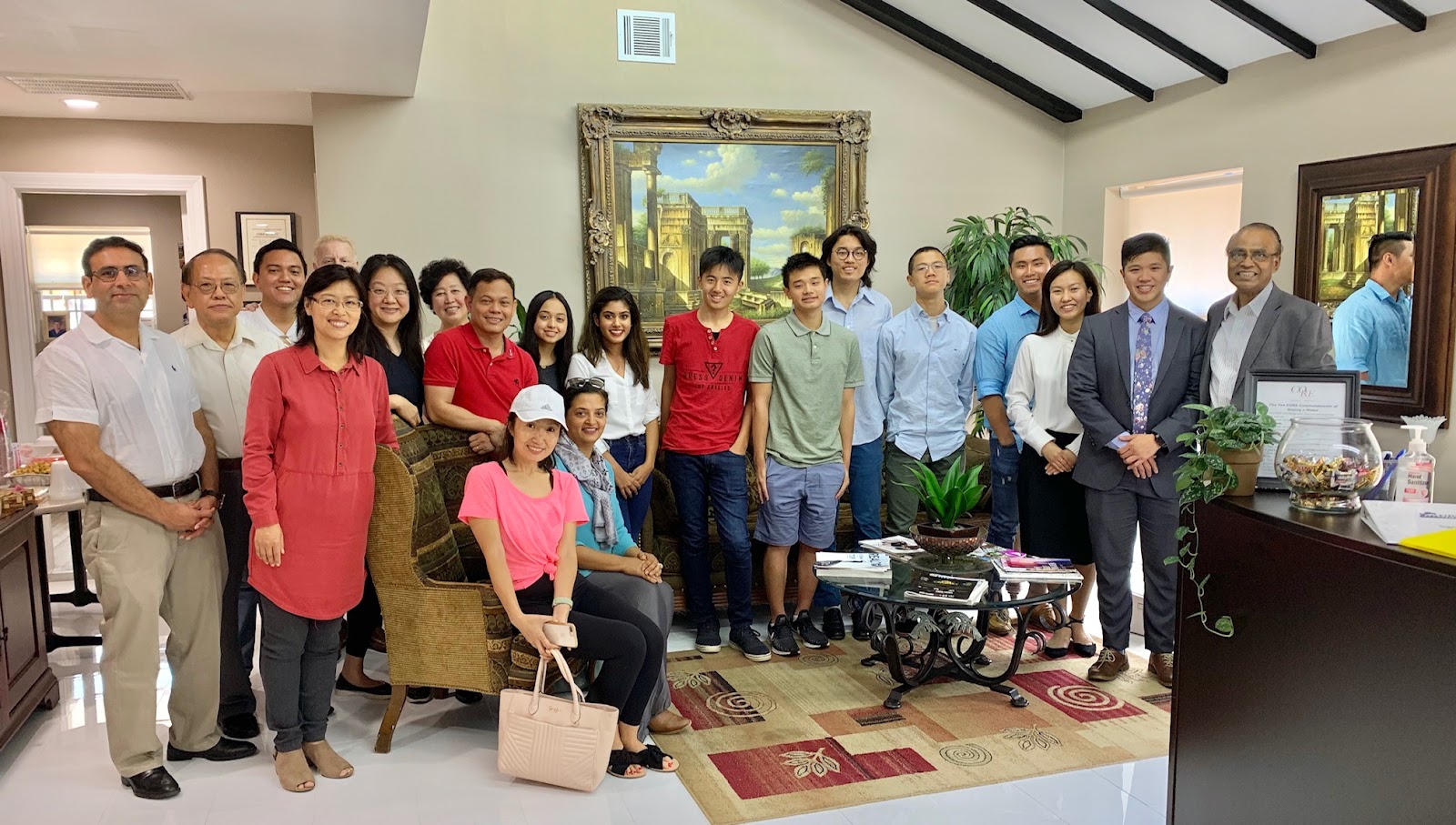
Houston Asian American Community Celebrating Completion of the 2019 Summer Student Internship in Civic Leadership
8/18/2019
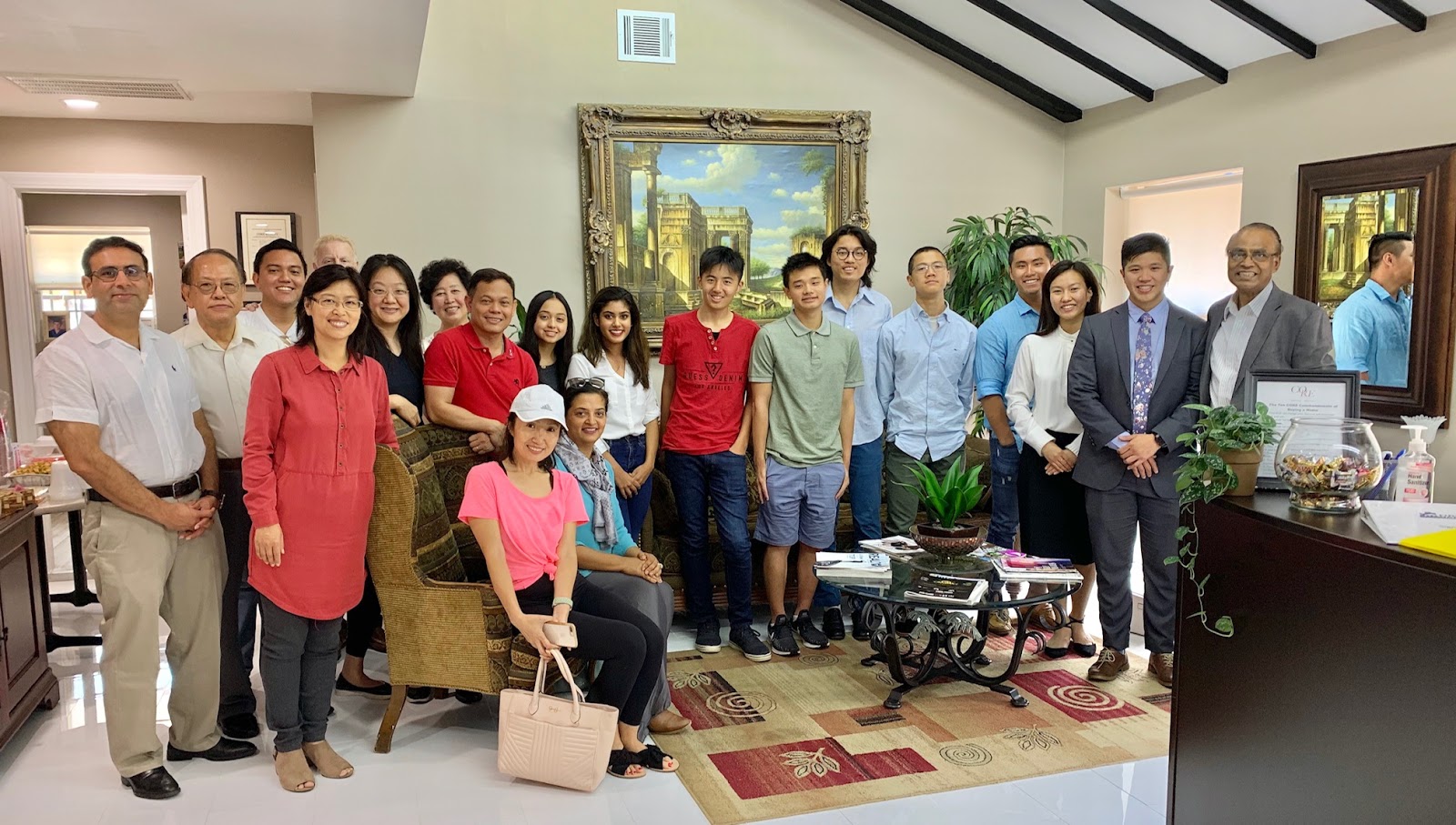
Aug 17th Saturday, United Chinese Americans (UCA) and OCA Asian Pacific American Advocates – Greater Houston jointly hosted the Graduation Ceremony and Award Luncheon for Houston students who have completed the Civic Leadership Internship in the 2019 summer program. The event was attended by students, mentors, parents, and community leaders in the greater Houston area.
Program director Dr. Helen Shih, representative of UCA Houston and a board member of UCA, said she started this program this year to increase the public awareness and number of Asian American Pacific Islander (AAPI) students interested in public services and governmental affairs. The internship was sponsored by Civic Leadership USA (CLUSA), a national non-profit organization promoting civic advocacy in the AAPI community. This summer, CLUSA has funded about 30 summer student internship programs in different cities and regions in the US.
During the event, program director for OCA internship, Debra Chen, who is also the executive director of OCA – Greater Houston, emphasized the importance of the 2020 census advocacy, which is the focus of the student internship. She said during the 2010 census which was 10 years ago, there was no federal resource allocated to the AAPI community. However, census data directly impact governmental resources received by the community, election redistricting, and AAPI representatives. Therefore, lack of recognition and governmental support cost dearly to the community, which is made even more vulnerable under the current anti-immigrant atmosphere in the nation.
Nelvin Adriatico, a leader of the Philipino American Coalition of Texas, who mentored students this summer, said he is particularly interested in bringing out a bigger voice for the AAPI community and motivating younger generation leaders. He said AAPI families have traditionally emphasized on good education and good jobs in science and engineering field. But lack of representation of the community in the large and diverse cities like Houston is becoming a serious problem. That’s why he wants to run for Houston City Council position in the area that includes Chinatown and other heavy concentration of AAPI communities to make a change.
Student representative Mishaal Gardezi presented the work she did in the summer, which included voter registration, voter outreach, and civic education. She said she has been participating in program like this since middle school. As a Muslim American and also a young woman, she feels more empowered to stand up for the community and to help more young people involved. Although she didn’t take much break in the summer, the work is very rewarding, fulfilling, bringing her a greater experience and the sense of inner joy.
Because of lack of federal and state funding, grass-root effort by civic organizations like OCA, CLUSA, and UCA is going to be very critical in 2020 census and election seasons. Dr. Shih said AAPI organizations are coming together to discuss this important issue during September’s National Civic Leadership Forum in Washington DC. she hopes to continue to support the students and internship programs in the fall and in 2020 with these organizations. Interested students and mentors should contact the program directors directly.