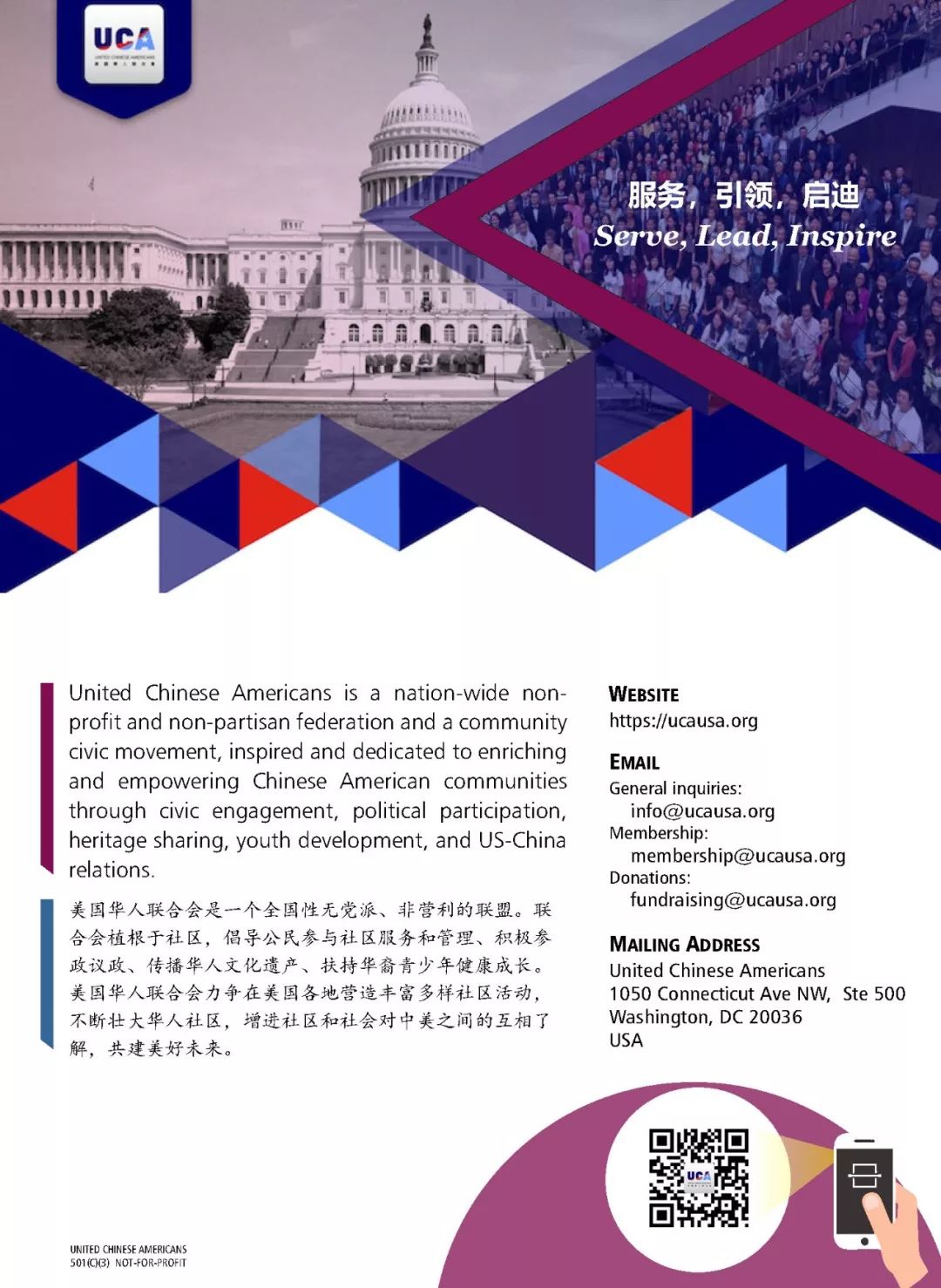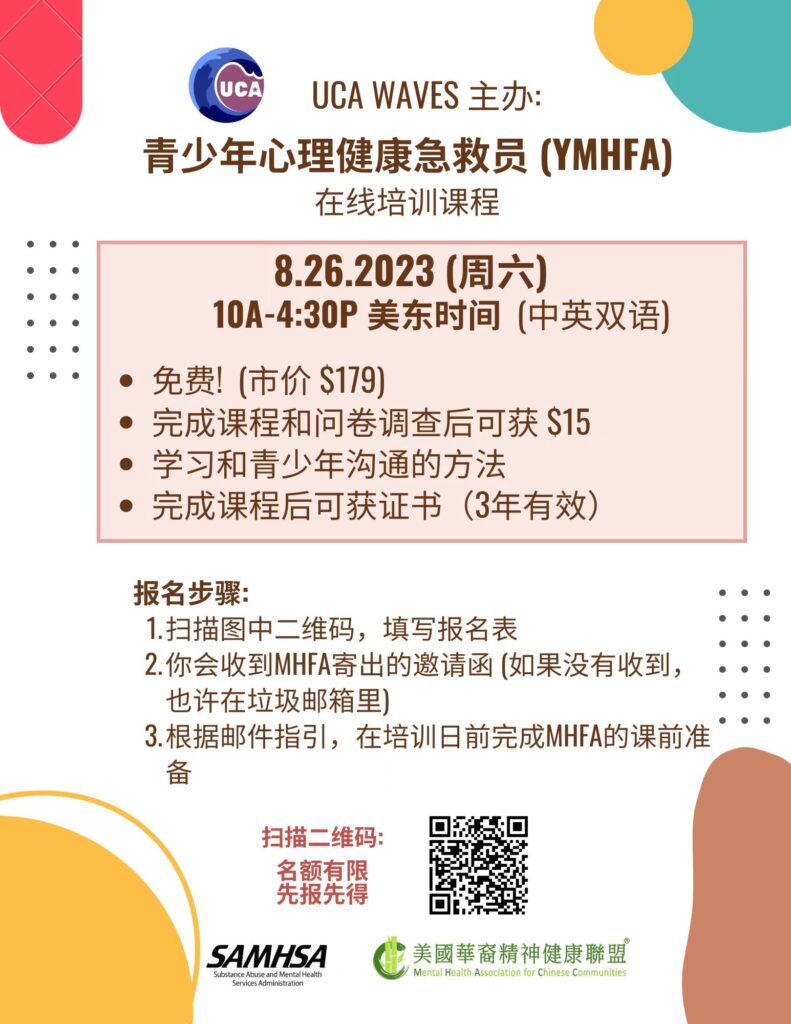
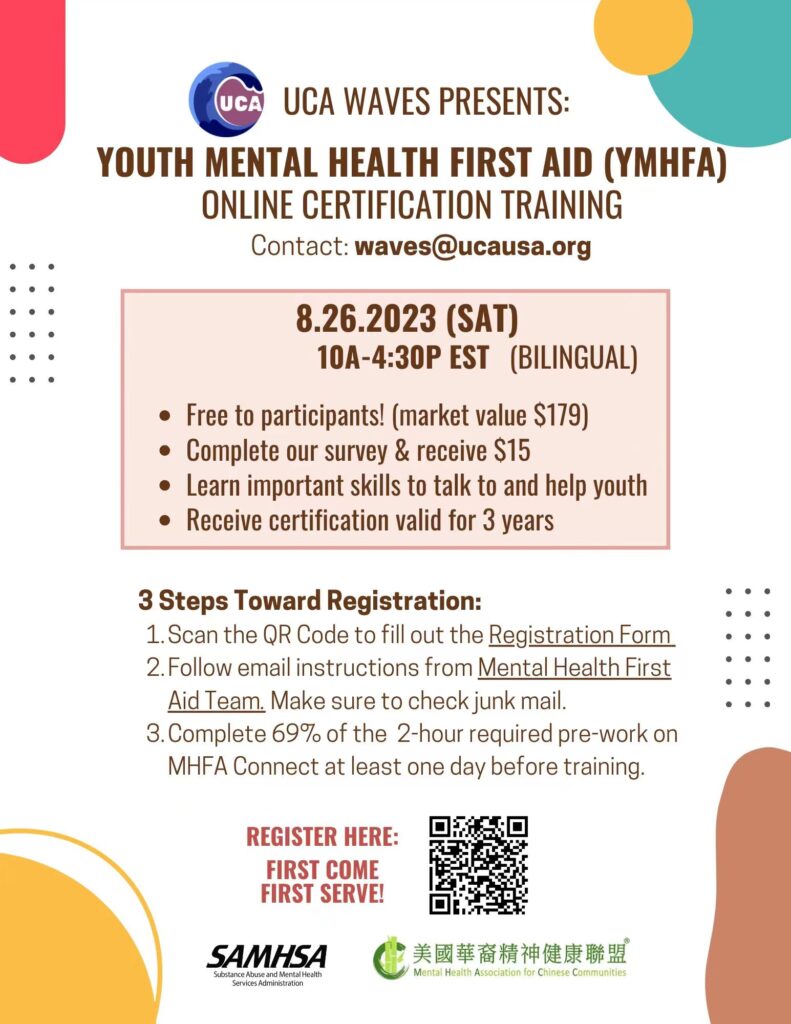
🧠 免学费(市价$179),中英(双语)授课,面向成年人 (18岁以上)
🧠 完成课程和问卷调查后可获得$15
🧠 学习和青少年沟通的方法
🧠 完成课程后可获证书 (3年有效)
🧠 报名步骤:
1、扫描以下图中二维码,填写报名表
2、您会收到MHFA寄出的邀请函(如果没有收到,也许在垃圾邮箱里)
3、根据邮件指引完成MHFA 的课前准备
8月26日 10am – 4:30pm (美东时间)
Post related to mental health initiative
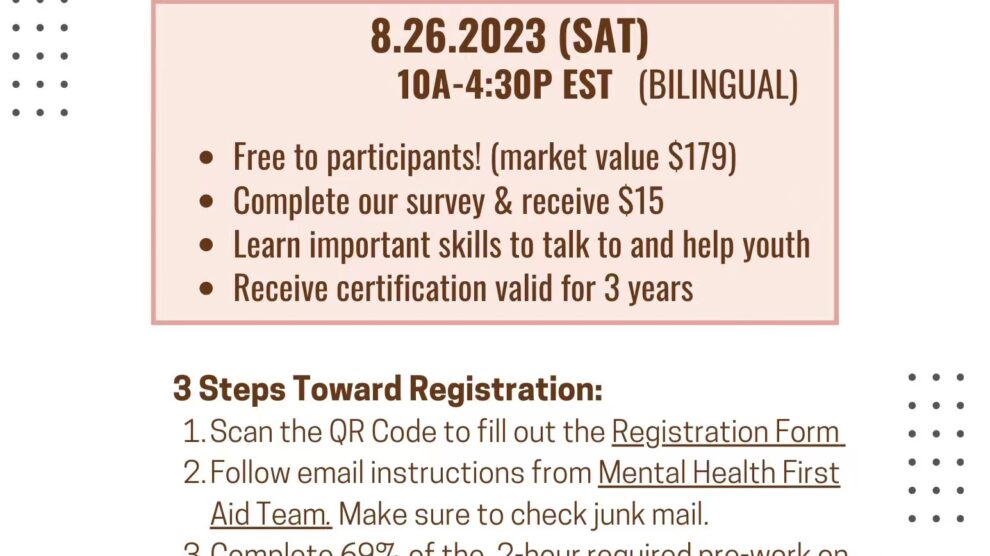
🧠 免学费(市价$179),中英(双语)授课,面向成年人 (18岁以上)
🧠 完成课程和问卷调查后可获得$15
🧠 学习和青少年沟通的方法
🧠 完成课程后可获证书 (3年有效)
🧠 报名步骤:
1、扫描以下图中二维码,填写报名表
2、您会收到MHFA寄出的邀请函(如果没有收到,也许在垃圾邮箱里)
3、根据邮件指引完成MHFA 的课前准备
8月26日 10am – 4:30pm (美东时间)
Last Open Enrollment Period October 2020 – February 2021 & 2020
1) 2020 11-14 Webinar to Naperville Women’s Club Webinar Presented “Medicare 的東南西北 by Dr. Linda Lin Yu 11-16 Update” & Discussed Q&A Presenters
Results: Well received with many compliments; the largest audience NWC ever had.
2) 2020 12-2 to Taiwan’s 華府台灣同鄉會
Presenter: Chengya Shih
3) 2020 12-4 to Taiwan’s 中山女中和師大校友會
Presenter: Chengya Shih
5) Number of People Helped by Receiving 2021 Medicare-Medicaid Update Electronic Files assembled and sent by Meijan Linda Yu
A. Chicago SUNRISE Chorus Group Members and Spouses
B. Alumni of Kong-Xiao Elementary School
C. Alumni of 1970 Texas A&M University
The focused audience has been Asian-Americans, especially Chinese Americans whose English is not their mother tongue.
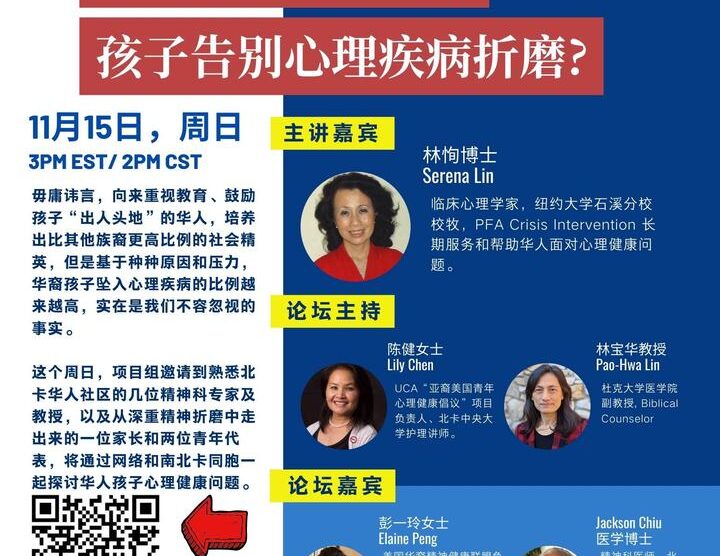

向来重视教育、鼓励孩子“出人头地”的华人,培养出比其他族裔更高比例的社会精英,但是基于种种原因和压力,华裔孩子坠入心理疾病的比例越来越高,实在是我们不容忽视的事实。
来自美国疾控中心的调查数据说,美国亚裔高中生中有18.9%的人产生过轻生念头,比白人高中生高出3.4个百分点,15-24岁美国亚裔女性的自杀死亡率比白人女性的高出30%。
偶然从各种渠道传出的消息,诸如,某名校华人孩子不堪忍受压力跳楼身亡,总让为人父母者心悸、痛惜。来到异国他乡忙于立足、养家,面临文化认同和身份转变压力的家长,为了自己,为了孩子,是该掌握一些心理健康知识了。
这个周日,11月15日,美国华人联合会(UCA“亚裔美国青年心理健康倡议(Asian American Youth Mental Health Initiative)”项目,除邀请到熟悉北卡华人社区的3位精神科专家及教授,介绍他们的研究和临床经验外,还从加州、堪萨斯和伊利诺伊,分别请来曾备受精神疾患折磨的两位华二代和一位家属,分享他们在至暗岁日里的感受和重启人生的经过。
早就关注到华人社区心理健康问题的UCA,从2016年开始启动这个项目,3年来组织全美各地的顶尖专家举办两次大会和十几场讲座,交流心理疾病的研究和治疗成果,普及这方面的知识。这次他们和北卡中央大学、临床学者项目联手,由北卡华联、华人头条、北卡华协、美国华裔精神健康联盟协助,举办这次网络讲座,希望与南北卡同胞一起探讨华人孩子的心理健康话题,并藉此搭建一个纾解心理压力、解除疾病痛苦的交流平台。
Serena Lin 林恂博士,临床心理学家,纽约大学石溪分校校牧,长期服务和帮助华人面对心理健康问题。
彭一玲(Elaine Peng)女士,美国华裔精神健康联盟负责人,因家庭遭遇心理疾病导致的悲剧后,致力改善患者康复环境,普及精神健康知识,对抗污名化。
Jackson Chiu,医学博士,精神科医师,北卡州立大学学生咨询中心主任
和天尧(Tim He),青年代表,硕士研究生在读
蔡心怡(Alice Cai),青年代表,高中12年级学生
两人都有罹患心理疾病经历,将向家长和同龄人分享他们的感受和走出泥潭的经验。
Serena Lin 林恂博士
陈健(Lily Chen)女士,UCA“亚裔美国青年心理健康倡议”项目负责人、RWJF临床学者研究员,北卡中央大学讲师
林宝华(Pao-Hwa Lin)博士,杜克大学医学院副教授
11月15日 周日 美东时间下午3:00
Zoom链接:
https://us02web.zoom.us/webinar/register/WN_RvHYXMbsS7Wof2yEZ6XFTg
1.精神疾病有哪些预兆?
What are some of the warning signs of mental illness?
2.没有药物治疗人们能克服精神疾病吗?
Can people get over mental illness without medication?
3.如果我认识的人出现精神障碍症状,我该怎么办?
What should I do if someone I know appears to have the symptoms of a mental disorder?
4.文化在我们对待心理健康的方式中扮演着重要的角色吗?
Does culture play a big part in how we approach mental health?
5.我如何教育我的父母为什么心理健康很重要?
How can I educate my parents on why mental health is important?
更多问题,请扫描海报上的二维码注册,或扫码加入下面的微信群提问,以便讲座嘉宾和主持人解答。


For the past four years, UCA has worked with Chinese American community with thousands of community members. One of the most urgent issues expressed by parents and community members is youth mental health. This concern is validated by observed students experiences and behaviors.
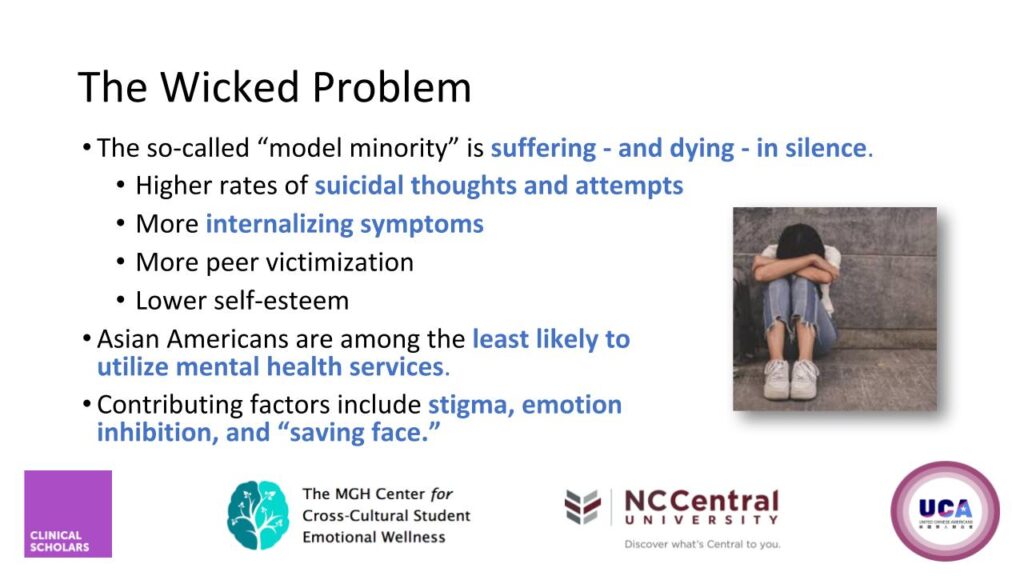
Due to cultural expectations, identity issues, low health literacy about mental health, stigma against mental health, and social isolation, Chinese/Asian American youth are suffering “silently” with mental illness and emotional stress. Insufficient support from families and their community, as well as lack of available Chinese speaking mental health professionals, further contributes to the problem According to the Centers for Disease Control (CDC) & Prevention (2016), in general, Asian Americans report fewer mental health concerns compared to White Americans
In order to meet the urgent needs of our community, United Chinese Americans (UCA), a national coalition of Chinese Americans dedicated to civic engagement, youth development, and heritage-sharing (www.ucsusa.org), has worked with its chapters to address mental health issues facing the community. UCA has taken a leap of faith to tackle this issue with very limited resources and funding, collaborating with its Illinois chapter (il.ucausa.org) and community partners to organize 12 youth mental conferences in Chicago (2), Minnesota (1), Wisconsin (2), Ohio (3), Nevada(1), San Francisco (1), and at the 2016 and 2018 Chinese American Conventions (2) in Washington, DC.
This past summer, UCA organized three very impactful mental health webinars, and co-organized the most recent one in September.
We also are building a Chinese American mental health network with other organizations and individuals including Massachusetts General Hospital’s (MGH) Center for Cross-Cultural Student Emotional Wellness, also affiliated with Harvard Medical School’s Department of Psychiatry; the Pacific, Education, Advocacy, Research, Learning (PEARL) Institute of New York, affiliated with New York University’s (NYU) Silver School of Social Work; National Alliance of Mental Illness NAMI North Carolina Chapter; and mental health discussion groups with on social media, including WeChat, an app-based platform popular among Chinese Americans. We also support many community organizations in their efforts to educate our community about youth mental health.
In November, 2019, UCA started to lead the process for the Clinical Scholar Leadership Development Program from Robert Woods Johnson Foundation RWJF. UCA is proud to announce that our Clinical Scholar team was chosen as one of the eight teams nationwide as the 2020 Clinical Scholar Cohort.
RWJF is the nation’s largest healthcare philanthropy with the commitment to continue working passionately toward improved health and health care for everyone in America. Clinical Scholars is a national leadership program for experienced health care providers advancing health equity supported by the Robert Wood Johnson Foundation.
OUR GUIDING PRINCIPLES:“The inspired vision of our founder, General Robert Wood Johnson II, was to improve health and healthcare in America, especially for those most in need. Energized by our legacy of taking on challenging issues, we are dedicated to building a Culture of Health that provides everyone in America a fair and just opportunity for health and well-being.
We take seriously our responsibilities, and we pledge to work in ways that reflect our values:
We are privileged to do this work. We are proud of our successes and accomplishments, and we believe our best achievements lie ahead.”
Click to Read news release
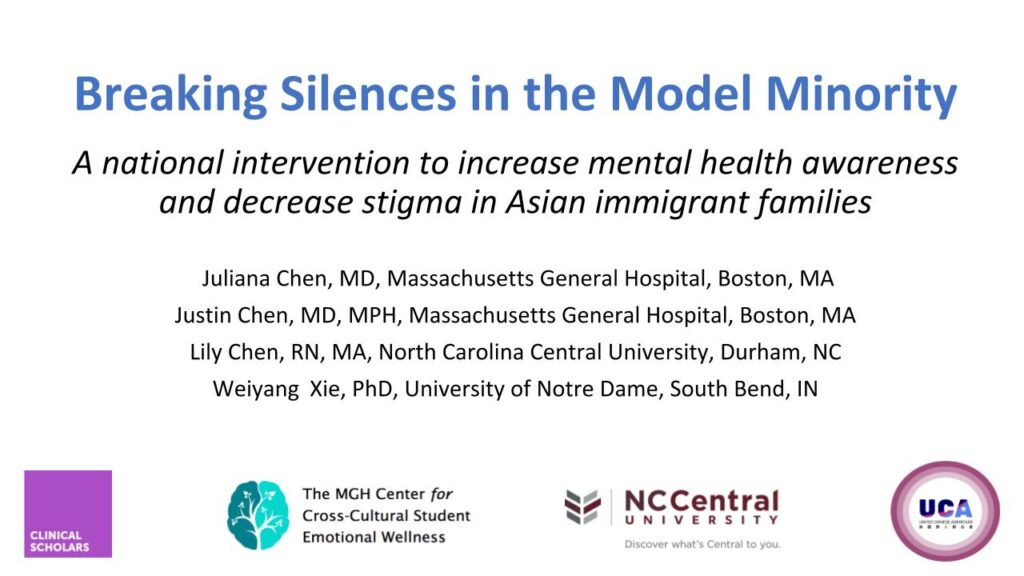
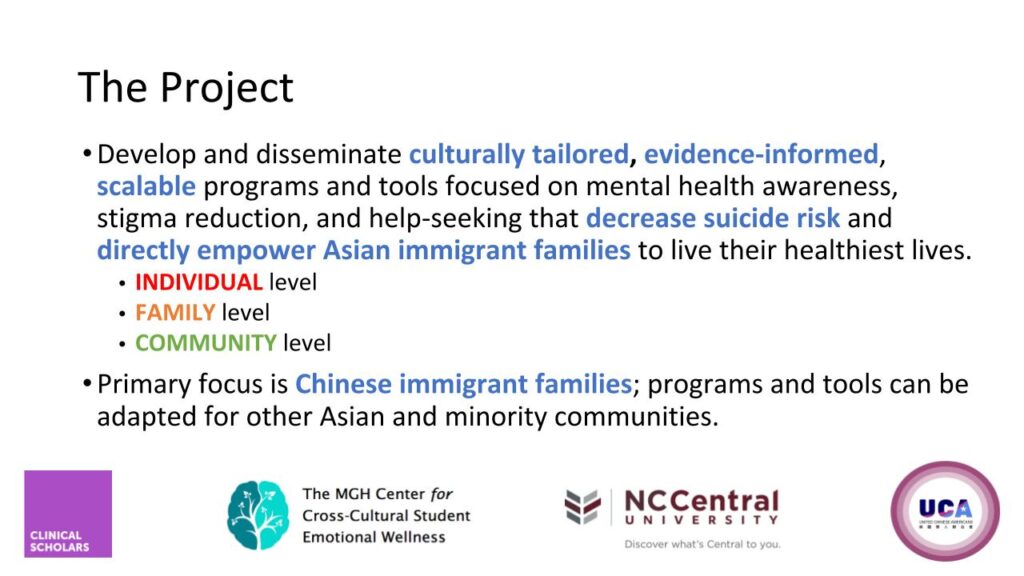
Our project, “A national intervention to increase mental health awareness and decrease stigma in Asian immigrant families” tackles the problem of mental health and suicide in Chinese immigrant families. Although Asian American youth are often stereotyped as a uniformly well-educated and successful “model minority,” they are at high risk of depression and suicide. Parents often want to help, but face barriers including communication and language challenges, lack of awareness, and stigma of mental health issues and treatment. Our team will develop and disseminate culturally tailored, evidence-informed, and scalable programs and tools focused on mental health awareness, stigma reduction, and help-seeking that decrease suicide risk and directly empower Asian immigrant families to live their healthiest lives. Strategies at the individual level will focus on stigmatization and education. Strategies at the family level will focus on improving parenting skills and practices, including parent-child communication. Community-level strategies will focus on building national networks and resources, including a national provider directory, in partnership with school districts and community organizations throughout the country. While the primary focus of the current project is Chinese immigrant families, we anticipate that the programs, tools, and models developed can be adapted for other Asian and minority communities.
More information on the foundation websites https://clinicalscholarsnli.org/
Contact Person Information
Name: (Lily) Jian Chen, RN, MA, CNE
Title: Senior Advisor
Organization: United Chinese Americans (UCA)
Email: lily.chen@ucausa.org

Press Release:
A National Intervention is Needed to Increase Youth Mental Health Awareness and Tackle Mental Health Stigma in Asian Immigrant Families
Contact: Lily Chen (lily.chen@ucausa.org)
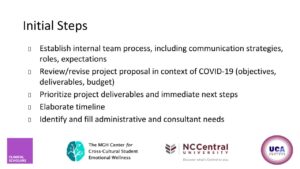
Washington, DC (October 5, 2020) – UCA is proud to announce members of its Youth Mental Health Initiative have been selected to participate in the 2020-2023 cohort of Clinical Scholar Fellows, part of the Robert Wood Johnson Foundation Leadership Program. As a team, the Fellows will tackle youth suicide among Chinese American immigrant families by developing culturally-tailored and evidence-informed programs and tools to increase mental health awareness, reduce stigma, and to empower Asian immigrant families to live their healthiest lives.
“The need to address Asian American mental health conditions, especially those affecting our youths, is widely known and long overdue and I am so pleased the Robert Wood Johnson Foundation has taken a major step to help our community,” said Haipei Shue, President of UCA. “Immigrant communities face hardships adjusting to a new language, new culture, lack of social and professional access, as well as the resulting mental stress. Thank you, Robert Wood Johnson Foundation Clinical Scholars Program, on behalf of our community!”
“UCA has accepted the challenge and responsibility to destigmatize and highlight an issue that impacts children and families who are Asian American immigrants,” noted Dr. John K. Holton, Board member of UCA Illinois Chapter and Director of Strategic Initiatives at the Jane Addams College of Social Work, University of Illinois at Chicago. “Helping young people’s mental health concerns is important to every community. The programs and toolkits to be developed by the Clinical Scholars team working with UCA will be important not only to Asian Americans, but also to every racial group. This is a national and international issue.”
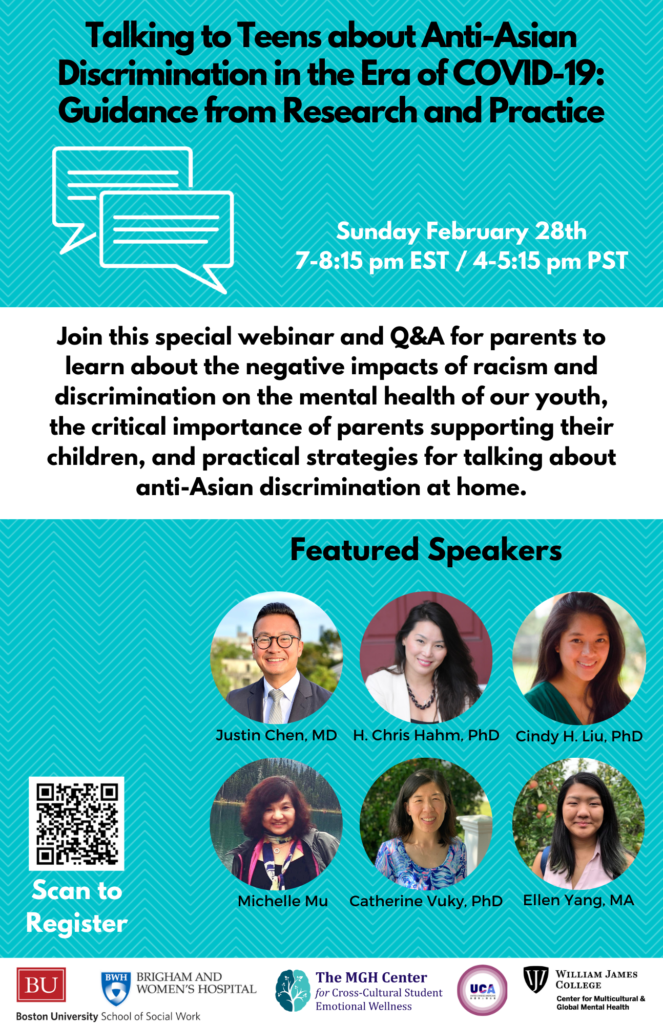
Suicide is the leading cause of death among Asian American youths, and experts have been alarmed by the rising suicide rates. Cultural stigma and lack of understanding about mental health in Asian families and the community often prevent adolescents from seeking help, as Asian Americans are among the least likely to utilize mental health services. Furthermore, the COVID-19 pandemic has compounded strain on youth mental health due to social isolation and, in the case of Asia-immigrant families, an increase in racially motivated bullying and crimes.
The Robert Wood Johnson Foundation Clinical Scholars Program is a highly competitive program aimed to develop effective health care leaders to enable everyone in America to live longer, healthier lives. Fellows will collaborate on a three-year community project aimed to address the root causes of inequality in health.
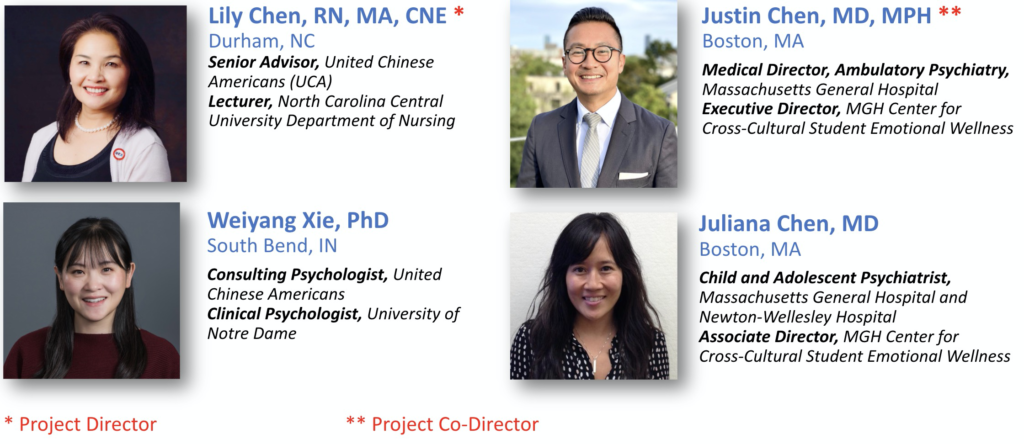
The UCA team project, aptly titled Breaking Silences in the “Model Minority”: A National Intervention to Increase Mental Health Awareness and Decrease Stigma in Asian Immigrant Families, will be led by Lily Chen, UCA Senior Advisor and Lecturer at the Department of Nursing, North Carolina Central University, and co-led by Justin Chen, Medical Director of the Ambulatory Psychiatry Services at the Massachusetts General Hospital (MGH). Team members include Weiyang Xie, Clinical Psychologist at the University of Notre Dame, and Juliana Chen, Child and Adolescent Psychiatrist at MGH and Newton-Wellesley Hospital. Partnering organizations include North Carolina Central University as well as the MGH Center for Cross-Cultural Student Emotional Wellness.
UCA is committed to educating the Chinese American community about youth suicide prevention and overcoming a reluctance to seek help. UCA has organized a series of webinars and forums to address mental health needs that can be viewed on the UCA YouTube page HERE.
Clinical Scholars is a national leadership program supported by the Robert Wood Johnson Foundation. It invests in innovative health care professionals who are passionate about collaborating across disciplines to tackle complex health problems in their communities.
Website: https://clinical-scholars.org/
Founded in 2016, UCA is dedicated to enriching and empowering Chinese American communities through civic participation, political engagement, and youth education. Its various programs aim to develop and preserve heritage and culture and to promote a better understanding between the United States and China for the well-being of our community, our country, and our world.
1050 Connecticut Ave. NW, Suite 500, Washington, DC 20036
Website: https://ucausa.org/
Twitter: https://twitter.com/ucasocial
The opinions expressed here are the author’s own and do not represent the opinions of the program or the Robert Wood Johnson Foundation.

Webinar on July 28, 2020, organized by UCA Houston and Global Federation of Chinese Business Women in Southern USA, with a video recording on UCA Youtube Channel.
As immigrants and minorities in the United States, Chinese Americans may be subject often to prejudice and discrimination. Children may face bullies at school. Women often encounter such situations in workplaces and professional life.
The rising anti-Chinese sentiment and increased incidents of anti-Asian hate crimes have been of great concern to our community recently. The situation has exacerbated during the COVID pandemic and in the 2020 election season when political tactics such as blame game, racial hate, xenophobia, and international conflicts are being deployed in full swing to distract voters and instigate tension. Unfortunately, the Chinese community is caught in between the racial attacks and deteriorating US-China relationship, and is suffering as a scapegoat and bargain chip amid the national crises and global conflicts.
Racist remarks used by some US officials, with labels such as “Chinese virus” and “Kung Flu,” along with broad-stroke accusation under the name of national security and intellectual property theft have further inflamed hostility and incite mistrust towards the Chinese American community.
According to a US-based coalition, hate crimes and other racist incidents have surged to more than 2,000 reported cases since the outbreak of the COVID-19 pandemic. Conceivably, there have been far more unreported cases occurring everywhere in the country and affecting many, many families.
To help the Asian community, especially women and students, address these issues and learn how to deal with the situation, UCA Houston has teamed up with the Global Federation of Chinese Business Women (GFCBW) in Southern USA and hosted a webinar on Tuesday, July 28, at 7:30 PM – 9 PM, entitled, “Dealing with bullying, hate crimes, and discriminations during the COVID-19 pandemic”.
Panelists of the webinar include Dr. Helen Shih, a member of UCA Houston and Alice Hsiao, a member of GFCBW Southern USA. Dr. Helen Shih, an expert in holistic health, has spent many years on scientific studies and professional development. As a UCA board member, Dr. Helen Shih leads the organization’s efforts in Houston. She has also been an advocate and community organizer committed to the social progress, civic engagement, and social-emotional wellbeing of the Asian community.
Alice Hsiao, AIHCP Certified, Nutritional Science, B.S., M.A., is a spiritual counselor. She is an active member of GFCBW Southern USA and the Houston Chinese community. She helps individuals and families deal with mental-spiritual issues related to bullying, discrimination, abuse, and social and domestic violence. She is also a certified floral designer at the Houston Floral Art Institute, where she uses floral arrangements to relieve mental stress and promote healing and trauma release.
Ms. Nancy Chen and Ms. Dawn Lin, the leadership of GFCBW Southern USA, moderated the webinar along with Professor Steven Pei, former chairman of UCA, who provided technical guidance. The webinar focused on the harm of bullying, hate crimes, and discrimination, as well as effective ways to deal with them. Bullying can lead to mental health issues such as depression and self-harm among Chinese youth. Mental health has been recognized as an important aspect of community wellbeing, especially among the youth as the second generation of Chinese families. The webinar also made connections with the conflicts arising from different cultural traditions and with the civil rights concerns.
During the COVID-19 pandemic, the Houston Chinese community has organized numerous relief efforts and humanitarian events. When Asian businesses were impacted and anti-Asian sentiment was on the rise, the community organized the “Asian Americans Salute Frontline Heroes” (AASFH) events with a great impact. Both UCA Houston and GFCBW Southern USA played key roles in these activities.
UCA Houston also organized important events including the “Vincent and Lily Chin Award Ceremony” and the “From Vincent Chin to George Floyd” webinar at the end of June, commemorating two heroes who rescued an Asian family, victims of a March 2020 hate crime in Midland Texas.
UCA, a leading national organization for the welfare and civil rights of Chinese immigrants, has been actively engaged in pandemic relief efforts and in promoting the social status of Chinese Americans. During May, the Asian American Heritage Month, UCA organized a nationwide donation drive to deliver free Chinese meals to frontline workers and needy families in a “Food of Love” campaign. Recently, UCA has filed an amicus brief to join Harvard University and MIT in their lawsuit to stop the execution by the Trump administration in its ill-conceived visa restriction policy on international students.
Founded in Taiwan in 1994, GFCBW has helped women compete and succeed in the business world by providing training, networking, and marketing opportunities. Today, with 74 branches worldwide, GFCBW is the only international association that was started from Taiwan for Chinese women in business (http://gfcbw.org). The Southern USA chapter, the first chapter of GFCBW, has been established in Houston for 35 years. The chapter is not only a platform for business activities to serve overseas Chinese, but also a nonprofit organization to promote community welfare. It has actively contributed to Houston relief efforts during the pandemic, including donating PPE supplies and meals. For more information, please visit http://gfcbw-houston.org.

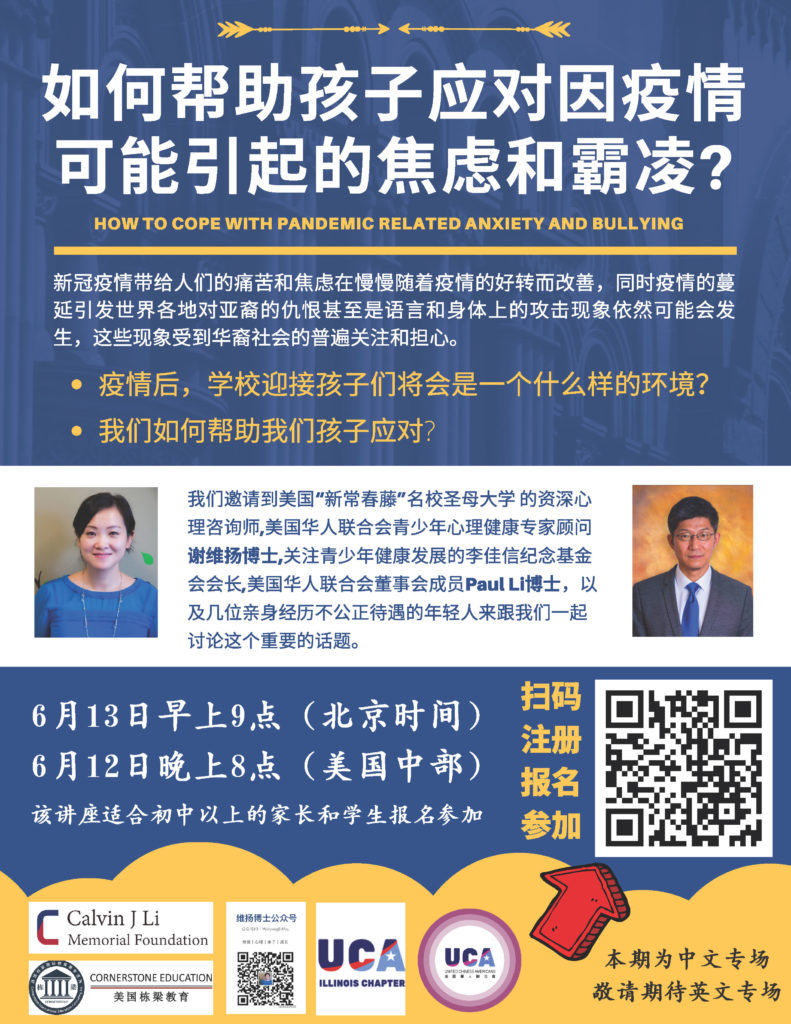
Many of us have been impacted by COVID-19 in more ways than we’ve ever anticipated, including the toll on our mental health. The social pressure facing Chinese and other Asian American youths, in particular, has been challenging to many families. To help our youth and families cope with mental stresses during the pandemic, United Chinese Americans (UCA), UCA Illinois Chapter, Cornerstone Education, and the Calvin J Li Foundation are organizing an educational webinar titled: “How to Cope with Anxiety and Bullying During Covid-19,” to be held on Friday, June 12, 2020 @9 p.m. EST. The webinar will be conducted in Chinese, and an English version will be available at a later date. Please register here: http://june0713.mikecrm.com/1ouzmt0
The first part of the webinar features Dr. Weiyang Xie, a licensed clinical psychologist and a consultant for UCA’s youth mental health initiative. Dr. Xie will discuss coping strategies related to anxiety and bullying. The second part of the panel will feature a group of young students and professionals who will share their experience, including Jeff He, Tim He, Connor Hu, Frank Li, Zachary Wu, Andy Yu, and Sophie Zheng. The discussion will be hosted and moderated by Dr. Paul Li. Dr. Li is the founder of the Calvin J Li Foundation, and is also a UCA board member and UCA youth mental health co-coordinator.
疫情给全人类带来困惑、焦虑和不安。 对孩子们来说,更是如此: 他(她)们迷茫,不知所措;有的甚至选择极端的方式。如何引导孩子的健康发展,如何及时排查孩子们的变化,如何疏导他们的焦虑,如何面对可能出现的霸凌,都成了刻不容缓的话题。请大家注册参加 6/12 周五美中时间晚间八点的讲座。 健康生活和学习,人人关注:http://june0713.mikecrm.com/1ouzmt0
The short video below offers a glimpse of the youth mental health issue our community is facing: https://tinyurl.com/ycc3oomv
We hope you can join us in this timely educational webinar. See you soon!
Sincerely,
Youth Mental Health Webinar Organizing Committee
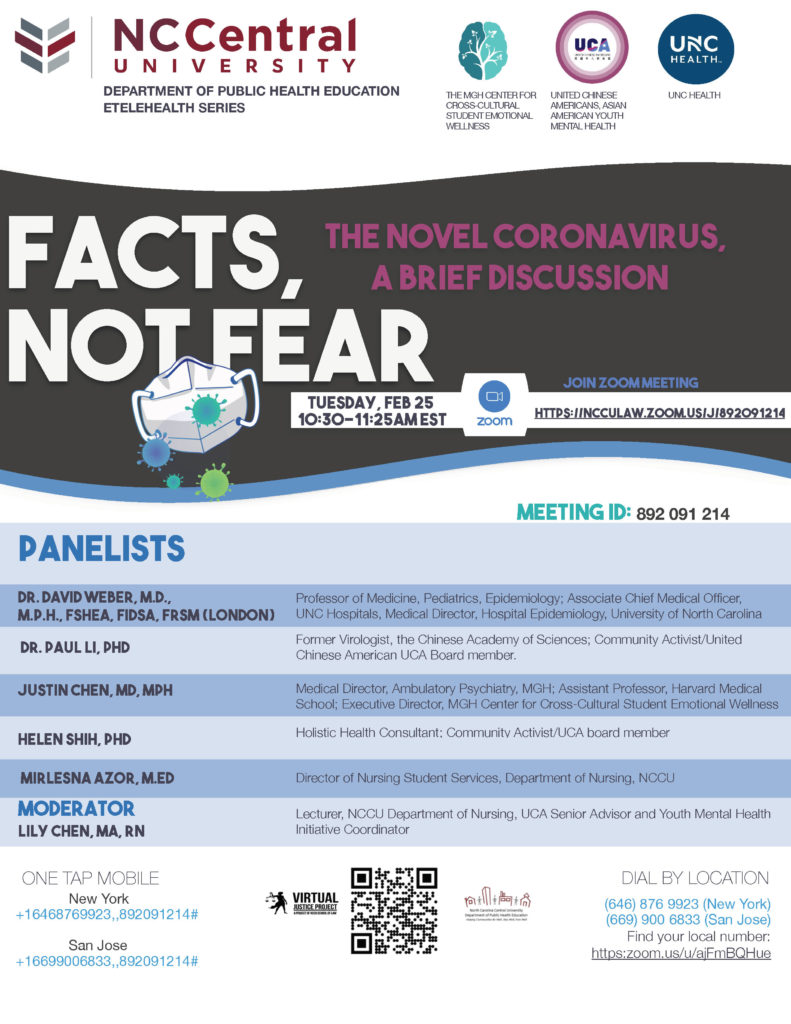
In order to help people in our community grasp medical truth, facilitate communication between the Chinese and the mainstream community, and work together to prevent the epidemic and reduce panic, UCA organized an online webinar on February 25, 2020 titled “Fact Not Fear ” and released all materials to public.
* Part of North Carolina Central University, NCCU Telehealth Series
Harris County Public Health has maintained a good Chinese version on the virus:
http://publichealth.harriscountytx.gov/Resources/2019-Novel-Coronavirus
It has link to CDC’s Chinese resources and guidelines:
https://www.cdc.gov/coronavirus/2019-ncov/index-Chinese.html
This is the resource from LANCET (on medical literature and information), all the official documents and medical guidelines from Chinese governments are here:
The Canadian government on the virus:
https://www.canada.ca/en/public-health/services/diseases/2019-novel-coronavirus-infection.html
WHO has technical guidelines on all practical aspects:
https://www.who.int/emergencies/diseases/novel-coronavirus-2019/technical-guidance
Nature has a central online site updating medical research articles on the virus:
https://www.springernature.com/gp/researchers/campaigns/coronavirus
British Medical Journal:
https://www.bmj.com/coronavirus
New England Journal of Medicine
https://www.nejm.org/coronavirus
David Weber, M.D., M.P.H., FSHEA, FIDSA, FRSM (London) — Professor of Medicine, Pediatrics, Epidemiology; Associate Chief Medical Officer, UNC Hospitals; Medical Director, Hospital Epidemiology, University of North Carolina at Chapel Hill
Paul Li, Ph.D. — Former Viorologist, the Chinese Academy of Sciences; Community Activist/ United Chinese American UCA Board member.
Justin Chen, MD, MPH — Medical Director, Ambulatory Psychiatry, MGH; Assistant Professor, Harvard Medical School; Executive Director, MGH Center for Cross-Cultural Student Emotional Wellness
Helen Shih, Ph.D — Holistic Health Consultant; Community Activist/UCA board member
Mirlesna Azor — M.Ed, Nursing Student Services, NCCU
Lily Chen, MA, RN, CNE*, Lecturer — North Carolina Central University Department of Nursing (*Certified Nurse Educator by National League of Nursing)
Click to watch video playback of the seminar
United Chinese Americans in Washington (UCAWA) is a newly formed chapter of UCA. Since founding the organization we have stared several programs including Youth Leadership & Government Internship Program. We have also initiated a conversation with Bellevue School Foundation and Bellevue School District to explore the possibility to work together in addressing the mental health issues that young students including Asian students are facing in today’s world.
Bellevue School District is ranked the best school district in Washington State with student population over 20,000. Among 20,000, there 45%+ Asian students, and 20%+ Chinese students. In the recent years the school has seen a big increase of reported mental health incidents and cases among its middle and high school students. According the data collected by the District there are average 40+ per week reported mental health related incidents and cases in its students population. Many of us found the number astonishing since Bellevue School District is situated in a predominantly higher middle-class city. But we believe this is the new reality that the schools and the school district are facing in our state, and other states in the US as well.
After many email exchanges, discussions and meetings, now the leaders of BSF and BSD have made administrative decision to collaborate with UCA/UCAWA to do a series of youth mental health lectures and events. Detailed plan and timelines are still being worked on. We are so glad that we will have an opportunity to help and support the effort of Bellevue School District in addressing the youth mental health issue and make our contribution. For the past two month we have received abundant help from UCA and UCA Illinois Chapter that has provided valuable information, resource materials and expertise. We look forward to joining force with UCA, Illinois Chapter and other experts in the fields to make the program happen, and make this pilot project a success.
— UCAWA
作为第一代华人父母养育在美国出生成长的华二代,面临诸多挑战:他们努力照料孩子的生活、关注孩子的智力发展,但在真正理解和关心孩子们的情感需求方面还有不少欠缺和疏漏。文化差异下的代际沟通,造成了华二代心理健康发展的困境。
心理健康的培养对于青少年拥有快乐、成功的完整人生至关重要。2019年1月5日(周六)下午2点至5点,内华达华人协会 (Nevada Chinese Association)与美国华人联合会 (United Chinese Americans)将在拉斯维加斯首次联合主办“青少年心理及情绪健康讲座”,为华人父母提供如何重新审视家庭教育、如何培养孩子心理健康的宝贵机会。
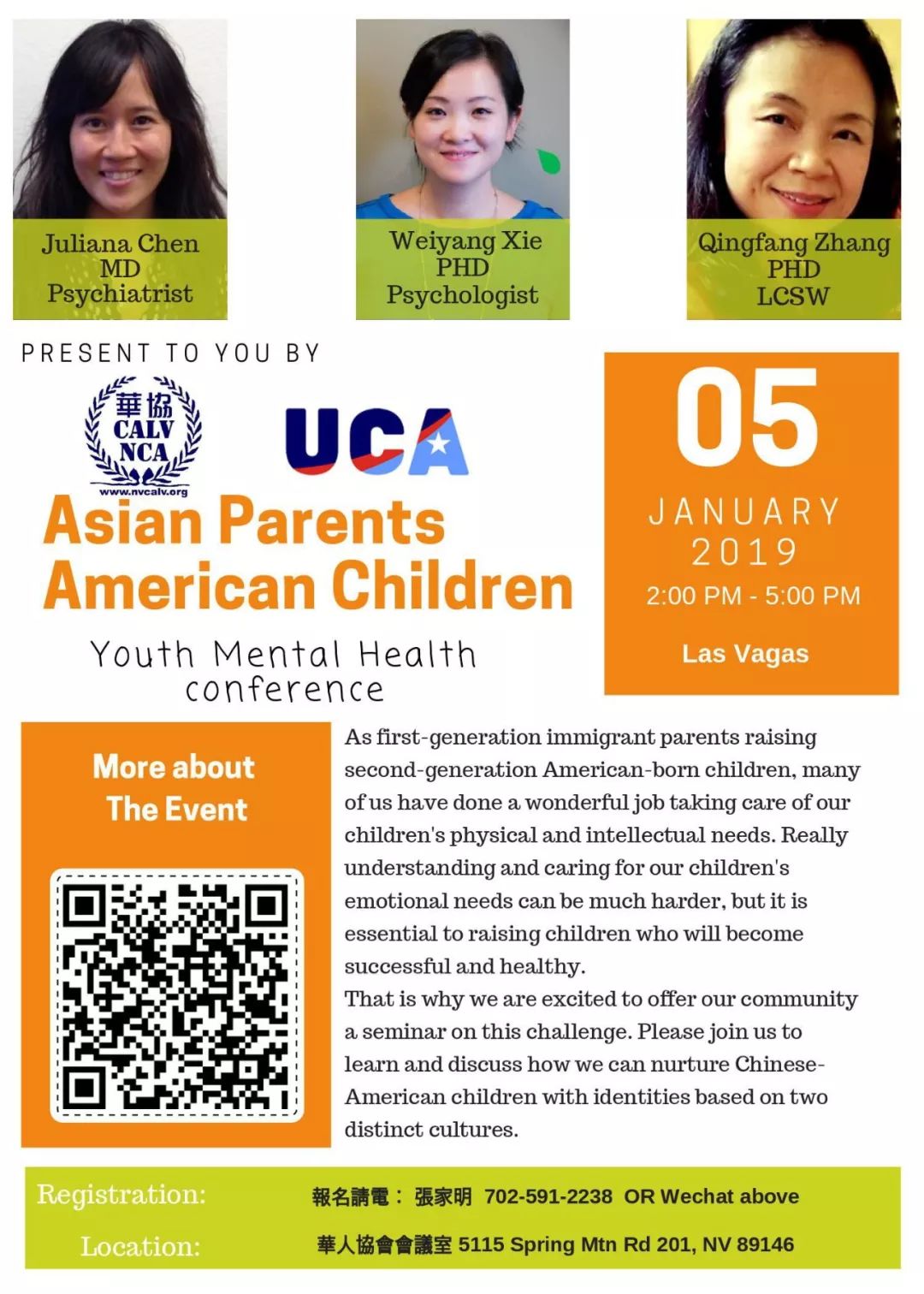
讲座特邀长期从事心理和精神健康的医师、专家、青少年教育专家,分享他们的临床和科研经验,探讨在孩子成长的过程中所面临的各种心理健康隐患,并提出具体实用的专业建议。参会者还将与专家一起学习和讨论:如何在两种不同文化的基础上,挑战父母心态,培养个性独特的华二代?如何有效地与孩子们沟通?当孩子面临挫折时,如何给予支持和帮助?如何帮助孩子提高心理韧性,从而更好地抗击压力、预防心理疾病?
【特邀演讲嘉宾】
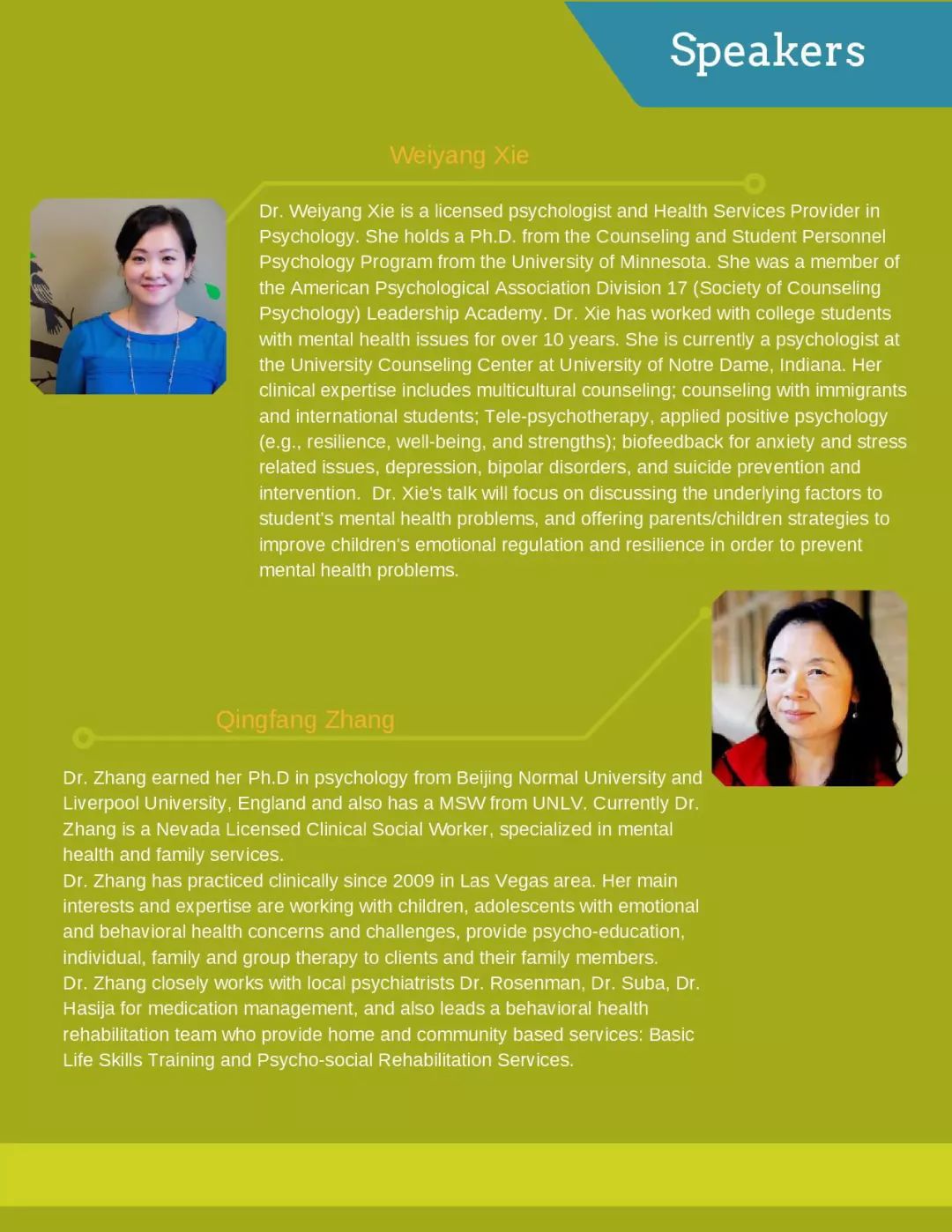
• 谢维扬博士(上图左)
谢维扬博士是一位执业心理学家和精神健康医师,明尼苏达大学咨询和学生团体心理学博士。谢博士在印第安纳州圣母大学咨询学院工作。她擅长的临床知识包括多文化咨询,向移民和国际学生提供咨询,在线治疗,应用积极心理学,针对焦虑和压力相关问题的生物反馈,抑郁,危机干预,适应等问题。
谢博士将分享她的临床经验和大家探讨在孩子成长的过程中所面临的各种心理健康隐患,并从专家角度分析如何帮助孩子建立自信,增强沟通能力和情绪调节能力,来提高孩子的心理韧性,从而更好的抗击压力,预防心理疾病。
• 张青芳博士(上图右)
张青芳博士是北京师范大学与英国利物浦大学联合培养的心理学博士,UNLV社会工作硕士,持有内华达执照临床社会工作师LCSW。她是内州儿童与家庭治疗机构Wishing Well Child and Family Therapy的创始人和CEO,以及Desert Behavioral Health 临床总监 (Clinical Director)。
张青芳博士为个人和家庭提供心理治疗和精神卫生方面服务,具有丰富经验。此次讲座,她将着重介绍本地华人青少年个人和家庭面临的困境和挑战,以及华人如何使用本地的心理精神卫生服务方面的资源,应对这些挑战。
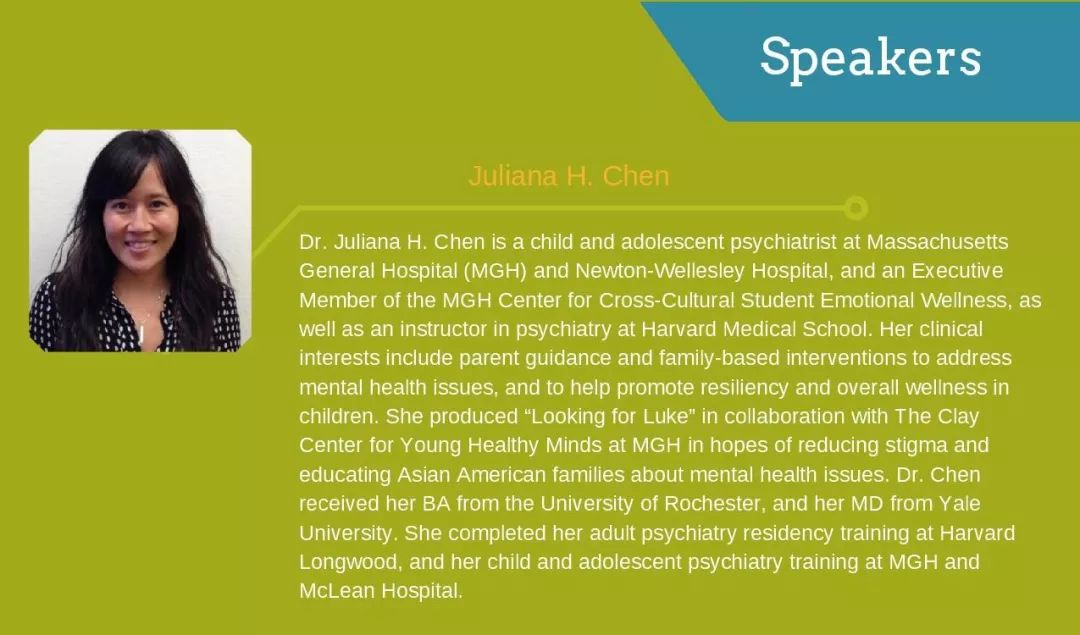
• Juliana H. Chen, MD(上图)
Juliana是麻省综合医院的儿童、青少年精神病科执业医生,也是该医院跨文化学生情感健康中心的执行委员,以及哈佛医学院精神病学讲师。她在罗切斯特大学获得学士学位,在耶鲁大学获得医学博士学位,并在哈佛大学医学院完成了成人精神病学住院医培训,在麻省综合医院完成了儿童和青少年精神病学培训。
Juliana的临床兴趣包括家长对孩子的引导,通过家庭参与关注心理健康问题,帮助孩子增强心理承受力和整体身心健康。值得一提的是,她还与麻省综合医院关注年轻人健康思想的克莱中心合作制作了著名纪录片《寻找卢克》,希望能够减少人们对患有精神疾病的自卑感,帮助美国亚裔家庭正确理解心理健康问题。
【时间】 2019年1月5日(周六),2-5pm
【地点】 内华达华人协会会议厅
5115 Spring Mtn Rd 201, Las Vegas,NV 89146
【报名方式】
讲座面向公众开放,免费入场。电话报名:702-591-2238 张家明