Columbia University Joins UCA’s Call to Speak Up

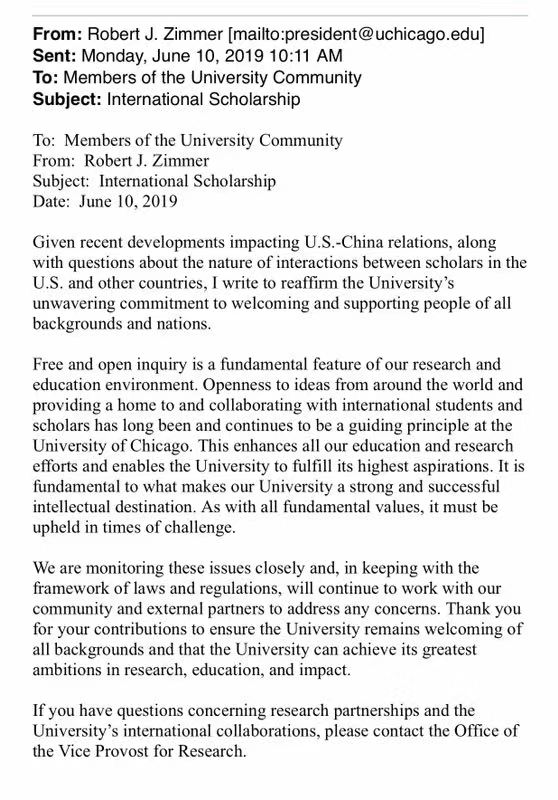
Lee C. Bollinger, president of Columbia University, published an opinion piece on Washington Post, titled “No, I won’t start spying on my foreign-born students“, in response to heightened pressure on academic research, joining a growing list of other institutions making similar statements. The content is reposted here.

The FBI has stepped up its scrutiny of research practices at college and university campuses — including mine.

Law enforcement and intelligence agencies determined to thwart the illegal transfer of intellectual property to foreign rivals are encouraging U.S. academics and administrators to develop more robust protocols for monitoring foreign-born students and visiting scholars — particularly if they are ethnically Chinese.

With students returning to campus, these policing attempts thrust economic and political concerns into fierce conflict with First Amendment freedoms.

To be sure, government-funded academic research in such national security realms as cybersecurity and bioterrorism is justifiably sensitive. Likewise, academic research conducted in collaboration with U.S. companies — a principal target of most unlawful technology transfers — leads to commercial innovations that warrant protections. Universities have an obligation to comply with existing security protocols, identify sensible ways to bolster them, and cooperate fully with law enforcement authorities and corporate research partners if clear acts of espionage are suspected. To the extent we are falling short in any of these areas — and yes, there have been isolated incidents of academics sharing sensitive intellectual property with foreign governments — we can and must do better.

At the same time, however, only a fraction of the research conducted on campus is “secret.” Indeed, the reality is just the opposite. Academic research is intended to be shared — released into the public domain to advance human progress. Groundbreaking medical discoveries, agricultural innovations credited with saving billions of people worldwide from starvation, the Internet, artificial intelligence: All are the result of publicly available, university-based research.

Consequently, a foreign national need not fly halfway around the world to “infiltrate” our great universities and learn about our latest insights and findings: With some notable exceptions,she can type words into a search engine and peruse peer-reviewed academic journals from the comfort of an office or dorm room overseas. Or, similarly, she can visit the U.S. Patent and Trademark Office’s website, where applications for patent protection provide detailed descriptions of recent innovations.

And so, most worrisome to me, as someone who has spent five decades advocating freedom of expression and assembly, is the notion that university personnel — and perhaps students themselves — should be asked to monitor the movements of foreign-born students and colleagues. This is antithetical to who we are.

The mission of a university is to foster an open atmosphere conducive to speculation, experimentation and creation. American higher education is the envy of the world not in spite of, but because of, its unrivaled commitment to openness and diversity. Attracting — and welcoming — the brightest minds in the world, regardless of nationality or country of origin, is what we’re all about.

To put it another way, the U.S. university model is a strategic advantage, not a hindrance to American competitiveness. Our administrators, professors and research scholars are not, and should not become, an arm of U.S. law enforcement. Ironically, what the FBI apparently considers our great vulnerability is, in my view, our greatest strength.

At Columbia University, where I am president, thousands of students and faculty represent more than 150 countries. We stewards of major research universities couldn’t contain intellectual freedom even if we wanted to. The incompatibility of university culture with systematic scrutiny may explain why even law enforcement officials who have visited our campus have offered little prescriptive guidance, instead offering that we should be vigilant.

The unauthorized use of intellectual property by overseas competitors is a serious problem. But the surveillance of foreign-born scholars in this country is the wrong solution. If law enforcement agencies have legitimate concerns, it seems to me that they should identify and monitor those they designate as “suspicious people” based on real threats, not broad worries about entire nationalities.

A more effective approach — advocated by many of my colleagues in higher education as well as the bipartisan Commission on the Theft of American Intellectual Property — is to expand the number of green cards awarded to foreign-born graduates of our great colleges and universities. Many of these international scholars, especially in the fields of science, technology, engineering and mathematics, would, if permitted, prefer to remain in the United States and work for U.S.-based companies after graduation, where they could also contribute to the United States’ economic growth and prosperity. But under the present rules, when their academic studies are completed, we make it difficult for them to stay. They return to their countries with the extraordinary knowledge they acquired here, which can inform future commercial strategies deployed against U.S. competitors.

The mandate of our colleges and universities is to pursue open, robust inquiry across a wide range of topics. Our institutions of higher learning should do more — not less — of what made the United States the most innovative nation in the history of the world.


Related Posts:

UW-Madison is the Latest to Join UCA’s Call to Speak Up,Amid Worsening US-China Relations

Repost from UW-Madison OFFICE OF THE CHANCELLOR website: UW’S RELATIONSHIP WITH CHINA.

The U.S. and China need each other. We need each other as trading partners; we need each other as major world leaders. And our universities need each other.

As we count down the final days of summer and get ready for another academic year, let me tell you about my most interesting trip of the summer.

In late May, I had the honor of leading a delegation to China. While not my first trip to that country, it was my first trip as UW chancellor.

Why visit at a time when the geopolitical relationship between the countries is strained? Quite simply, UW and China need each other more than ever and can learn much from one another.

On the May trip, multiple groups from campus, including the International Division, the Wisconsin Foundation and Alumni Association, International Student Services and several of our schools and colleges, participated in various aspects of the trip to help make it a success.

It was a busy itinerary, including meeting with our alumni, welcoming incoming Chinese students and their families to UW, attending conferences organized by UW faculty at Chinese universities, meeting with higher education leaders, and conducting industry-partnership conversations.

By way of background, you might know that UW’s history with China goes back more than 100 years. A century ago, we were the top public university (and 4th largest overall) recipient of Chinese students enrolling in American universities through the “Boxer Indemnity” scholarship fund, the main route at that time for Chinese students to attend college in the U.S.

Forty years ago, then-Chancellor Irving Shain was the among first American university presidents to visit China after it re-opened to the outside.

Today, we have 3,200 students from mainland China studying at UW. They comprise the largest group of international students at UW. Between 2000 and 2018, their share increased from 25% of all international students to 55%.

We welcome these students and scholars to Madison and do everything we can to support them and help them to be successful. Their presence on campus enriches the residential experience of all of our students.

Big, public research institutions like UW that educate thousands of students and conduct groundbreaking research have to have a global reach if we’re going to carry out our mission. Unlike in past decades, this relationship has become increasingly bilateral. Our scientists are collaborating with Chinese scientists. While there are still far more Chinese students coming to UW, increasing numbers of our U.S. students are interested in going to China. Our faculty are organizing international conferences in China with colleagues from that country – and vice versa. During my recent visit, a conference on higher education organized by a UW faculty member in collaboration with Peking University allowed me to address colleagues in China. All of these connections create new opportunities for all involved.

We need to be smart and respectful in all of our international collaborations. Full transparency and disclosure will benefit all partners and everyone involved in collaborative research projects.

The strategic partnership agreement that we signed with Nanjing University is particularly significant. We have a long-shared history of cooperation with Nanjing – this is the campus that made the most significant impression on Chancellor Shain in 1979.

In signing our most recent agreement, UW-Madison and Nanjing are seeking linkages across disciplines that can have a lasting and positive global impact. This lays the foundation for an expanded relationship featuring many more years of research collaboration and student exchange.

We also are collaborators in nine active research partnerships with Chinese universities, including a project that brings our wildlife biologists together with ones at Peking University to understand the impact of development on the Asiatic Black Bear population.

Our faculty talk about the two-way nature of their work with Chinese counterparts. As Chinese universities expand in size and quality, and as top scholars work in China, we now meet as full partners and potential collaborators with much to gain on both sides.

Collaborations can create the potential for economic development, with six current industry projects located in China, including a $2.5 million project with Nestle to develop and run a dairy farming institute.

There is growing concern about security issues with China, particularly around intellectual property. We need to be smart and respectful in all of our international collaborations. Full transparency and disclosure will benefit all partners and everyone involved in collaborative research projects.

But I am proud of the number of scholars at UW – both US citizens and citizens of other countries – who have ties to China, and I support the work that they do.

The U.S. and China need each other. We need each other as trading partners; we need each other as major world leaders. And our universities need each other. We can learn more working together than working in silos.

As long as we both share a commitment to open inquiry, outstanding education, and sharing knowledge and discoveries in a way that improves people’s lives, we can work together.

Graduation Ceremony – UCA-IL/CLUSA Civic Engagement Summer Internship

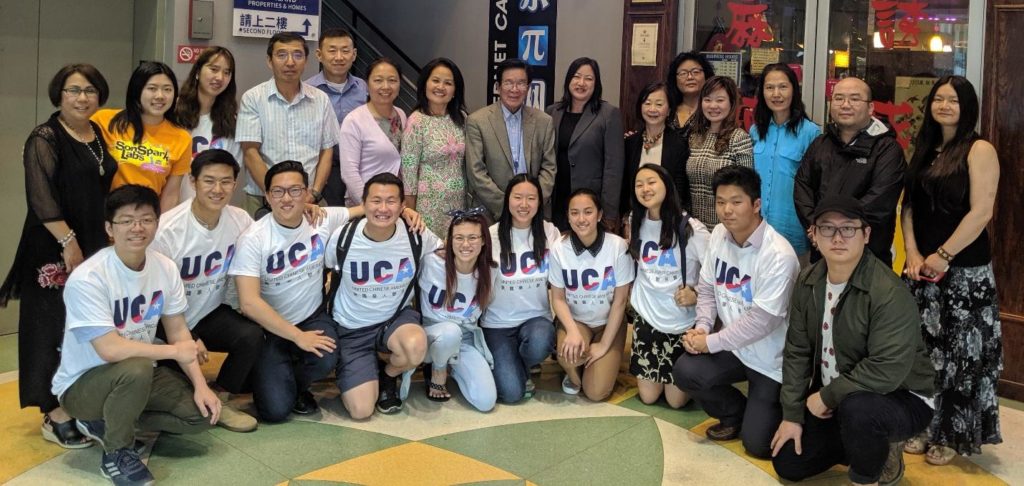
UCA is excited to share some updates on the new youth program from UCA Illinois: Civic Engagement Summer Internship. The program’s mission is: Train, Connect, Collaborate, Empower and United civic leaders and local organizations in USA.

The program provides students internship opportunities in elected officials’ offices or government agencies, whether at the local, city, county, state, or federal levels, and selected nonprofits to inspire students’ interest in government and public policy, to build a pipeline of Asian Americans in public office, and to build strong coalitions with participating agencies, offices, and organizations. The program is made possible with a grant from Civic Leadership USA (CLUSA) .

We want to express our heartfelt thanks to the following offices participated in the program and hosted our interns:

  • Illinois State Representative Theresa Mah’ office
  • Chicago 12th Ward Alderman George Cardenas’s Office
  • Illinois Department of Human Services
  • Illinois Department of Corrections
  • Illinois Department of Children and Family Services
  • Illinois Human Rights Commission
  • Illinois Business Immigration Coalition
  • City of Aurora

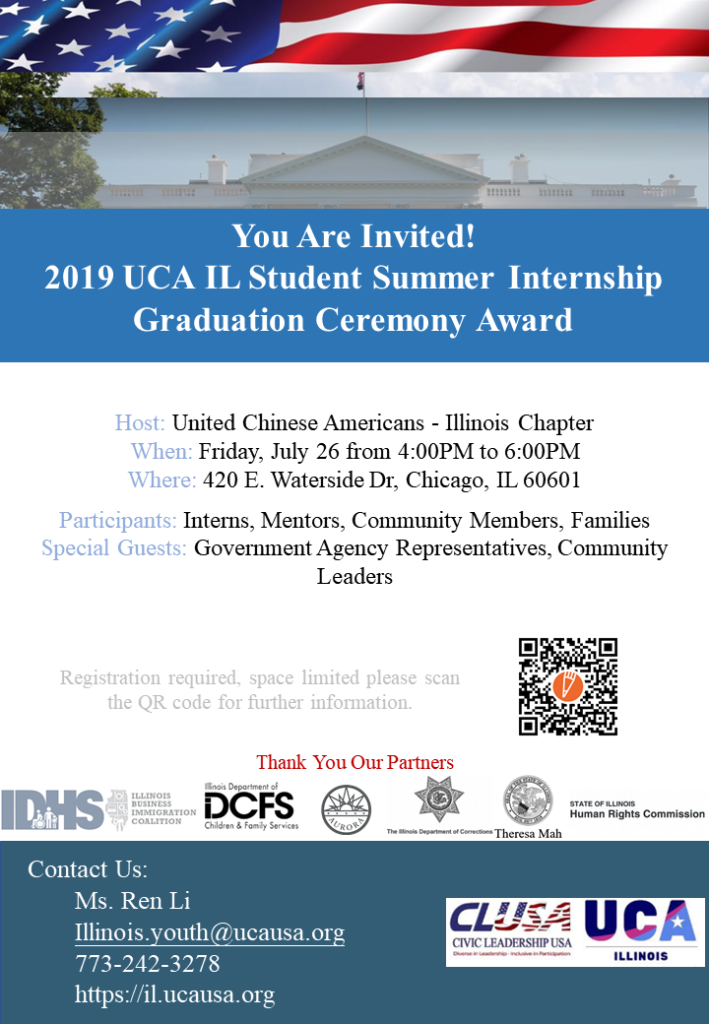
Now we’d like to invite you to join the graduation ceremony with representatives of these government offices, our interns/students, their mentors and families, future interns and community members on Friday July 26, at 4-6 pm in Chicago.

Please see details about the event on the flyer below. You will hear our honoured officials and speakers from these offices and our interns sharing their inspiring stories and experiences.

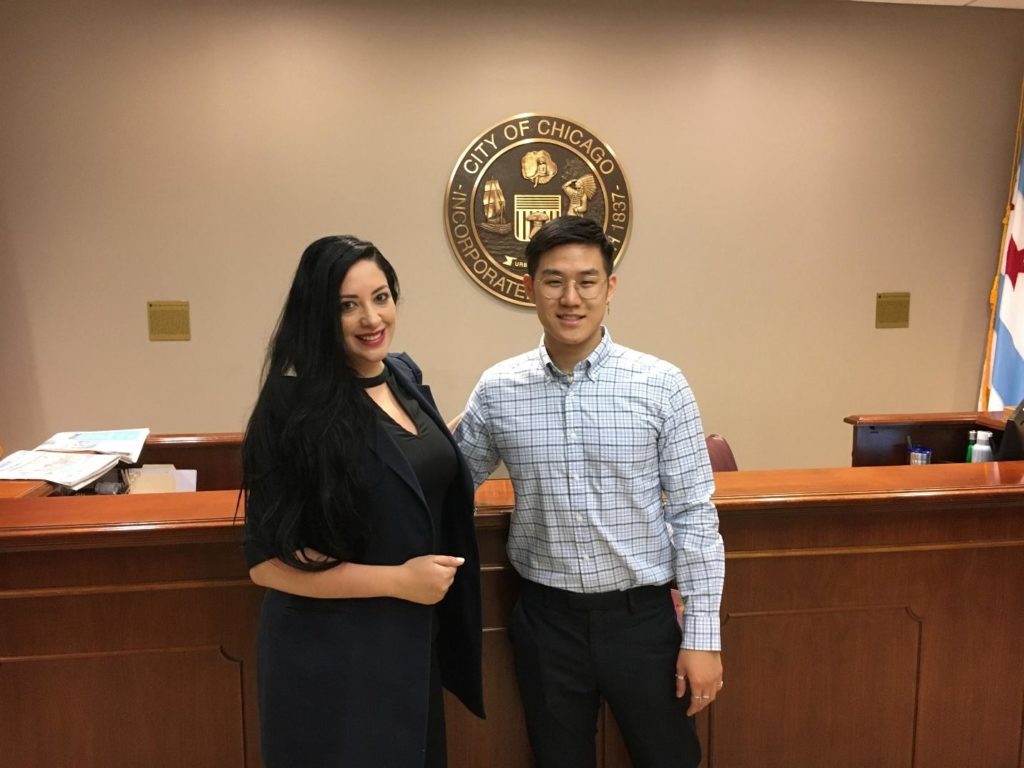
Civic engagement has been a key mission for UCA as an organization. Over the last three years, we have done a lot to increase the engagement of Chinese Americans in their communities and civic processes. To more effectively carry out that mission, we also need to get the next generation involved. We would like to help the youth to become more aware of the social and political environments. Having the chance to participate in the processes and understand how governments work is a great way to achieve that. Our interns in Representative Mah and Alderman’s Cardenas offices shared that each citizen’s voice does count and these offices’ daily work is related to every citizen’s daily lives.

Some of our interns also find governments can be a great place to apply the academic knowledge and professional skills that they have acquired at colleges, learn about social justice, and simply grow and network as young adults. For example, the intern at City of Aurora was assigned to work on regulations of commercial signs. It’s a good fit for his Urban Planning major in college. Another student in Biology found relevant work during his internship at Department of Human Services in fighting abuse of controlled substances. Our high school interns learned a great deal at Human Rights Commission about social justice. The parent of one of the two students interning at Department of Corrections shared with me that the internship is the best time he has this summer, and proudly included the experiences on his LinkedIn profile.

The internship was coordinated by Ren Li, VP of UCA IL who works with Jean Ma, Coordinator for Civic Engagement. They also participated in National CLUSA internship training with four of our interns late June. They got the great opportunity to gain insights into how we get more involved in the civic processes around the country, and developed their networks of Chinese American youth communities.

To help interns adapt to the work environment and develop themselves, we had two group trainings and each was assigned with a mentor. The mentors are mostly community leaders with deep experience in government, civic services, or their respective professions. These mentors are Ms. Marjorie Moore of DCFS, Representative Theresa Mah, Ms. Nancy Chen, Ms. Winnie Chan, Ms. Hongbo Wang, Ms. Jing Kong, Mr. Haibo Guo, Ms. Jan Zheng, and Mr. Yaoming Pei.

If you have any questions about the program, you may contact Ms. Ren Li, the program’s coordinator, at illinois.youth@ucausa.org or by phone: 773-242-3278. We are looking forward to seeing many of you at the July 26 event! We will start to take names for the application for 2020 summer internship at the event.

Carnegie-Mellon is the latest to answer to UCA’s Call to Speak Up, joining U-Pitt, John Hopkins, UC San Diego, U-Chicago and more…

Carnegie-Mellon is the latest to answer to UCA’s Call to Speak Up, joining U-Pitt, John Hopkins, and more...

Further development since last update. (Click for details). Carnegie-Mellon University, joining U-Pitt, John Hopkins, UChicago, UC San Diego, and Caltech, issued statement to CMU community supporting Chinese and other international scholars and students. More institutions previously issued similar statements since February, 2019. Read the original call-tospeak-up (click here).

08/15/2019

Dear Members of the Carnegie Mellon University Community,

I write to you today about the vital importance of America’s research universities to our economic prosperity and national security, and the need to recommit to what has made us so successful. As public concerns and political debates emerge about global engagement in higher education, we must ensure that our research ecosystem remains strong. This requires steadfast commitment to both the free flow of ideas and the safeguarding of our work as required by the national interest.

In this time of intense rhetoric and in the wake of recent incomprehensible tragedies, it is important to remember that the United States is a nation of immigrants. People the world over flowed into this land, continually tempering and galvanizing us with new ideas and spurring the relentless renewal that has defined our global leadership. Here in Pittsburgh, generations of immigrants forged futures for themselves and their families — and the nation — in the factories lining the three rivers. Andrew Carnegie, an immigrant from Scotland, founded the Carnegie Technical Schools to educate the sons and daughters of those factory workers.

With this in our DNA, Carnegie Mellon has been an international university since our inception more than a century ago. And as our institution has grown and transformed, we have always been at the cutting edge of countless fields, such as artificial intelligence, performing arts, engineering, computational finance and behavioral economics, precisely because we have kept our doors open to the best and brightest from around the country and around the world. This is who we are and who we always will be. As an immigrant myself, I value this fundamental principle on a very personal level.

In the context of this great, open, immigrant nation, we also must recognize that foreign influence in the form of intellectual property theft, cyber attacks, espionage and other broad-scale, state-sponsored efforts are direct threats to our nation’s security and economic prosperity. Carnegie Mellon takes these threats seriously. At the same time, the negative tone of the public discourse on international issues and unjust scapegoating of segments of our community are causing mounting anxiety and unease on campuses across the country. Our campus, especially our international community, is not immune from this anxiety and we must take this just as seriously.

To break through the heat of this debate — one that is tinged with controversy and concern involving both immigration policies and U.S.-China relations — we must ask a fundamental question: how can we preserve and enhance the diverse research, education and innovation ecosystem that has fueled our nation’s broad prosperity since World War II? In other words, can we be both open and secure? I believe we can.

First, we must be — and are — ever-vigilant to protect our work and safeguard the national interest by following best practices, applicable laws and policies that shield us from foreign interference and exploits. We will continue to work directly with national policymakers and our colleagues at the Association of American Universities (AAU) to preserve the integrity of university-based research. Mary Sue Coleman, president of the AAU, and Peter McPherson, president of the Association of Public Land-grant Universities, recently penned a joint op-ed about academic institutions preserving open collaboration while maintaining vigilance with respect to national security. Carnegie Mellon is proud to be part of a network of universities committed to both.

Second, we must double down on what we do best: leading the world in innovation, creativity and finding solutions to society’s most pressing challenges. America’s research and innovation ecosystem is the envy of the world, and it is powered by higher education, serving as an extraordinary engine of social mobility and catalyzing our nation’s economic prosperity. Our research enterprise has been successful because we have always competed globally not in the hope that others will lose, but in the belief that when we win, the world wins. That’s why we must not retreat from global engagement. We must not change how we do research. We must not cripple the engine that has delivered amazing benefits for society. In this most disruptive age, our nation must invest and out-innovate.

Finally, as a nation we must prioritize immigration policies that are central to continuing our global work and deepening our commitment to national security. This ranges from the need for swift and accurate resolution of visa and other immigration determinations for those seeking to join our university communities, to a final action by Congress on the Deferred Action for Childhood Arrivals (DACA) program. As we have before, we encourage our nation’s leaders to finally provide a solution for DACA students who came to the United States as children, were raised here and have always called America their home.

Today, CMU’s researchers and scholars are undertaking bold projects to solve real-world problems. Our discoveries in areas like robotics and cybersecurity enhance our nation’s economic prosperity and safety. We have been successful on those fronts only because of the dedication and contributions of all of our scholars and students, many of whom come from all over the world.

So, to the members of our international campus community, without hesitation and with heartfelt affirmation, let me say: We value you. We support you. We will always welcome you. This is a campus that is unafraid of inclusivity. We are compelled and defined by it. And that will never change.

Earlier this year, I charged CMU’s Committee on International Engagements with developing principles and processes to guide our efforts in the way we engage international partners. This work is happening in earnest — work that will result in our sustained ability to advance knowledge and develop talent through our research and educational missions. The committee will share its recommendations with the university community this fall.

As we embark upon a new academic year full of promise and opportunity, let us reaffirm our belief in the power of education to transcend social and economic divides. Let us take pride in knowing how much our work matters. And let us continue embracing the diversity that has always made, and continues to make, it all possible.

Warm regards,
Farnam Jahanian
President
Henry L. Hillman President’s Chair
Carnegie Mellon University

07/22/2019

Dear Fellow Pitt Community Members:

Our very mission—to leverage knowledge for society’s gain—demands a global perspective. We seek to tackle the world’s greatest challenges. We welcome the most talented faculty, students, staff and visitors from near and far. And we collaborate with the most distinguished scholars, universities and research institutions from around the world.

These international pursuits and collaborations are the oxygen for the University of Pittsburgh’s vibrant and rich academic environment. Some of our most celebrated members—scholars and discoverers like Yuan Chang, Adolf Grünbaum, Cho-yun Hsu, Maud Menten, Carmelo Mesa-Lago, Wangari Maathai and Vladimir Zworykin—chose to join our University community and have written significant chapters in Pitt’s remarkable history of accomplishments and achievements. Today, as our celebrations for the Year of Pitt Global conclude, I am confident that some of the brightest storylines in Pitt’s future will be authored by faculty, students and staff who have also joined our University from afar.

Yet, this long-standing tradition of global academic engagement is increasingly under attack. Rising geopolitical tensions over economic competitiveness, trade and national security have begun to erode support for the robust global academic engagement that we have long enjoyed—and which is crucial for Pitt’s continued success.

National and economic security are based, to a large extent, on access to the latest knowledge and technology. This linkage places research-intensive universities like Pitt at the front lines of these issues. As a result—and for the first time since the end of the Cold War—university-based research and scholarship are facing calls to restrict global engagement. A rising tide of fear is fueling uncertainty, confusion and rapidly changing responses by our federal agencies, and the effects of government policies on research universities have been especially striking.

Collaborations between scientists across national boundaries have been subject to unprecedented scrutiny. Established practices have been prohibited on technicalities. And researchers, particularly immigrants and visitors from China, have been the target of aggressive investigations and public sanctions.

At Pitt, our mission demands better—and so does our University community.

As a public institution, we will continue to uphold all laws governing research, innovation and international partnerships while fostering a vibrant and globally engaged university. As a world leader in research and learning, we must both excel at our mission and protect public interests—despite the difficult climate and challenges involved.

This work requires us to remain engaged with Congress, federal agencies and national university associations to advocate for sensible and clear government actions that address real threats without causing irreparable harm to our nation’s research universities, which are still admired around the world.

It also requires us to issue new guidance as needed. As a result, I urge everyone to pay close attention to new information, since this is one of the best tools we have for helping our community members navigate the current, rapidly shifting legal and regulatory environment.

And, when new guidance does arrive, we promise to assist any affected University community member and to do so without fear, prejudice or invidious distinctions based on an individual’s nationality, ethnicity, race or country of origin.

For the international members of our academic community, I will state the obvious: You belong here. We welcomed you to our campus in good faith and in compliance with all applicable laws and regulations, and we want you to have a productive and positive Pitt experience. We will continue to do our part to help you feel at home here—no matter where else you have called home.

I invite our extended University community to join me in this effort, and—as always—I look forward to seeing what we can accomplish together.

Sincerely,

Patrick Gallagher

07/11/2019

To: The Caltech Community
From: Thomas F. Rosenbaum, President and David A. Tirrell, Provost
Date: July 11, 2019
Re: Our International Community of Scholars

The strength of the United States as a scientific, technological, and economic power has depended crucially on the contributions of scholars and entrepreneurs from all over the world. Our universities, in particular, have long opened their doors to foreign talent, seeking to become destinations for the most creative, original minds, irrespective of heritage or national origin. At Caltech, 45% of our faculty were born outside the United States, and roughly the same percentage of our graduate student body is international. Approximately 35% of American Nobel Prizes in the sciences have been awarded to individuals born outside the United States.

Recent news stories and communications from government agencies have raised concerns about threats to U.S. national security and economic competitiveness, concurrent with rising tensions in international trade and the growing technical capability of international corporations. In such a climate, it can be tempting to try to protect our national interests by putting boxes around our researchers and our laboratories, to attempt to constrain the transfer of scientific discoveries and technological innovation. But the academic enterprise is utterly ineffective in that mode; it depends on talent and interaction and the challenge of ideas, all of which may arise anywhere in the world. Our universities thrive by bringing together people of diverse perspectives, of different backgrounds, of distinct sensibilities, and letting them hone their conceptions of the world by confronting and shaping each other’s ideas.

It is essential that we maintain the open, vibrant sense of community that is so central to successful scholarship and innovation. In particular, we must ensure that our international colleagues – students, postdoctoral scholars, staff, and visitors – continue to feel welcome here, and continue to enjoy the personal and professional support that they need to pursue their most ambitious goals. We have heard from some of these colleagues that they are feeling heightened stress, not because of actions taken by our community, but because of the broader public conversation and policies that are understandably unsettling. Under such circumstances, we must all make special efforts to reaffirm our embrace of scholars from all over the world, our commitment to open exchange, and our celebration of the richness of international collaboration.

07/09/2019

Dear Johns Hopkins Community:

Over the past several months, we have watched with growing concern the change in tenor of the national dialogue regarding the role of universities in supporting the open international exchange of ideas and people, while also preserving U.S. national security interests. Amid increased scrutiny by Congress and government agencies of research endeavors involving foreign-born faculty and students, recent media attention to potential national security threats posed by foreign governments’ access to intellectual property, and foreign nations warning students about studying in the United States, our international community of students and scholars at Johns Hopkins have expressed mounting anxiety and concern.

We write today to reaffirm our enduring commitment to our international students, researchers, and patients. The success of a research university like ours is predicated on the open, robust exchange of ideas; enhanced by our ability to welcome people with different academic and practical training, experiences, cultural backgrounds, and viewpoints; and improved by our capacity to nurture talent from around the world.

Johns Hopkins has a long and storied history of international collaboration in research, education, and patient care, from Dr. William Welch’s partnerships in medical education in China in the early 20th century to our academic and clinical commitment to fight AIDS in sub-Saharan Africa. Today, our faculty are working in more than 110 countries, and we are expecting an entering class of undergraduates that boasts the highest percentage of international students in our history. They will be welcomed into an academic community that includes more than 7,000 international students, faculty, and researchers, who hail from more than 120 nations and share our commitment to discovery that makes a measurable impact on the quality of human life.

We are also an institution with a proven commitment to protecting our nation’s security and advancing its economic success. Consistent attention to best practices in disclosing, managing, and securing federally funded information and intellectual property protects the integrity of our research and its use beyond the borders of our institution.

We believe that that these twin commitments can and must be maintained, and that we must remain vigilant about the long-term consequences of sacrificing one to the other. When any members of our community unfairly bear the burden of government mistrust simply by virtue of their place of birth, country of residence, or ethnicity, we risk undermining the core tenets of our success as an institution and as a nation. The potential for such scrutiny to have a deadening effect on the free and unfettered pursuit of ideas and the important contributions of international scholars and researchers is distressing in the extreme. Our great societal challenges are not constrained by geographic boundaries, and our pursuit of solutions must therefore also transcend those borders.

As Johns Hopkins pursues innovation and discovery to benefit our nation and our world, we will advocate for sound policies that allow us to continue to be a place of open academic exchange. We remain steadfast in supporting our colleagues and students from abroad who have committed themselves to our shared pursuit of truth and service to humanity.

Sincerely,

Ronald J. Daniels
President
Johns Hopkins University

Sunil Kumar
Provost and Senior Vice President for Academic Affairs
Johns Hopkins University

Paul B. Rothman
Dean of the Medical Faculty
CEO, Johns Hopkins Medicine

06/13/2019

ALL ACADEMICS, STAFF AND STUDENTS AT UC SAN DIEGO


SUBJECT:   Reaffirming Our Support for UC San Diego’s International Community

In recent months, increased media attention focusing on the diplomatic and economic tensions between the United States and foreign countries have led to greater scrutiny of academic exchanges. In turn, a feeling of unease has developed among many international students and scholars here at UC San Diego and at other universities across the country.

As one of the premier research institutions in the U.S., UC San Diego engages in cutting-edge, impactful research and pedagogy with our global partners. We are mindful of the reality of economic and technological espionage and the importance of confidential and proprietary information. UC San Diego takes great care in protecting our intellectual assets while encouraging global engagement.

At a time when national security issues lead news reports, it is critical that we remain welcoming to students, staff, faculty, visiting scholars, and other members of our community who come from other countries, or for whom those countries are an ancestral home.

UC San Diego is unequivocally committed to its international students and scholars. We value every member of our community and actively cultivate a diverse and inclusive campus that encourages respectful open dialogue per our longstanding Principles of Community.

More than 8,700 undergraduate, graduate and non-degree students from outside the United States, representing 111 countries, study at UC San Diego, and more than 1,500 international scholars conduct research and provide instruction. Within our faculty are more than 400 educators from around the world who create knowledge, teach and mentor students, and add immeasurable value to our collaborative intellectual community. The university also employs a number of individuals from around the world who serve in a wide variety of roles that sustain UC San Diego’s world-class reputation of local, national and global impact in service to others.

Together, these individuals make significant contributions to UC San Diego’s research and educational endeavors. By bringing the most talented and promising students and scholars to our university, and working closely with knowledge partners across the globe, we are better able to collaborate and find solutions to the world’s most pressing issues.

If you have concerns about aspects of research partnerships taking place at UC San Diego, we encourage you to contact the Office of the Vice Chancellor for Research at vcresearch@ucsd.edu. For more information on UC San Diego’s international student population, contact the Office of the Vice Chancellor for Student Affairs at vcsa@ucsd.edu. For questions concerning faculty, contact the Office of the Executive Vice Chancellor for Academic Affairs at evc@ucsd.edu.

UC San Diego is a student-centered, research-focused, service-oriented public research university, open to people from all over the world. We are proud to support research and educational collaborations with both domestic and international scholars and partners. International exchanges are instrumental in opening and sustaining important dialogues that ultimately make our world a safer, more equitable place to live.

Pradeep K. Khosla
Chancellor

06/10/2019

UCA Raises Concerns For Chinese American Scientists as Collateral Damage

United Chinese Americans (UCA) Raises Concerns For Chinese American Scientists as Collateral Damage in the Crossfire Between the United States and China Due to Deteriorating Relations

WASHINGTON, D.C. – April 25, 2019.  The United Chinese Americans (UCA), www.ucausa.org, expresses grave concern for Chinese American scientists, who have been made to feel increased scrutiny and increasing suspicion of their loyalties based on their ethnic background.

Last week’s news reports on what is likely the first wave of a crack down targeting primarily Chinese American scientists at MD Anderson Cancer Center in Houston are unsettling, because of the manner in which the investigations were carried out, and the fear they have generated. No scientist has been charged with a federal crime. Yet, reportedly, at least 10 scientists have retired, resigned, been fired or placed on administrative leave, with more parties affected. Fifty-five other NIH-funded institutions are currently carrying out similar investigations in response to U.S. government concerns. UCA is closely monitoring these developments.

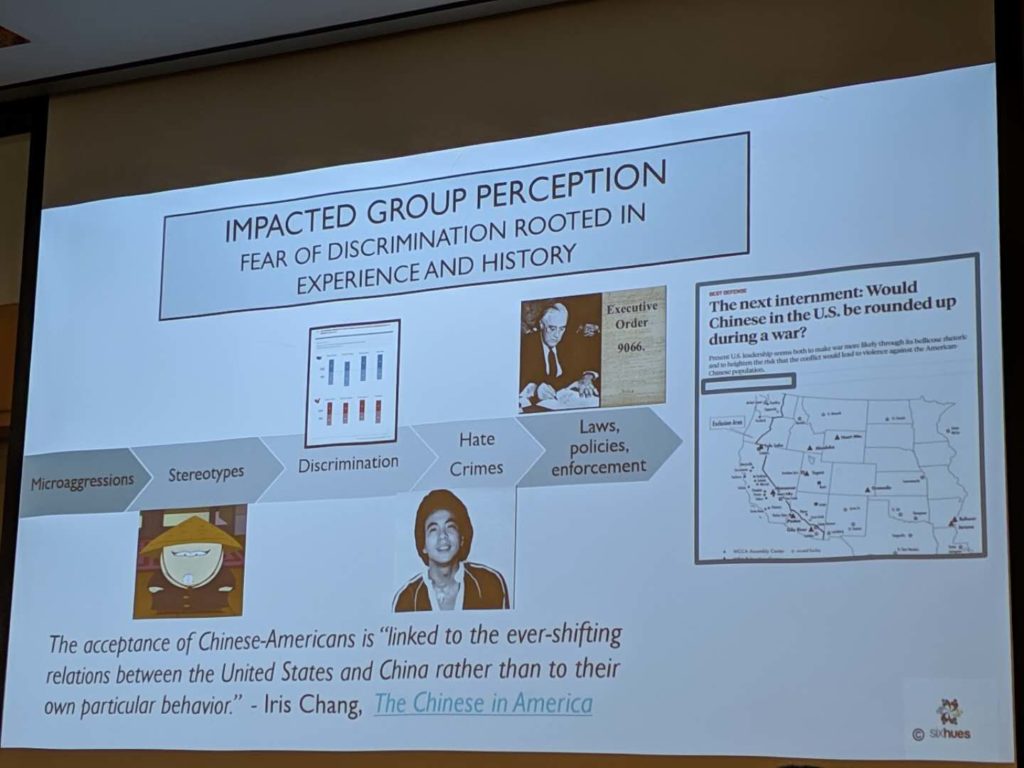
More broadly, the sharp deterioration in U.S.-China relations of recent years has endangered academic freedom in American universities and research institutions as well as scientific exchanges between the two countries. At the same time, tighter scrutiny and growing distrust of Chinese Americans have had a profoundly adverse effect on this community, who historically has suffered profoundly from the notorious Chinese Exclusion Act and Red Scare. Once again, Chinese American scientists are caught in the crossfires between the two global powers, becoming collateral damage as a result of the charged atmosphere.

Chinese American scientists, who have made tremendous contribution to America’s scientific progress and technical prowess, are increasingly being questioned, investigated, suspended and even prosecuted. To avoid suspicion or to be able to continue their work, some scholars with Chinese background or ties have been forced to change the direction of their research or the nature of their grant application, or to reduce or end reciprocal scientific collaboration with China.

But the vast majority of Chinese American scientists are law-abiding. Some who have been prosecuted with espionage related charges have turned out to be totally innocent. But to this day, their reputations, careers and lives remain in tatters. In many other cases, people have had multiple felony charges leveled against them but at the end, have been convicted of much lessor offenses, e.g., mishandling of data. Ever since 1996, altogether fewer than 200 defendants—about 31% of them or 58 individuals being Chinese nationals or Chinese Americans—have been charged, not all convicted, under the Economic Espionage Act. Of those, most were motivated by personal financial gains, not economic espionage carried out in collaboration with a foreign power or with the intent to benefit a foreign government.

Let’s be clear: American interests and national security, unquestionably, must be protected. Where a few wrongdoers have acted with intentional malice toward our nation, UCA condemns such behavior in the strongest terms and supports vigorous prosecution of them according to the law.

To address the current situation, UCA makes the following five appeals:

  • We call on the U.S. higher education and scientific communities to continue to uphold and strengthen scientific collaborations around the world so they may continue to benefit all mankind. We salute the University of California at Berkeley, Stanford University, the University of Michigan and the University of California at Davis for their efforts to uphold these principles and ideals as well as for their civil rights concerns for their faculty members and students, and call on more institutions to follow their example.
  • We call on Chinese American scientists to continue to carry on the indispensable role they have played in maintaining America’s lead position in scientific research and global competitiveness. To this end, we fully endorse the strengthening of compliance efforts and ethical standards guiding scientific research and collaboration. We call on Chinese American scientists—indeed all scientists—to adhere strictly to all applicable laws, regulations and practices, and to cooperate in reporting any breaches to appropriate authorities.
  • We call on Chinese American scientists – indeed, all Chinese Americans – to continue to strengthen U.S.-China people-to-people relations through scientific exchanges and educational efforts rather than retreating. An adversarial U.S.-China relationship is harmful to Chinese Americans, to the United States and China, and to the future of the world. Chinese Americans have a unique role to play as communicators, bridge builders and messengers of peace between the two peoples.
  • We call on the Chinese government to earnestly protect U.S. intellectual property rights, as American scientists participate in its talent programs and other exchanges, and vigorously strengthen the standardization and transparency of those programs. The Chinese government should also improve its supervision and management of such programs, including sub-national ones, toughen two-way compliance requirements and enhance training to reduce or eliminate doubts and concerns other countries may have about such programs.
  • Finally, we call on U.S. law enforcement agencies to strengthen internal training and safeguards to reduce implicit bias and discrimination, to enhance communication with Chinese American communities and to ensure that the freedom and civil rights of all Chinese Americans are rigorously protected.

The United Chinese Americans (UCA) stands at the forefront of safeguarding the rights and interests of Chinese Americans. We will continue to conduct legal awareness education in the Chinese American community, to promote dialogue and communication between the Chinese American community and the FBI, the Justice Department and other government agencies so that Chinese American scientists may lead normal, peaceful and productive lives.

UCA is a nonpartisan, nonprofit organization whose members across the nation comprise Chinese American immigrants dedicated to contributing to and participating in the full civic life of American society.

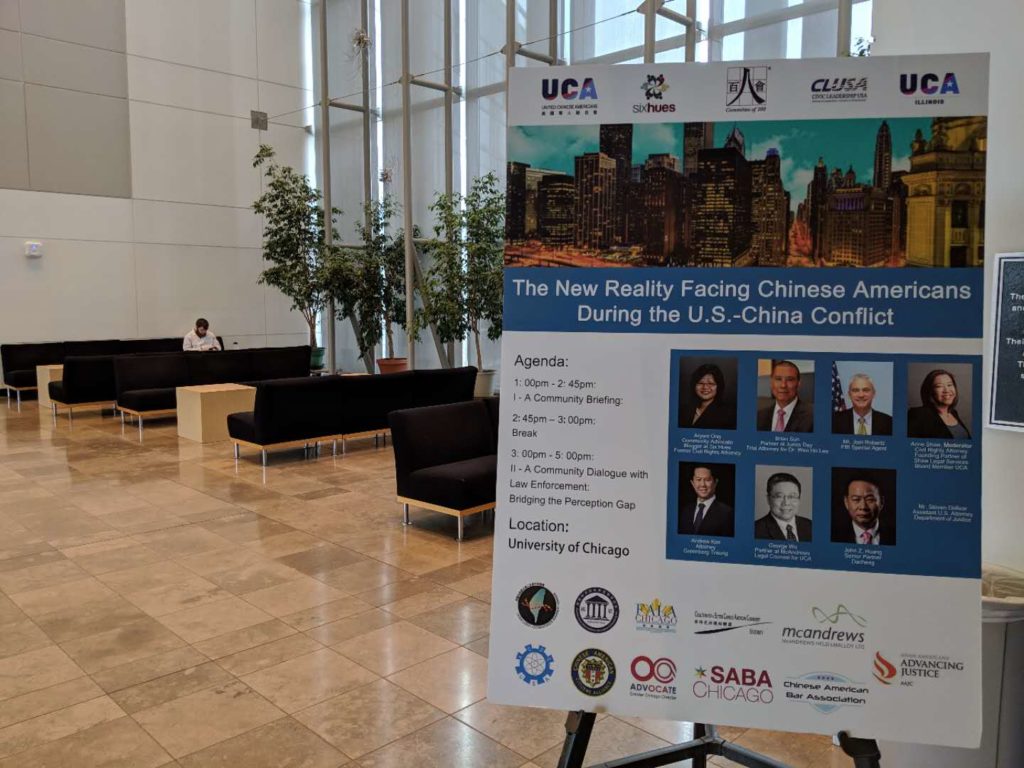
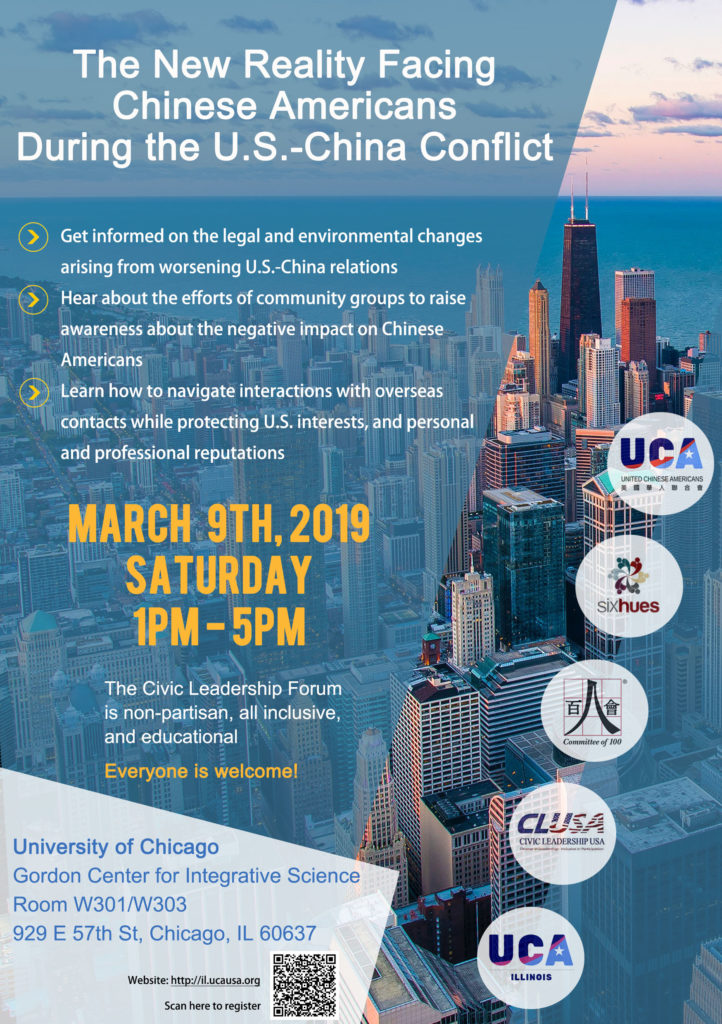
UCA Forum: A New Reality Facing Chinese Americans

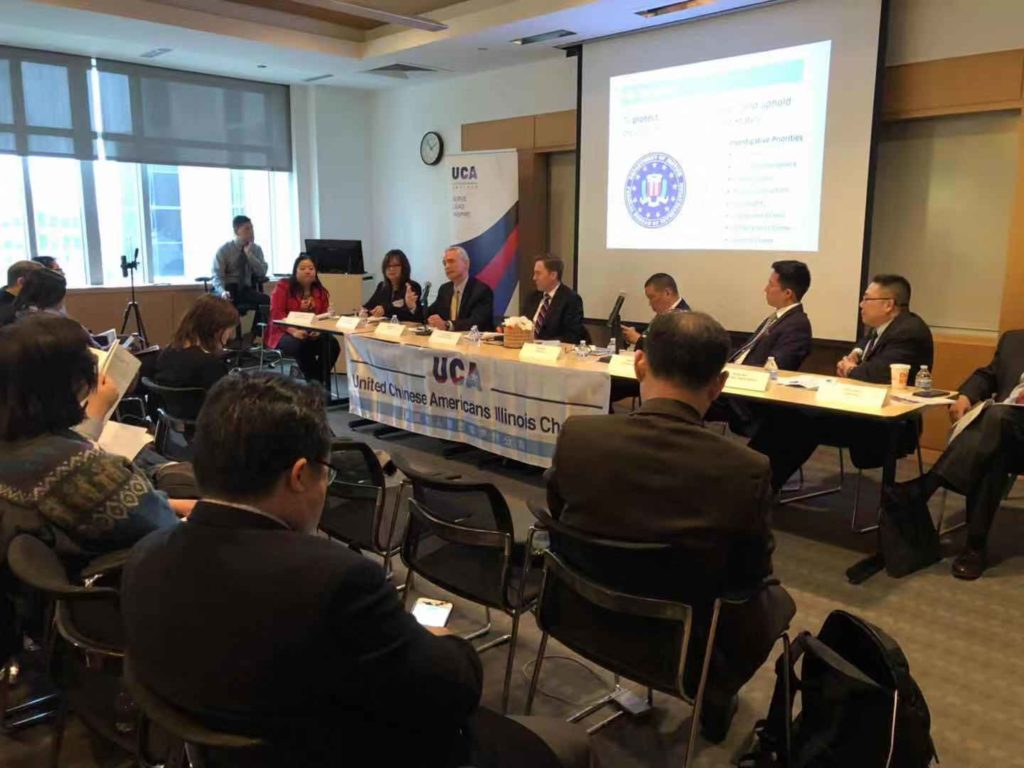
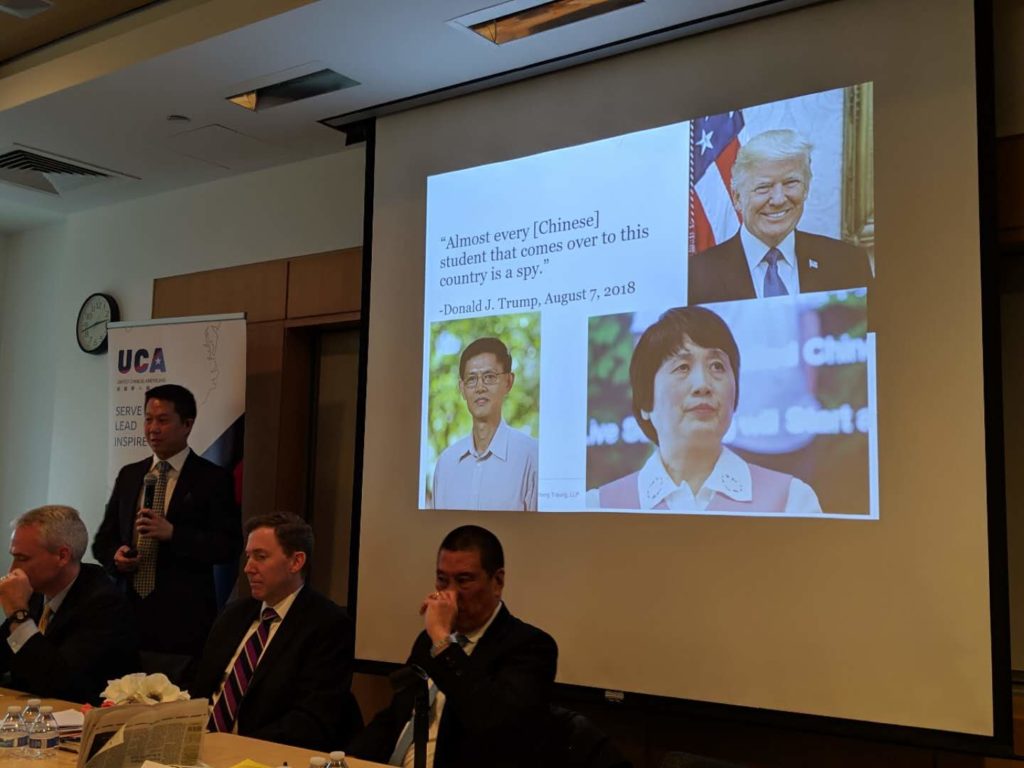
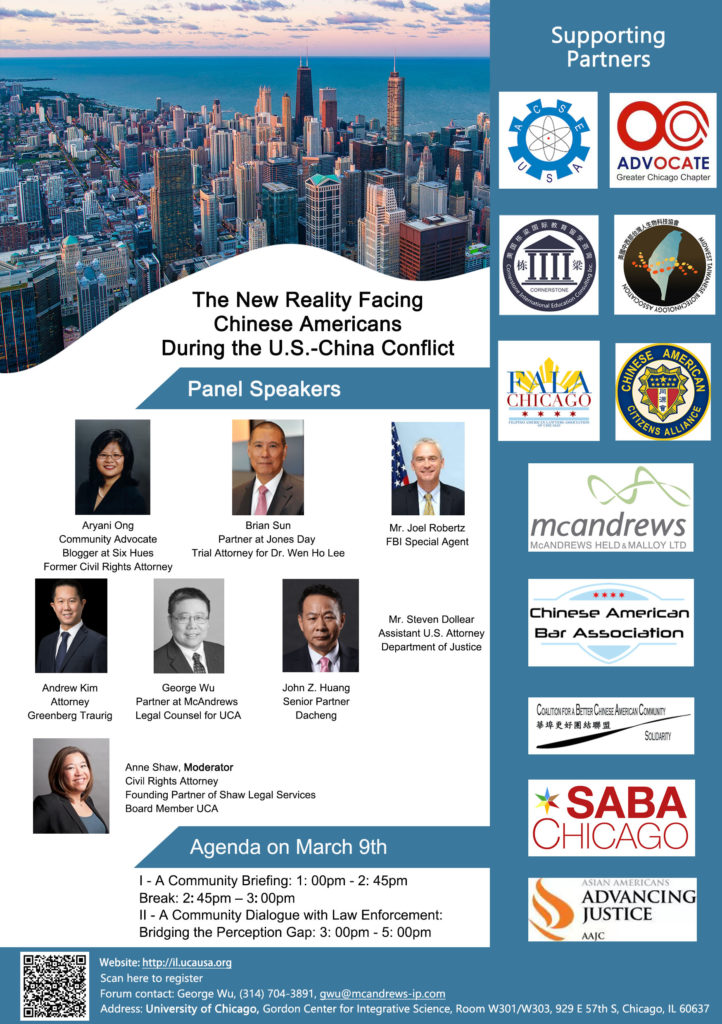
The much-anticipated forum on the new reality facing Chinese Americans during China-US conflicts has successfully wrapped up. UCA/UCA-IL, along with CLUSA, Committee of 100, and SixHues, invited a panel consisting of renowned lawyers, FBI investigator, and activists to bring some crucial messages to the Chinese American community.

Data have shown that Chinese Americans are being a more scrutinized ethnic group under the current administration’s policies. Some policies in China such as the “1000-person Plan”, does not help, especially when there are existing stereotypes against Chinese. And the lack of experience in sensitive business activities as well as dealing with law enforcement has been an issue as well.

Brian Sun, a distinguished trial lawyer in complex business litigation and white collar criminal defense, emphasized on the importance of being transparent and law-abiding. It is a fact that 22% or suspects of espionage cases are Chinese Americans, who count for only 1.8% of population. It is also a fact that many Chinese Americans unintentionally acted inappropriately or even illegally.

Another lawyer, George Wu, specialized in Intellectual Properties, also called for transparency and full compliance with policies. It is critical to take some time to study the company policies. For example, downloading data to USB, or visiting the company intranet from within China via VPN, could raise some serious eyebrows.

However, the good news is that law protects everyone’s rights, including Chinese Americans. John Huang, lawyer in Chicago, assured the audience that there are only about 100 Chinese Americans currently under investigation of espionage. According to the speaker, Chinese students have not been accused of economic espionage. As to immigration, 90% of EB5 applications still come from Chinese ethnic group. It may be noted, however, that Chinese students and scholars faced generalization as a “counterintelligence risk” by FBI director Chris Ray.

One of the highlights in the Q&A session is the theft of business secrets. Any of the following could count as theft and make it hard to defense: make copy of business secret without approval; obtain and transfer non-public confidential information; disclosure of such secret for the purpose of personal, financial gain, etc.

When it comes to investigation, it is important to clarify why FBI wants to talk with you, and understand that you are not obligated to talk with FBI without a lawyer. Wenho Lee and Sherry Chen, two victims of the espionage accusals, both talked with FBI for a long time without the presence of a lawyer. It is reminded that you have the right to be silent.

A detailed report in Chinese has been published via our WeChat public account. Click to read.

CLF News: National Security and Asian American Community

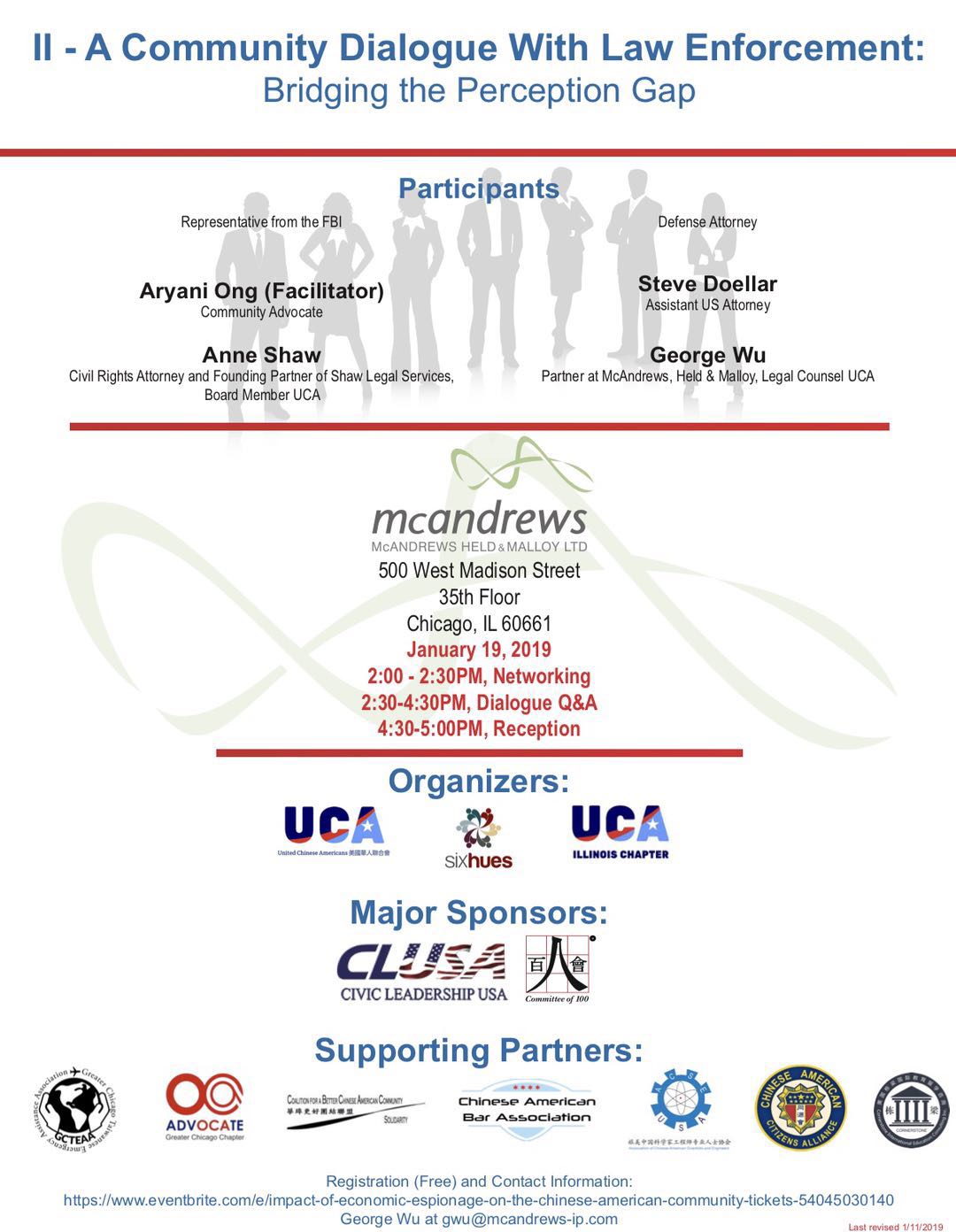
如何应对美国当下以“国家安全”为由的经济间谍案越演越烈的困境?在华人生存发展环境恶化情势下如何自我保护,共渡难关?华裔科学家郗小星和陈霞芬的蒙冤经历,给亚裔社区投下阴影,更多人日益担忧自己乃至下一代会成为中美关系冲突的牺牲品。

最近,一份来自百人会发布的《起诉中国间谍:经济间谍法的实证分析》报告发现,1996年至2008年,有17%的经济间谍被告是华人,有8%是其他亚裔;而从2009年至2015年,52%的经济间谍被告是华人,是之前的三倍多。

当前美国政府已把中国作为一个军事和经济上的竞争对手,在美华裔,尤其是新移民更需要面对这一现实,在科技领域工作的华裔更易引起两国政府的特别关注,甚至在工作场所下载文件,都有可能被视作危及国家安全。

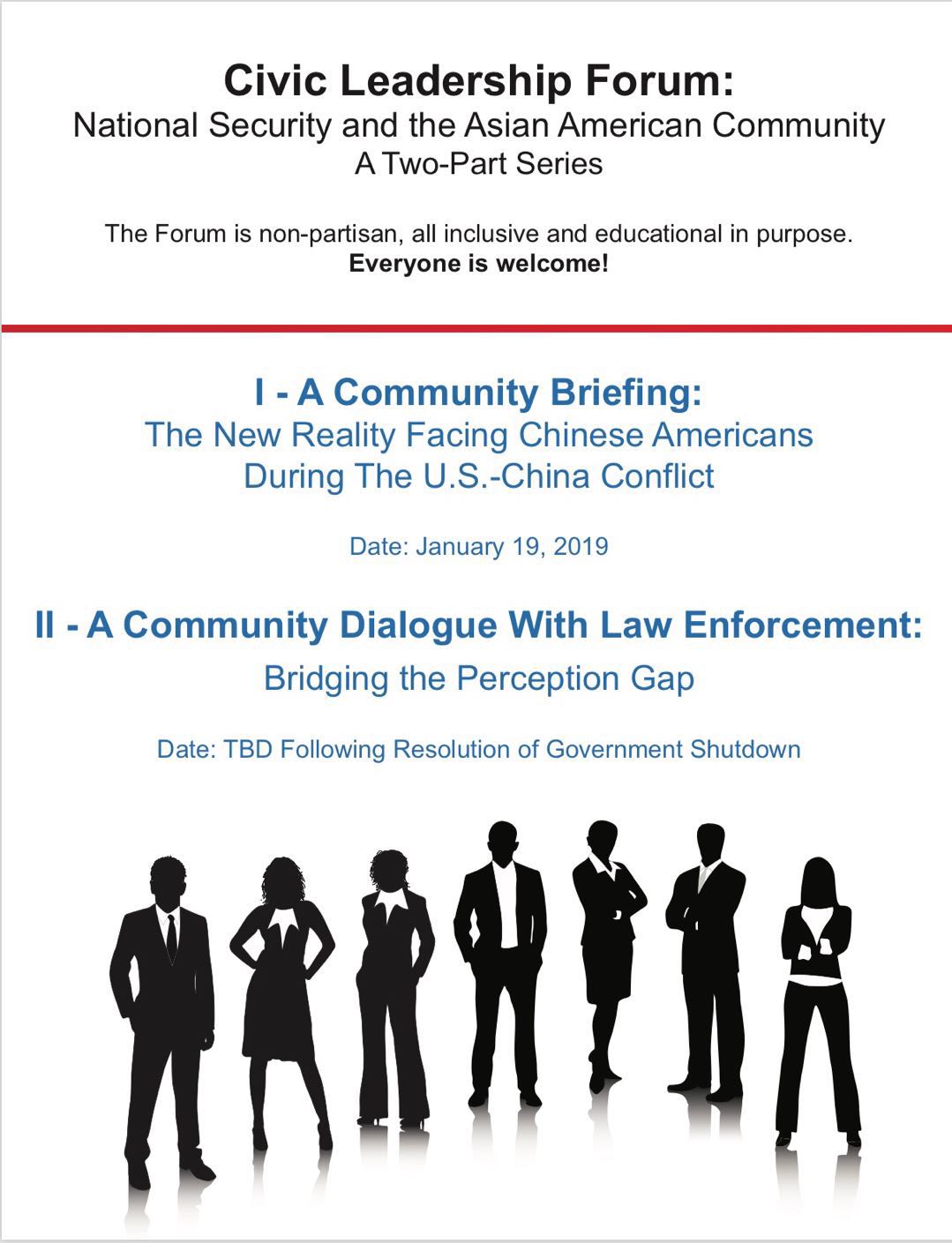
面对这一关系美国亚裔生存发展切身利益的困境,主办方:美国华人联合会(United Chinese Americans, UCA),Sixhues, UCA IL,以及主要协办方:百人会(Committee of 100)、Civic Leadership USA (CLUSA)等多个亚裔组织将推出两期“公民领导力论坛”,以“国家安全问题对亚裔社区的影响”为主题,关注这一敏感话题。


公民领导力论坛分为两部分:第一部分将聚焦“社区信息交流:华裔如何面对中美冲突带来的新环境”,第二部分将关注“社区与执法机关的对话”

1月19日先期举办的第一部分论坛,将特邀多领域的专家解析法律和社会环境变化所造成的这些现象,通过美国亚裔的历史背景,分析为何华裔担心此类政府行动可能带有基于种族的偏见,了解美国各地社区组织如何与政府部门和执法机关进行沟通,反映种族偏见问题、提出透明度和问责制的要求、与社区进行对话等。论坛将详细回应备受华人关注的敏感话题,切实保护华人权益。

论坛特邀演讲人:

• Brian Sun:Jones Day律师事务所主管合伙人,曾担任李文和的辩护律师,在复杂的商业诉讼和白领犯罪方面是在全面享有盛誉的辩护律师,被Lawdragon杂志评为美国500名主要律师之一,在《钱伯斯》排名被列为一级律师,曾担任美国亚太裔律师协会主席

 • Andrew Kim:哈佛大学法学院毕业,南德克萨斯法学院访问学者,Greenberg Traurig律师事务所诉讼律师。曾在华盛顿大学圣路易斯法学院和康考迪亚大学法学院担任多年的法学院教授多年。百人会发布了由他联合撰写的报告《起诉中国间谍:经济间谍法的实证分析》有关种族问题的重要发现引发多方关注。

• 王爱玲(Aryani Ong):社区活动家/Six Hues的博主和前民权律师,是亚裔美国司法特别工作组的联合创始人。近期她领导开启了联邦调查局与美国华裔之间的对话,主持了第二届美国华人大会有关经济间谍案的重要论坛,并组织来自全美各地亚裔组织领袖参加在FBI华盛顿总部举行的高级别对话。

 • 吴大同(George Wu):McAndrews, Held & Malloy律师事务所合伙人,UCA法律顾问。他擅长在生物技术、制药和医疗器械行业为客户提供专利申请、商标和版权注册方面的咨询服务,并代表客户参加有关知识产权诉讼。在仿制药公司领域,他具有简易新药申请程序ADNA领域诉讼的丰富经验。

论坛主持人:萧爱玲(Anne Shaw)

民权律师,Shaw Legal Services 的创始人,UCA伊州分会理事,擅长商业、民权和人身伤害领域的民事诉讼。她长期积极致力于社区法律公益,应邀为其他律师教授培训课程,包括为大芝加哥亚裔美国律师协会主办的消费者破产课程担任教师等,她还与AABA共同主持建立华埠Pro Bono法律诊所。目前担任亚裔美国律师协会法律基金会主席。

本次论坛无党派偏向,以包容性和教育性为目标,欢迎大家踊跃参加。

时间:第一部分论坛 2019年1月19日(周六),下午 2-5点

      第二部分论坛时间待定

地点:McAndrews, Held & Malloy律师事务所

500 West Madison Street, 35th Floor, Chicago,IL 60661


特别鸣谢赞助单位:

美国华人联合会伊州分会(UCA IL)

大芝加哥华人律师协会

(Chinese American Bar Association ofGreater Chicago,CABA )

栋梁教育(Cornerstone Education)

Sixhues

芝加哥同源会

(Chinese American Citizens Alliance, CACA ChicagoLodge)

Organization of Chinese Americans(OCA Chicago Chapter)

旅美中国科学家工程师专业人士协会

(Association of Chinese-AmericanScientists and Engineers)

大芝加哥侨界急难救助协会(Greater Chicago Taiwanese Emergency Assistance Association)

华埠更好团结联盟(Coalition for A Better ChineseAmerican Community)

特别感谢:McAndrews, Held & Malloy律师事务所为本次活动提供的场地和招待!

联系人:吴大同( George Wu )gwu@mcandrews-ip.com

免费注册网址:请点击文尾左下“阅读原文”(Read More)即可进入注册页面

https://www.eventbrite.com/e/impact-of-economic-espionage-on-the-chinese-american-community-tickets-54045030140

青少年志愿者联系人:

李韧 rli@hotmail.com (可获志愿者服务证明)

Seasons Greetings

festive_christmas_banner.jpg
Dear UCA Family,
As we are approaching the end of memorable 2018 and beginning of an exciting 2019, we want to express our gratitude to our UCA family members and supporters nationwide, who have nurtured and sustained this UCA civic movement in our community.
At this special moment, we vow to renew our commitment and redouble our efforts to serve, lead and inspire our beloved community, making sure that we will continue the community wide civic and spiritual renewal started here at UCA Family!
Christmas is traditionally a season of giving and giving back, a beautiful ritual and virtue that we cherish. We hope you will continue to have UCA in your heart when you plan year-end charitable giving or corporate matching gift. We can dream and achieve so much more together, with your support and care.
This world is and will be a better place because of you! Thank you, the beloved UCA family!
Merry Christmas and Happy New Year!
Warmly,
The UCA Team

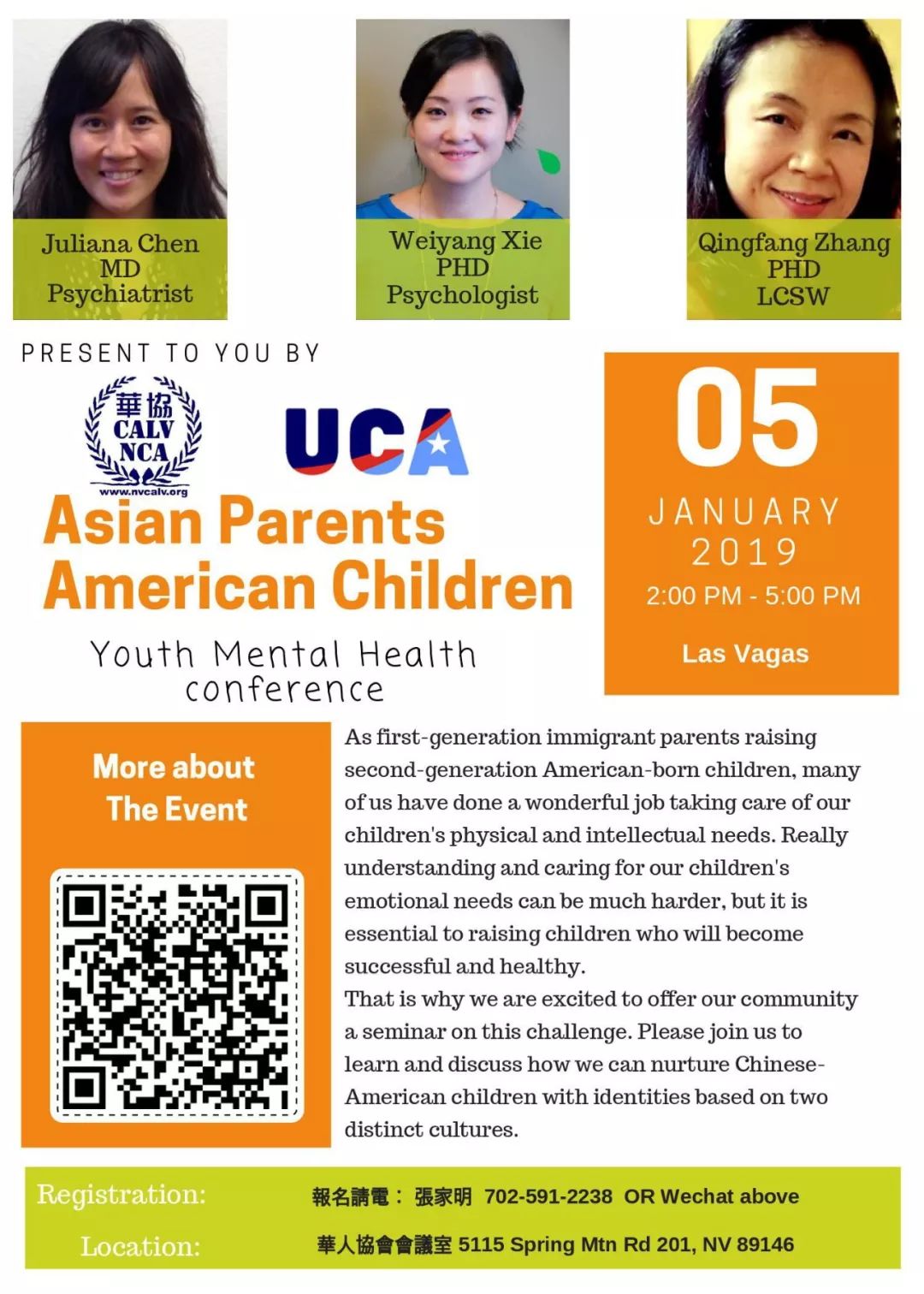
内华达华人协会联手UCA将首推青少年心理及情绪健康讲座

作为第一代华人父母养育在美国出生成长的华二代,面临诸多挑战:他们努力照料孩子的生活、关注孩子的智力发展,但在真正理解和关心孩子们的情感需求方面还有不少欠缺和疏漏。文化差异下的代际沟通,造成了华二代心理健康发展的困境。

心理健康的培养对于青少年拥有快乐、成功的完整人生至关重要。2019年1月5日(周六)下午2点至5点,内华达华人协会 (Nevada Chinese Association)与美国华人联合会 (United Chinese Americans)将在拉斯维加斯首次联合主办“青少年心理及情绪健康讲座”,为华人父母提供如何重新审视家庭教育、如何培养孩子心理健康的宝贵机会。

讲座特邀长期从事心理和精神健康的医师、专家、青少年教育专家,分享他们的临床和科研经验,探讨在孩子成长的过程中所面临的各种心理健康隐患,并提出具体实用的专业建议。参会者还将与专家一起学习和讨论:如何在两种不同文化的基础上,挑战父母心态,培养个性独特的华二代?如何有效地与孩子们沟通?当孩子面临挫折时,如何给予支持和帮助?如何帮助孩子提高心理韧性,从而更好地抗击压力、预防心理疾病?

【特邀演讲嘉宾】

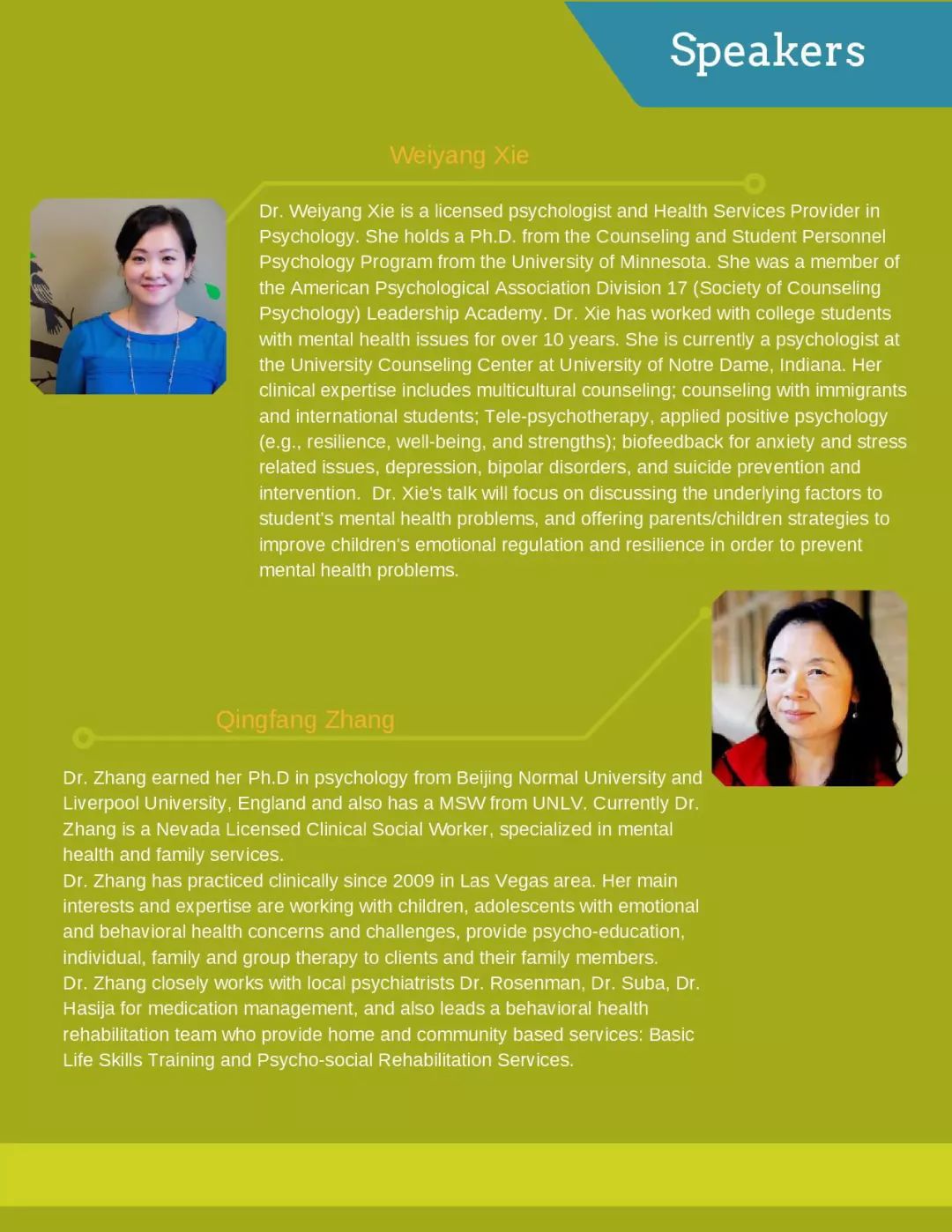
• 谢维扬博士(上图左)

谢维扬博士是一位执业心理学家和精神健康医师,明尼苏达大学咨询和学生团体心理学博士。谢博士在印第安纳州圣母大学咨询学院工作。她擅长的临床知识包括多文化咨询,向移民和国际学生提供咨询,在线治疗,应用积极心理学,针对焦虑和压力相关问题的生物反馈,抑郁,危机干预,适应等问题。

谢博士将分享她的临床经验和大家探讨在孩子成长的过程中所面临的各种心理健康隐患,并从专家角度分析如何帮助孩子建立自信,增强沟通能力和情绪调节能力,来提高孩子的心理韧性,从而更好的抗击压力,预防心理疾病。

• 张青芳博士(上图右)

张青芳博士是北京师范大学与英国利物浦大学联合培养的心理学博士,UNLV社会工作硕士,持有内华达执照临床社会工作师LCSW。她是内州儿童与家庭治疗机构Wishing Well Child and Family Therapy的创始人和CEO,以及Desert Behavioral Health 临床总监 (Clinical Director)。

张青芳博士为个人和家庭提供心理治疗和精神卫生方面服务,具有丰富经验。此次讲座,她将着重介绍本地华人青少年个人和家庭面临的困境和挑战,以及华人如何使用本地的心理精神卫生服务方面的资源,应对这些挑战。

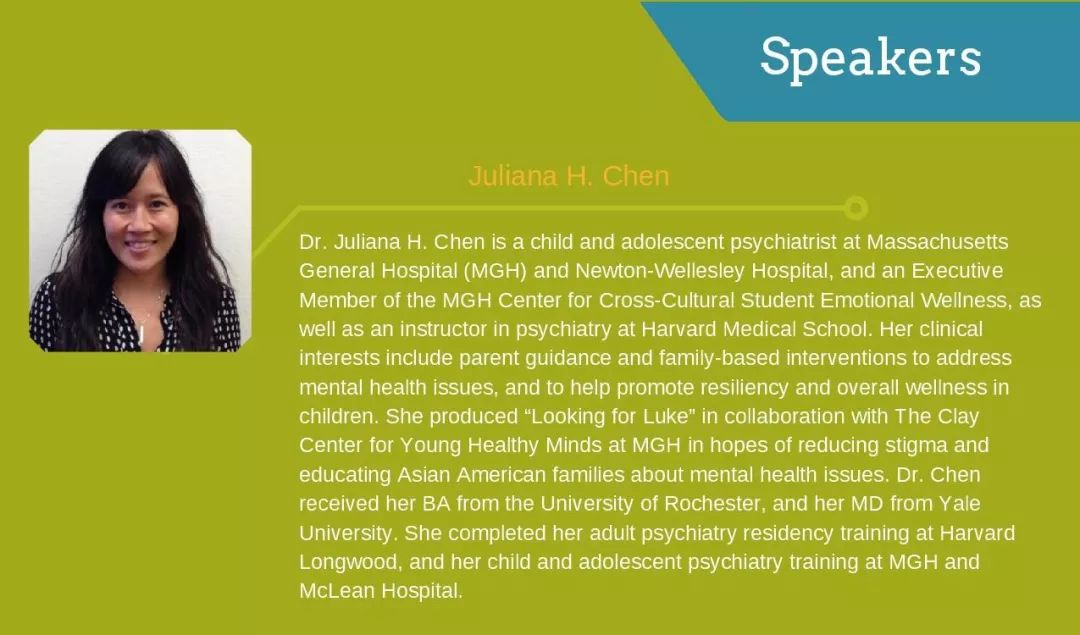
• Juliana H. Chen, MD(上图)

Juliana是麻省综合医院的儿童、青少年精神病科执业医生,也是该医院跨文化学生情感健康中心的执行委员,以及哈佛医学院精神病学讲师。她在罗切斯特大学获得学士学位,在耶鲁大学获得医学博士学位,并在哈佛大学医学院完成了成人精神病学住院医培训,在麻省综合医院完成了儿童和青少年精神病学培训。     

Juliana的临床兴趣包括家长对孩子的引导,通过家庭参与关注心理健康问题,帮助孩子增强心理承受力和整体身心健康。值得一提的是,她还与麻省综合医院关注年轻人健康思想的克莱中心合作制作了著名纪录片《寻找卢克》,希望能够减少人们对患有精神疾病的自卑感,帮助美国亚裔家庭正确理解心理健康问题。

【时间】 2019年1月5日(周六),2-5pm

【地点】 内华达华人协会会议厅

5115 Spring Mtn Rd 201, Las Vegas,NV 89146

【报名方式】

讲座面向公众开放,免费入场。电话报名:702-591-2238 张家明

点击阅读相关报道

【美国华人大会专题七】如何帮助亚裔孩子建立强大内心?

UCA伊州分会成功举办跨越代沟的心灵对话

“中国父母 美国孩子”:明州成功举办首次青少年实用心理讲座

中美两代人——第一代移民家庭中亲子关系探讨

美国华人大会:青少年教育专题总结

密城成功举办华裔青少年心理健康讲座