UCA to Join Asian American Communities in Honoring Heroes

UCA to Join Asian American Communities on June 22nd, in Houston, Texas

In Honoring Heroes in the Midland Hate Crime and Host a Webinar on Anti-Racism Movements

On June 23rd, 1982, Chinese American Vincent Chin died in Detroit, Michigan after being attacked and fatally beaten by two white autoworkers for looking like Japanese, at a time of rising anti-Japanese and anti-Asian racial tension. Vincent Chin’s death has become a crucial turning point in Asian American history and civil rights movement led by Lily Chin, Vincent’s mother, who stood up courageously for her son’s justice.

In March 2020, 38 years later, a Burmese family Cung, was mistaken to be ‘Chinese infecting people with Coronavirus’ and was attacked at a local Sam’s Club store in Midland, TX. The family’s two children, ages 2 and 6, along with the father, were badly wounded by knife cuts, some were even left on the face

Two months later, George Floyd was killed in Minneapolis by a white policeman. His death and the recent killing of innocent African Americans, have fueled the rage of the community, already distressed disproportionally in the COVID-19 pandemics. The tragedies continue to rip the country apart and generated national and international outcries against systematic racism and institutional discrimination in the US against people of color.

UCA and many Asian American organizations have come out firmly and clearly immediately after George Floyd’s death, condemning such brutality and crimes. We stand up together with our brothers and sisters who have been tormented by the dark side of American’s history. We are here to unite with the vulnerable communities and to ask for the continuous push for racial justice and social progress in this country.

On June 22nd, 2020, the 38 anniversary of Vincint Chin’s death, UCA is joining Asian American communities and anti-hate-crime anti-racism organizations to host an award ceremony and an advocacy event in commemorating this historical moment. We invite all community members to join us on these special occasions to honor the Midland heroes and to participate in the community dialogue on how we can move forward from this point on.

The event details from Houston Chinese Community Center are here: https://ccchouston.org/advocacy-award/

The donation to the victim family can be continuously made here: https://www.memberplanet.com//campaign/united-chinese-americans/general_giving_158_1_1

Lily and Vincent Chin Advocacy

Award Ceremony

Monday, June 22 at 10:30 a.m. CST
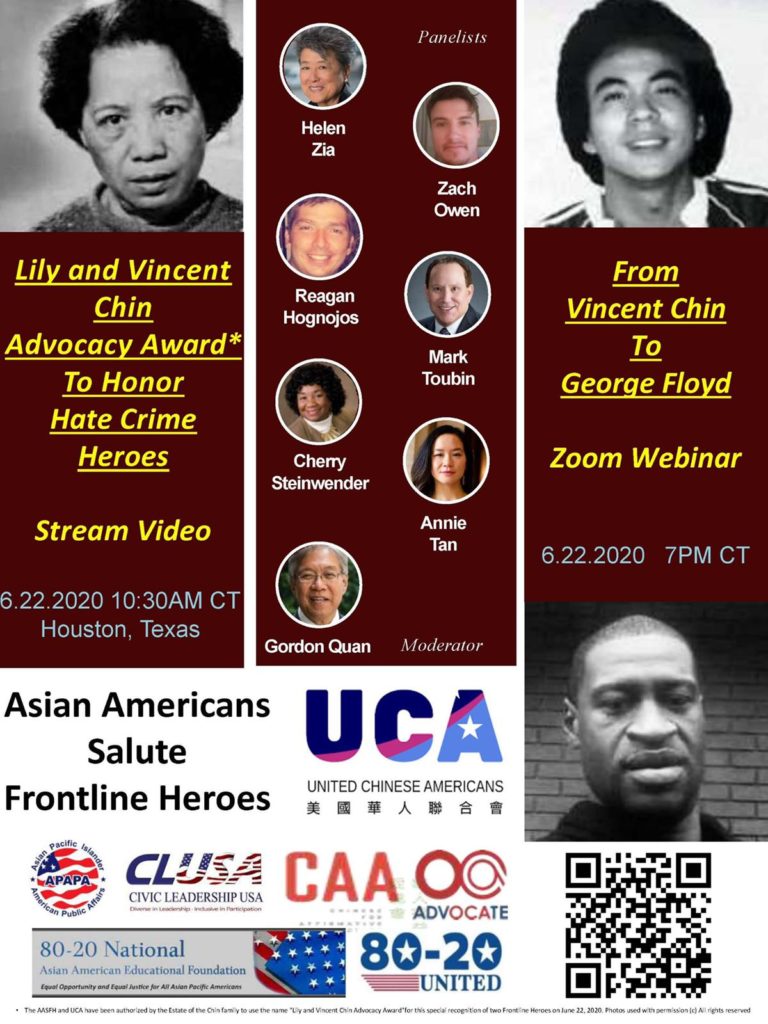
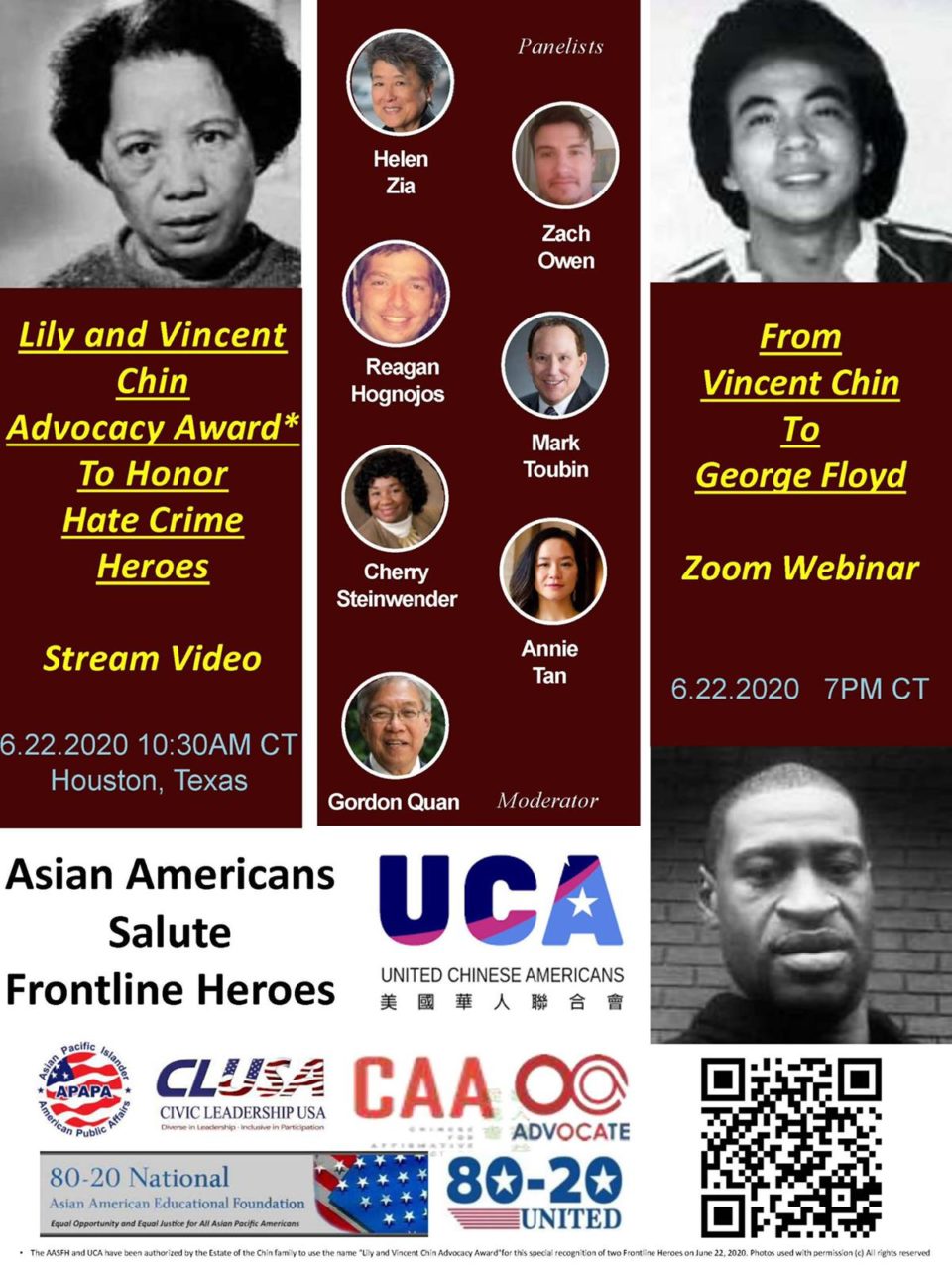
Two Midland, Texas heroes, Zach Owen and Bernie Ramirez, who intervened in a violent anti-Asian stabbing of the Cung Family, a Burmese father and his two young sons, will receive the Lily and Vincent Chin Advocacy Award* on Monday, June 22 at 10:30 am CST at the Chinese Community Center in Houston, TX.  Despite injuries to his leg and hand, Zach Owen, with the help of Bernie Ramirez, disarmed and subdued the attacker until the police arrived. Labeled a “hate crime”, the suspect said he thought the family was Chinese and spreading the coronavirus.

The award ceremony is organized by Asian American organizations including those in the Asian American Salute Front Heroes campaign Houston, UCA, and sponsored by many other local and national organizations. UCA will present a donation to the Cung Family to support the medical expenses for future surgeries and challenges the 2 and 6 year-old children may face due to the attack.

To watch the event live, please join by: https://www.youtube.com/watch?v=opm1Lbx9pdc.

The donation can be continuously made here: https://www.memberplanet.com//campaign/united-chinese-americans/general_giving_158_1_1

Please email steven.pei@ucausa.org for questions or comments on the donation and award ceremony.

From Vincent Chin to George Floyd:

A Panel Discussion

Monday, June 22 at 7:00 p.m. CST

A panel discussion will be held virtually via Zoom on the evening of Monday, June 22 at 7:00 pm CST, discussing the 38th anniversary of the brutal killing of Vincent Chin and the recent killing of George Floyd.  Both deaths created and sustained a major movement to oppose racial hate and discrimination.

Please register the zoom meeting ahead of time at: https://form.jotform.com/201684865046057 , and email steven.pei@ucausa.org for questions or comments on this panel discussion.

“From Vincent Chin to George Floyd” will feature:

Moderator


Gordon Quan

Attorney and former Houston Council member

Panelists


Helen Zia

An award-winning journalist and community activist who has covered Asian American communities and social and political movements for many years. She is a founder in the movement for justice for Vincent Chin and is outspoken voice for human rights.

Zach Owen

Recipient of the Lily and Vincent Chin Advocacy Award* for risking his life to save the Burmese family from hate crime committed at Midland, TX on March 14, 2020.

Reagan Hognojos

Friend of the Cung family.

Mark Touban

Attorney and serves as the Regional Director for the ADL’s Southwest Regional Office in Houston, Texas.

Cherry Steinwender

Co-Executive Director and co-founder of the Center for the Healing of Racism.

Annie Tan

Special education teacher and storyteller in New York’s Chinatown.  She has been a fighter for public education, unions, tenants and Asian American rights.  She is a cousin of the late Vincent Chin.

*AASFH has been authorized by the Estate of the Chin family to use the name “Lily and Vincent Chin Advocacy Award” for this special recognition of two Frontline Heroes on June 22, 2020. Photos used with permission (c) All rights reserved.

UCA Student Scholarship on Racial Justice

“From Vincent Chin to George Floyd” in 2020 Summer Semester 

UCA is announcing a student scholarship to be awarded to Chinese American students who are actively engaged in fighting against racism and hate crimes, and propel the progress towards civil rights protection and racial justice. The summer 2020 scholarship to honor the “From Vincent Chin to George Floyd” event will be given to a high school student led project in the amount of $1000 and to a college student led project in the amount of $1000.

The winners will be invited to a UCA national forum to discuss their work, and present their essays and materials. Content of their projects including the essays, media, and presentations will be promoted on UCA website and social media channels

Projects will need to commence after June 22nd, 2020, and last throughout summer 2020. The scholarship application must be submitted by 11:59 PM August 31st, 2020. The winners will be announced by September 22nd, 2020, selected by a panel of judges of UCA.

Please visit the scholarship announcement page for more details. Please email UCA board members, Helen Shih, or Jinliang Cai, for questions and comments: helenshihuca@gmail.com, jlcai@yahoo.com 
Science and Technology Caught between the United States and China Conference

By: Steven Pei

Science and Technology Caught between the United States and China Conference

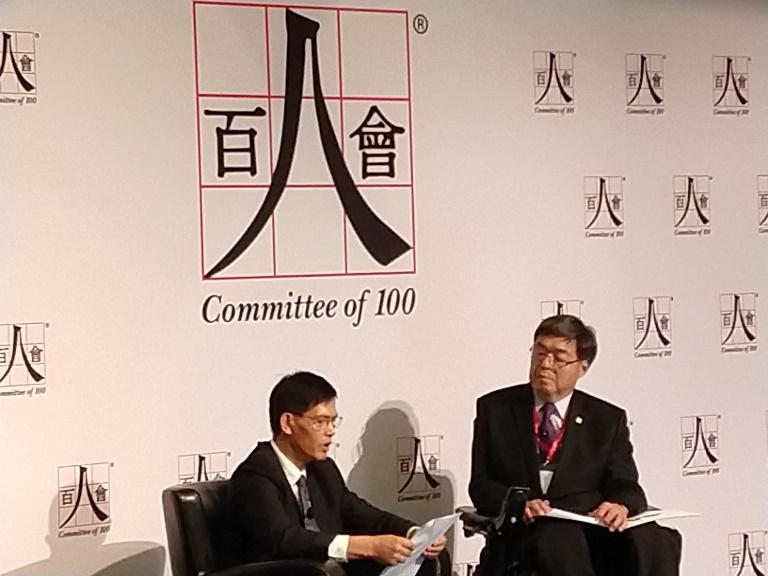
The Committee of 100 (C100) convened nearly 300 leading policy makers, legal experts, educators, business leaders, scientists, and community leaders in Palo Alto, Ca. on September 28, 2019 to address the human impacts of geopolitics. In addition to sixteen community partners, including Civic Leadership USA (CLUSA) and United Chinese Americans (UCA), the conference was also co-sponsored by thirteen professional organizations, including the Society of Chinese Bioscientists in America (SCBA), the Chinese American Hematologist and Oncologist Network (CAHON), and the Chinese Biological Investigators Society (CBIS), who issued the first open letter in the Science Magazine and drew a response from the leadership of National Institute of Health (NIH) on March 22, 2019.

After the opening welcome by Roger Wang, Chair of C100, Ambassador Gary Locke set the tone of the conference: “The U.S. – China relationship is the world’s most consequential bi-lateral relationship. We must be concerned about security concerns and condemn illegal activity, but in recent years there have been many cases of wrongful prosecution. Our pride in our heritage does not mean we are any less loyal or patriotic to America.” He was followed by Professor Susan Shirk, Chair, 21st Century China Center at the School of Global Policy & Strategy, University of California, San Diego, and former U.S. Deputy Assistant Secretary of State. She gave the opening keynote: “China and the U.S. wove together a dense fabric of trade, technology, and education – forming a nexus of what became globalization.” “To preserve America’s open society and vibrant research environment, we should double down on American openness, not put limitations on scientific collaboration.” 

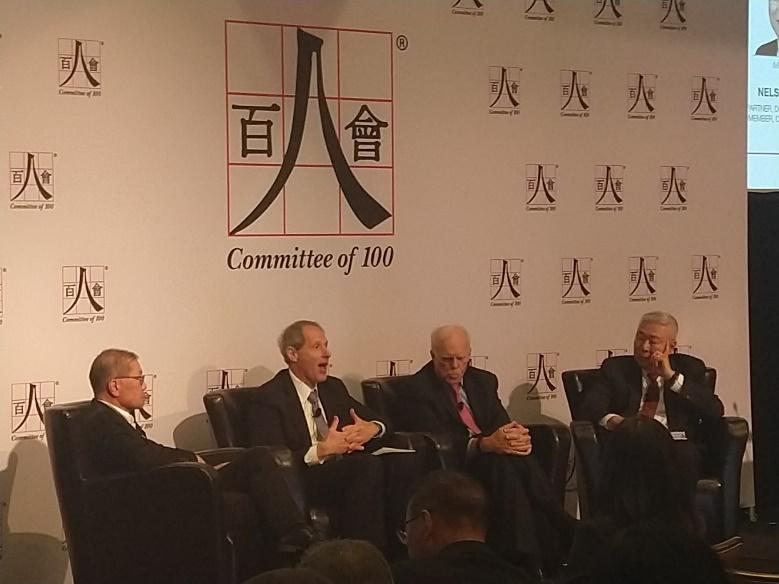
Dr. David Ho, Scientific Director of Aaron Diamond AIDS Research Center, Dr. Thomas Rosenbaum, President of California Institute of Technology, Dr. John Hennessy, Chairman of Alphabet Inc. and moderator Nelson Dong of C100 at the keynote panel.

Dong pointed out that “76% of 1,466 patents issued in 2011 to top 10 U.S. research universities had at least one foreign born inventor.” He also presented data showing the high percentages of American Nobel laureates and prize winners, science and engineering workers and student who were foreign-born. 

Dr. Ho argued, worried that NIH’s crackdown had already gone too far. Ho argued that the known cases are “largely due to sloppiness and a degree of greed” by a few scientists. “A small number of ‘bad apples’ does not connote a systemic problem that requires federal intervention when it could be addressed at the institutional level with policies already in place.”

President Rosenbaum, “The strength of the United States as a scientific, technological and economic power has depended crucially on immigration. Recent demonstrated examples of violations of scientific ethics, coupled with fears for U.S. economic competitiveness and national security, may well lead to governmental restrictions that broadly and severely restrict the flow of people and ideas.”

Chairman Hennessy pointed out that “Immigrants come to this country to make America a better country. There are a number of important American companies with foreign born founders. If you cut that off, you cut off an important part of our nation’s economic vitality.”

Dr. Steven Chu, Nobel Laureate and Former Secretary of Energy, and Congresswoman Judy Chu gave the plenary speeches at lunch. Robert Gee of C100 and Former Assistant Secretary of Energy gave a policy briefing in the afternoon. 

David Stilwell, U.S. Assistant Secretary of State for the Bureau of East Asian and Pacific Affairs joined by live video conference from the United Nation. 

Congressman Adam Schiff, chair of House Intelligence Committee, also delivered a pre-recorded speech.

It was followed by the “Business and Technology Panel” on the impact on business and the technology industry with Ambassador Craig Allen, President of U.S.-China Business Council and Carl Guardino, President and CEO of Silicon Valley Leadership Board.  The panel was moderated Jerry Yang of C100 and co-founder of Yahoo! Inc.

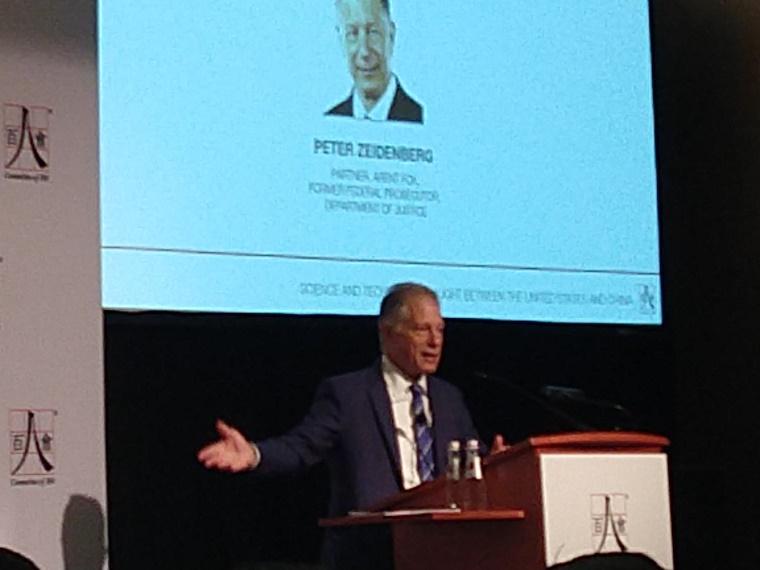
John Hemann, Chief of the Special Prosecutions Section of the U.S. Attorney’s Office for the Northern District of California and Peter Zeidenberg, former Federal Prosecutor, Department of Justice at the “Law and Justice Panel” on legal perspectives and impact moderated by Brian Sun of C100.

Brian Sun opened the panel with a discussion of Chinese Americans contributions and several U.S. Government initiatives and investigations of espionage cases and false accusations. As a lawyer with Jones Day in Los Angeles, California, he warned the audience that participating in the Thousand Talents Program “puts a target on your back. So don’t be stupid.”  

Zeidenberg talked about the cases of Xiaoxing Xi and Sherry Chen that he represented. It set the stage for “A Personal Perspective” by Professor Xiaoxing Xi. Even though he has shared what he and his family went through many times already, it brought Xi to tears again. Then Conference Chair Charlie Woo of C100 annnounced the good news that the American Physics Society just named Xi the 2020 recipient of Andrei Sakharov Prize “for his steadfast advocacy in support of the U.S. scientific community and open scientific exchange.” 

Woo also gave the closing remarks, “It is our hope to come together and find balanced solutions that protect national security, uphold the civil liberties of all Americans, and continue to foster the welcoming environment for the development of science, technology and research that America has always been known for.”

UCA Co-Sponsored 2019 National Civic Leadership Forum

UCA Co-Sponsored 2019 National Civic Leadership Forum

Civic Engagement and Empowerment in 2020 Census and 2020 Election Season are key areas of campaign for UCA

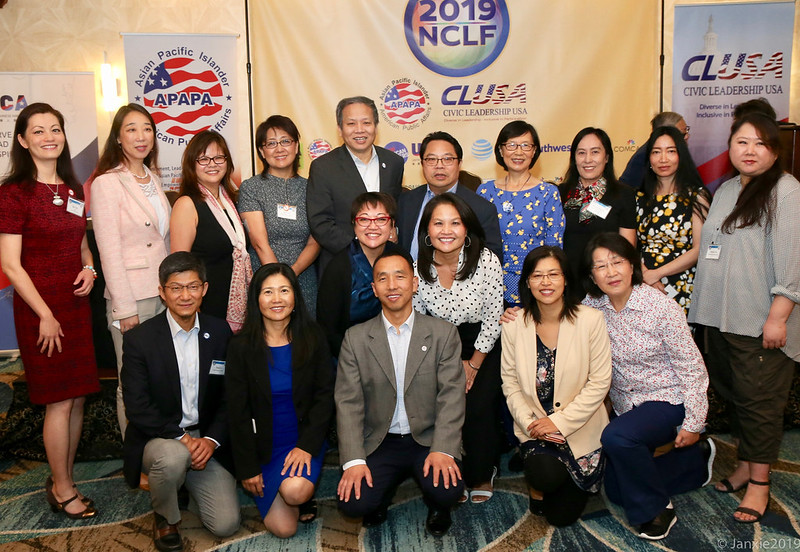
UCA members attending the NCLF 2019

Washington, DC – UCA has successfully hosted and supported its members to participate in the 2019 National Civic Leadership Forum (NCLF) held Sep 15-18th, in Washington, DC. The conference was attended by about 200 Asian Pacific Islander American (AAPI) community leaders representing 100 civic organizations across the country. The conference was led by Asian Apacific Islander American Public Affairs Association (APAPA) and Civic Leadership USA (CLUSA), with UCA being one of the major co-sponsoring AAPI organizations, including, Asian American Unity Coalition (AAUC), Asian Pacific Islander American Vote (APIAVote), New American Leaders (NAL), 80-20 United, Asian Pacific American Institute for Congressional Studies (APAICS), National Federation of Filipino American Associations (NaFFAA), Federal Asian Pacific American Council (FAPAC). The theme of the conference is “Empower AAPI for 2020”, with an aim to increase civic engagement in the AAPI community, build a broad coalition among many different AAPI organizations, and prepare for the 2020 elections and decennial census.

AAPI population is about 24.2 million in 2018 according to the Census Bureau, a 27% increase since 2010 Census, though this could be a significant underestimate because of undercount of the population. Many AAPIs are successful business owners, lawyers, doctors, and professionals, who are among the major contributing force to American economy and society. Yet AAPIs are also highly diverse and segmented with more than 21 major ethnic groups, over 30 languages spoken, and predominantly immigrants. These communities have experienced lowest voter turnout and census participation in the past two decades.

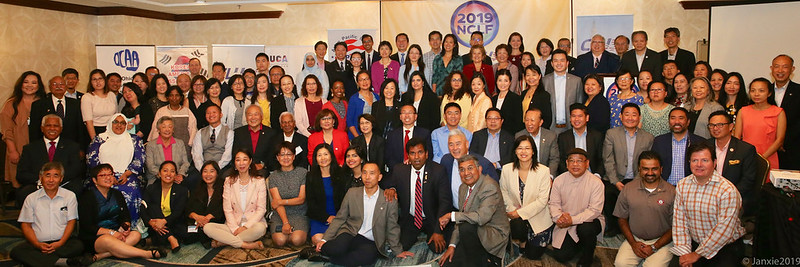
NCLF attendees and organization leaders
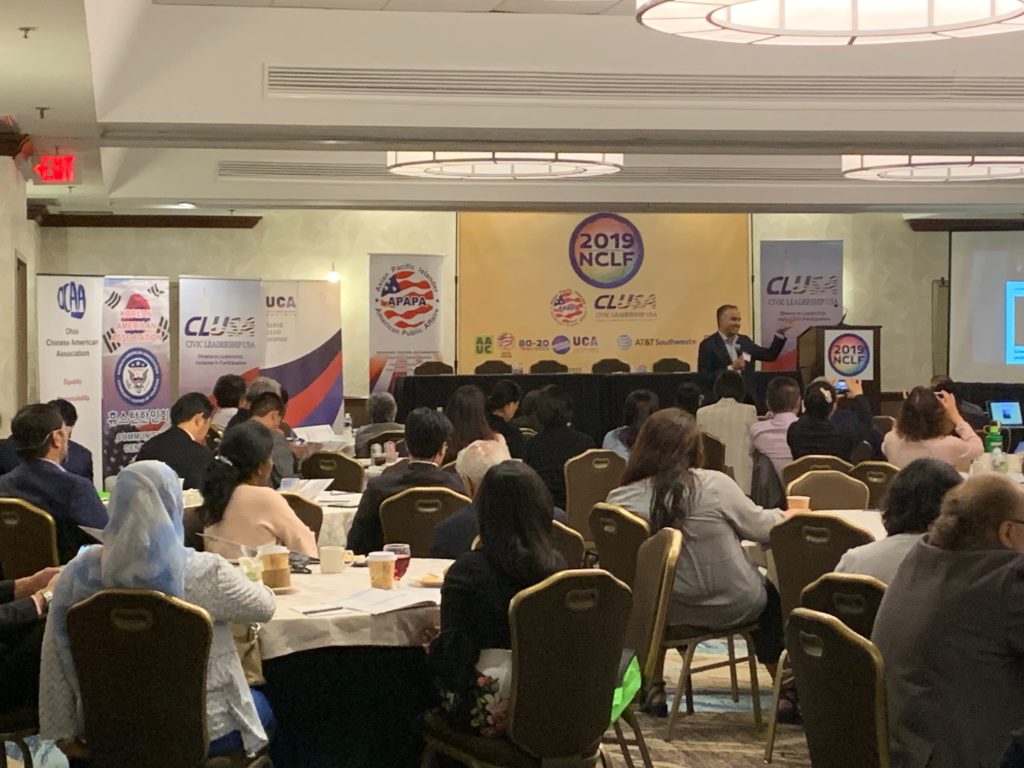
MCLF meeting session

Facing the challenges in 2020 census and historical 2020 election season coming up, AAPI civic leaders recognized the importance of gathering in Washington DC, discussing pressing issues and urgent threats to the communities that were exacerbated by the rise of anti-immigrant sentiment and hate crimes in recent years. More than 100 AAPI civic organizations representing twelve (12) ethnic groups were represented at the NCLF, including Bangladeshi, Cambodian, Chinese, Filipino, Hawaiian or Pacific Islanders, Indian, Indonesian, Japanese, Korean, Pakistani, Thai and Vietnamese.

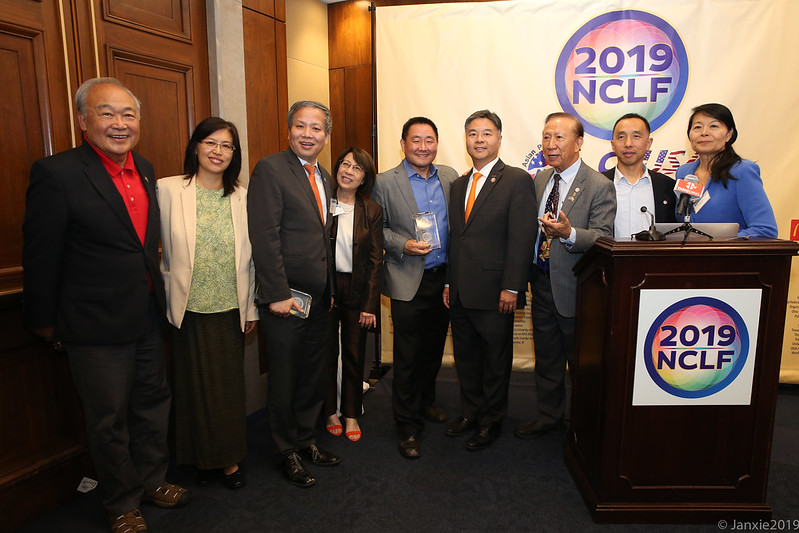
AAPI Congressional members, including Rep. Judy Chu, Ted Lieu, former Rep. David Wu, attended the conference and encouraged participants to be leaders and champions of the AAPI community. Secretary Elaine Chao (Department of Transportation), and members of the Asian American Caucus in US Congress also sent their representatives and encouraging remarks to the meeting attendees. Other Congressional members and speakers of the meeting included, Tom McClintock, Brendan Boyle, Lloyd Dogget, Bobby Scott, Kurt Schrader, Earl Blumenauer and Sheila Jackson Lee. 

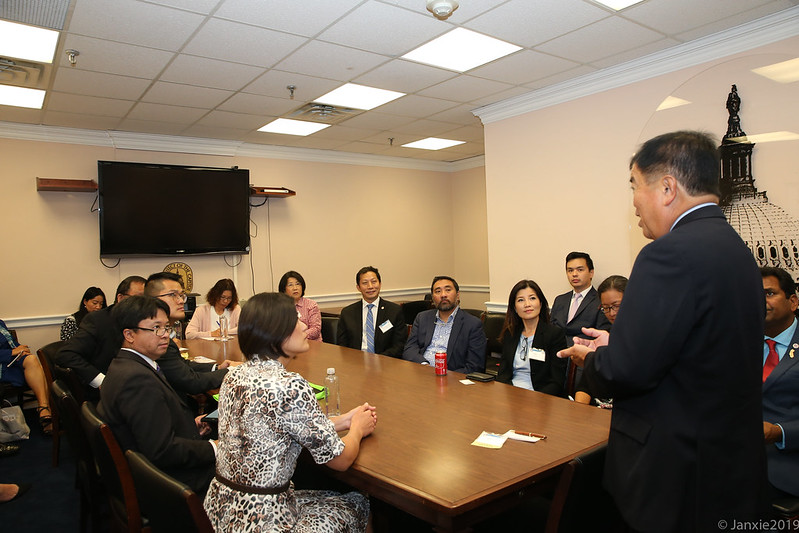
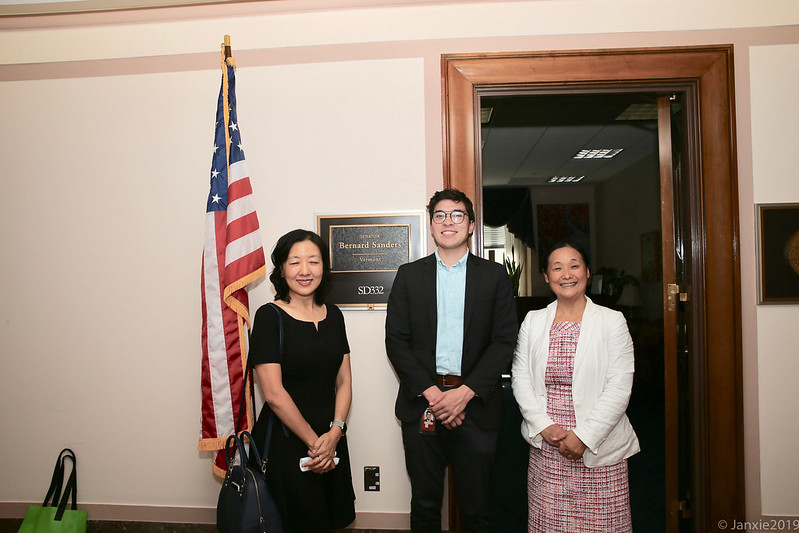
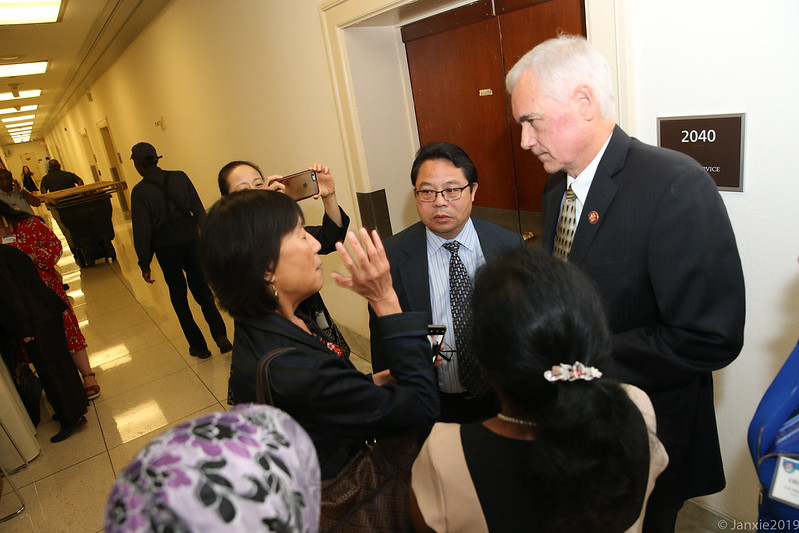
During the Congressional Visit session of the conference, AAPI leaders visited more than 70 US House and Senate representatives, and communicated the most urgent issues concerning the AAPI communities, including, 1. cumbersome and outdated immigration procedures that created crowded and lengthy backlogs with inhumane treatment of immigrants and families; 2. lack of funding and support in 2020 census especially for the AAPI community; 3. threats to civil rights under the scrutiny of national security caused by increased tension of international relations in the current administration. UCA has organized a similar Congressional Visit in its 2018 annual convention in Washington DC, advocating for civil rights protection for the Chinese community.

AAPI civic organizations including Asian Pacific Islander American Vote (APIAVote), Asian American Advancing Justice (AAJC), and others, along with AAPI elected officials and organization leaders, reviewed key statistics of the AAPI community and shared the best practices of voter engagement, leadership development, and how to run social-political campaigns. Full details of the conference can be found at the meeting website of https://whova.com/web/nclf_201909/.

The conference culminated in a press conference, Congressional Reception, and ceremony on Sep 17th, when 90 community leaders attended co-signed a joint statement by participating organizations. The joint statement highlighted the contribution of the AAPIs in their professional fields and economic impact. At the same time, it called AAPI communities to increase efforts in civic engagement and empowerment,  to participate in volunteerism, philanthropy, public policy advocacy, census and election, and other areas of social-political activism.

UCA board members played key roles in organizing and supporting the meeting, including Joy Guo, organizing Committee member, Chaoyu Xie, Campaign 101 session chair, Mary Liu, Keynote Speech session chair, Helen Shih, Congressional Visit session chair, and Xie Jan, official photographer. UCA president Haipei Xue, and Chairman of the board, Xiaoyan Zhang, were among the guest speakers at the conference. Vincent Wang (NCLF program chair) and Qiu Hong are Ohio APAPA members and UCA community partnership representatives who are the key organizers and supporters of the conference. Other UCA board members and community partnership leaders representing UCA included Zhida Song-James, Paul Li from Maryland, Lily Chen from Illinois, Hardy Li and Qi Hong Wagner from Washington state, and Zhaobang Zeng from North Carolina.

Congressional visit